Cart
0
You may also like
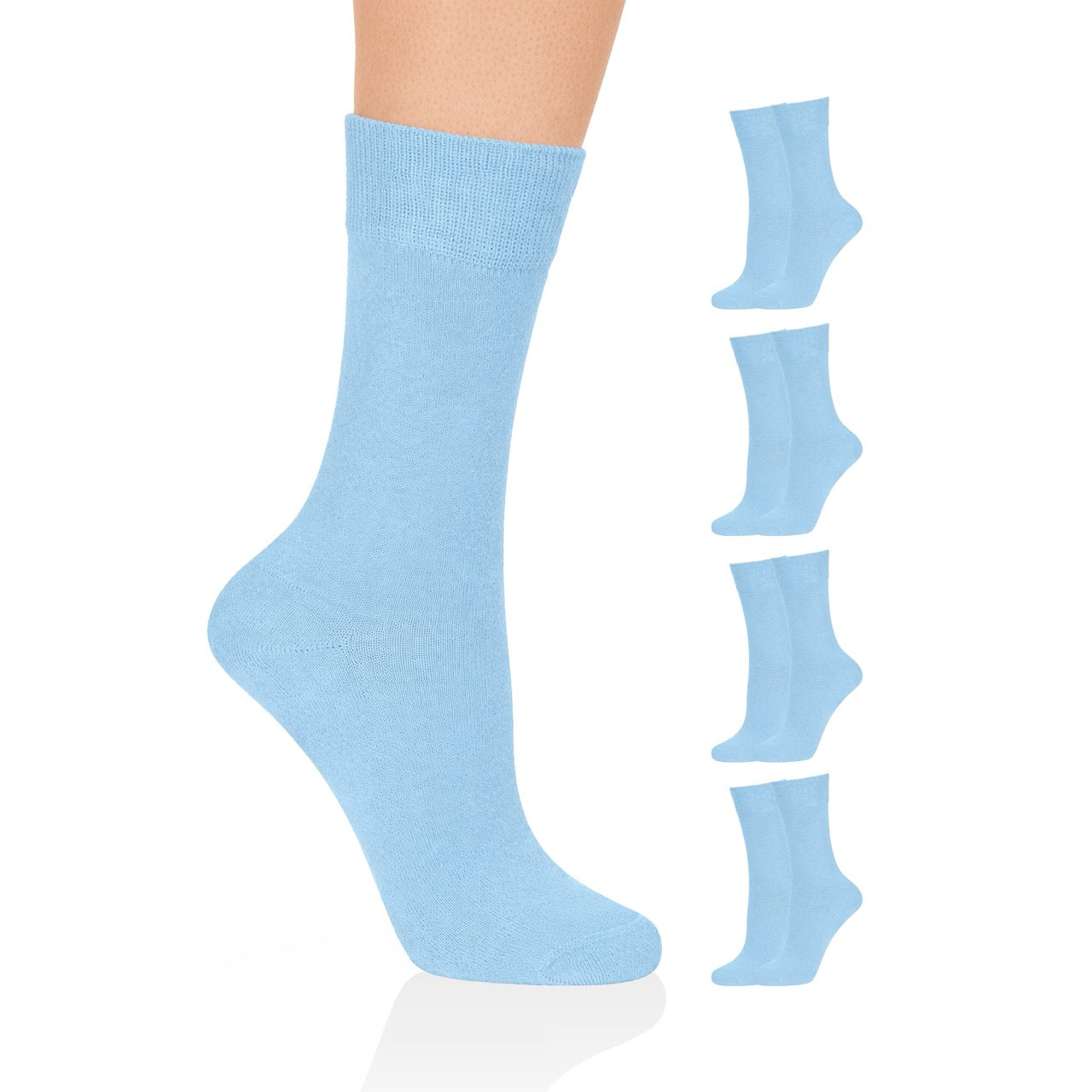
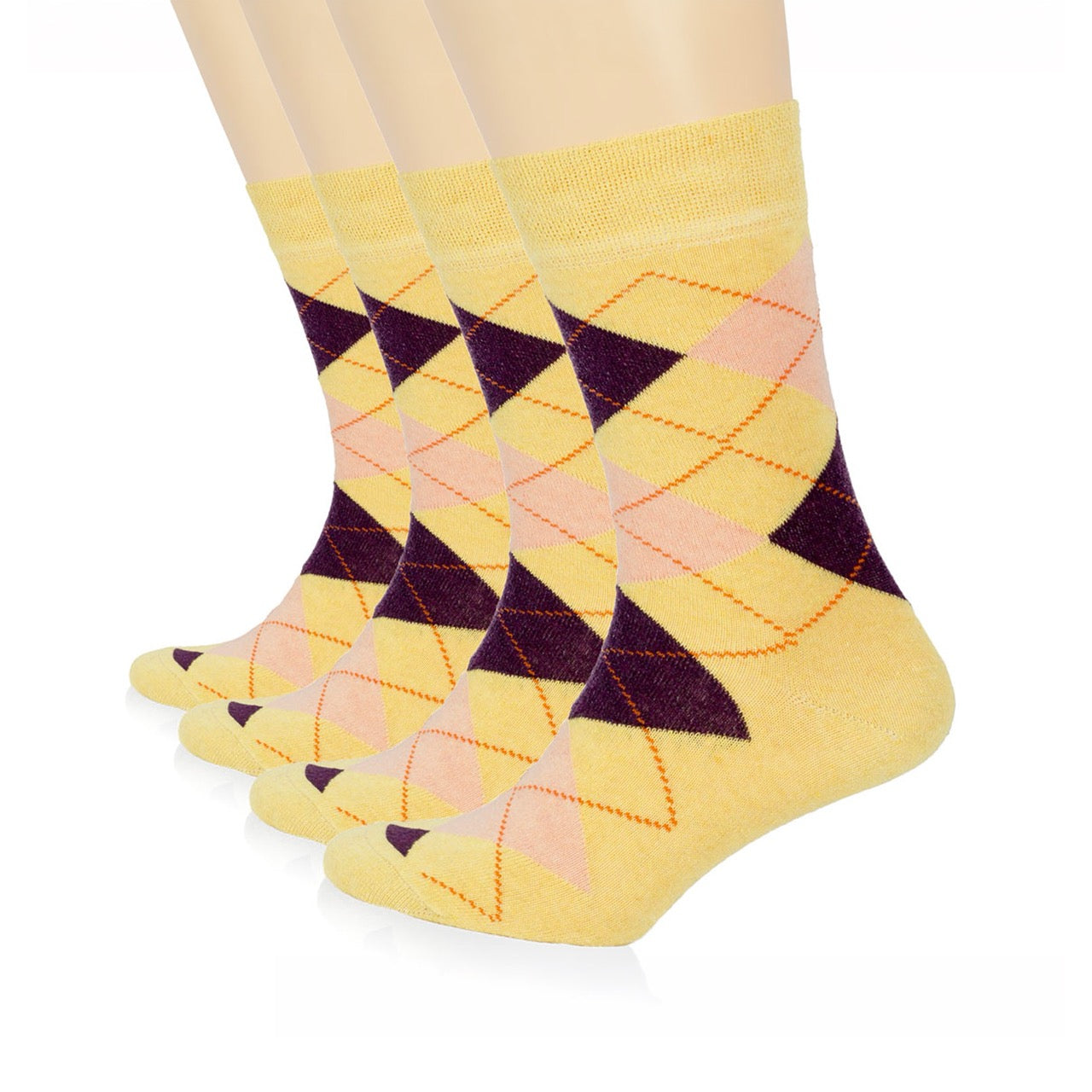


The numbers on a sock label are regulated; the adjectives are not. US law requires most textiles to list fibre content by generic name in descending percentage, country of origin, manufacturer identity, and care instructions. Everything else — moisture-wicking, seamless, non-binding, eco-friendly, antibacterial — is voluntary marketing copy that nobody verifies before it goes on the bag. The fastest useful check is the fibre content line: look at the dominant fibre, then confirm there's roughly 1–5% spandex for recovery and 10–25% nylon or polyester for abrasion resistance. A certification claim is only checkable if it carries a certificate number and an issuing institute.
Key Takeaways
Pick up almost any pack of socks and you will find two very different kinds of information on it. On the front there is the marketing: "moisture-wicking," "non-binding," "seamless," "cushioned comfort," "antibacterial," "eco-friendly." On the back or inside there is the legally required part: a fibre content percentage, a country of origin, a manufacturer identity, and washing instructions.
Only one of those two is regulated. Learning to read the regulated part — and to translate the unregulated part into something checkable — is the single most useful buying skill in this category. It takes about thirty seconds per package once you know what you are looking at.
In the United States, textile labelling is governed by the Textile Fiber Products Identification Act and enforced by the Federal Trade Commission. The FTC's business guidance document, Threading Your Way Through the Labeling Requirements Under the Textile and Wool Acts, sets out the requirements in plain terms. Three pieces of information must appear on most textile products sold in the US:
Separately, the FTC's Care Labeling Rule requires manufacturers and importers to provide care instructions so buyers know how to clean what they have bought.
Everything else on the package — every adjective, every benefit claim, every icon — is voluntary marketing copy. It may be accurate. It is not verified by anyone before it goes on the bag.
This is the mental split to hold onto. The numbers are regulated. The adjectives are not.

The fibre content is the densest piece of useful information on the whole package, and most people skip it. Here is how to decode a typical line.
Say a sock reads: 80% Cotton, 17% Polyester, 2% Spandex, 1% Rubber.
Now compare that to: 97% Polyester, 3% Spandex. This is a synthetic sock with no natural fibre at all. It will be durable and cheap, and it will hold heat and moisture against your skin more than a cotton-rich sock would. Neither content line is inherently right or wrong — they describe genuinely different products, and the label tells you which one you have before you buy it.
Fibre must be listed by its generic name, and this is where a lot of soft branding falls apart. The FTC requires that regenerated cellulose fibre be labelled as rayon or viscose — not as "bamboo," even when bamboo was the raw feedstock. So a package that shouts "BAMBOO SOCKS" on the front will typically carry a content line reading viscose from bamboo or rayon from bamboo on the back.
That is not deception; it is the rule working correctly. The front tells you the source material, the back tells you the processed fibre. The useful takeaway is that the back is what tells you how the sock will behave.
Here is the translation table. The left column is what the package says. The right column is what you should check to find out whether it is true.
| What the package says | What it usually means | How to check |
|---|---|---|
| Moisture-wicking | Fibre or knit structure moves moisture away from skin | Check fibre content. Cotton, bamboo viscose, merino and engineered polyester all do this. Heavy undifferentiated acrylic does not. |
| Seamless | Usually means a flat-linked or hand-linked toe seam, not literally no seam | Turn the sock inside out and run a finger across the toe. A flat join is the real thing; a raised ridge is not. |
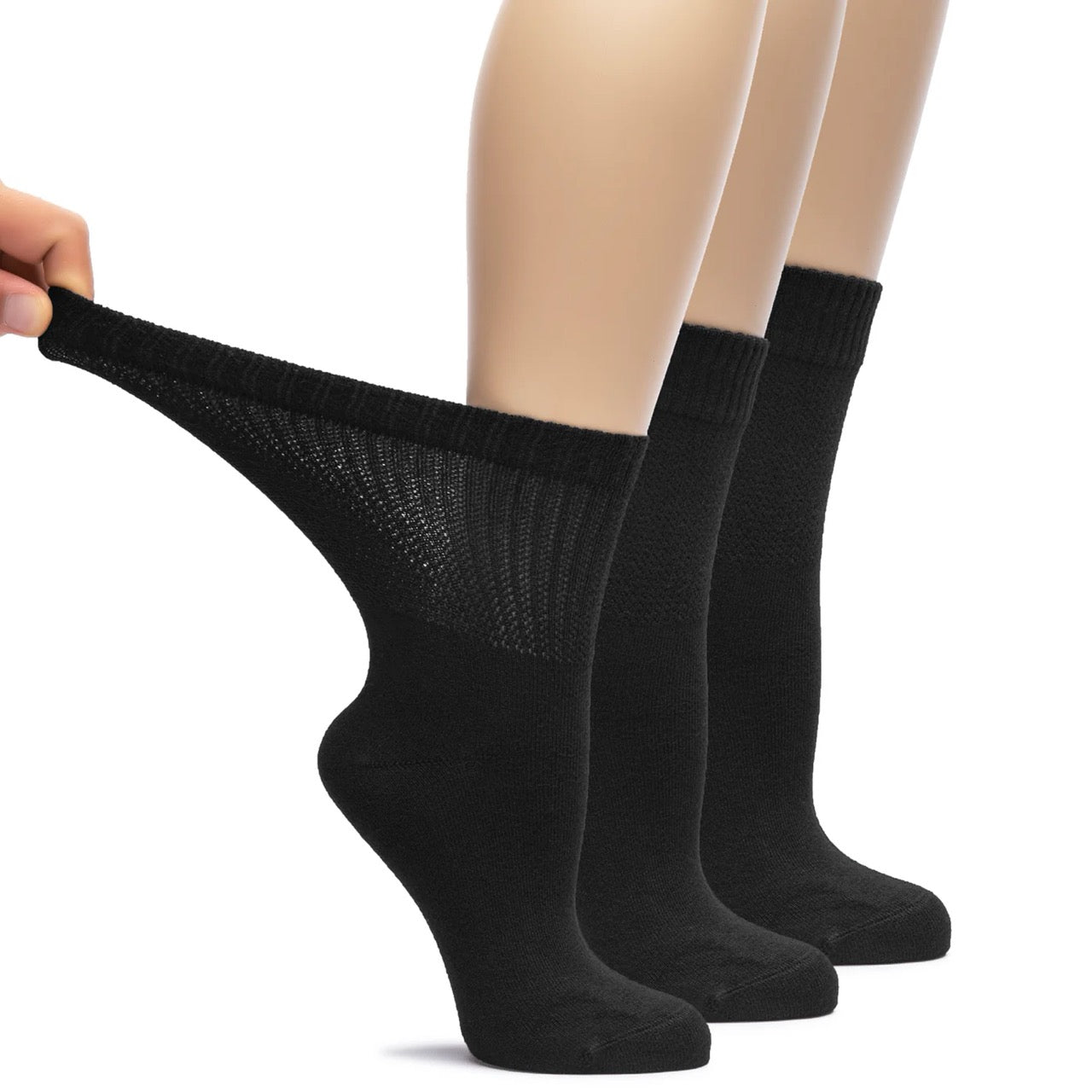
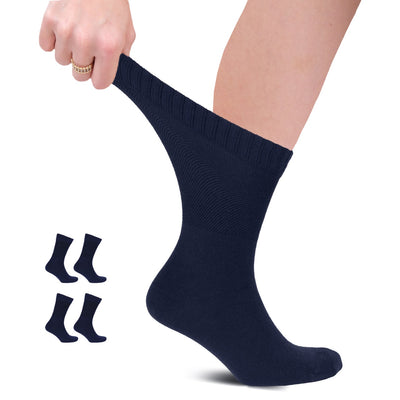
| Non-binding | A wider, gentler cuff without a narrow compression band | Stretch the cuff. It should open wide and recover without a hard elastic edge. |
| Cushioned | Extra terry loops on the inside, somewhere | Look for "full cushion" vs "half/semi cushion" — the difference is whether padding runs the whole foot or just heel and ball. |
| Antibacterial / antimicrobial | Either a chemical treatment or an inherent fibre property | Ask which. Treatments wash out over time; fibre properties do not. |
| Odour-resistant | Often just a restatement of the above | Merino and bamboo viscose have genuine inherent advantages here. A treated synthetic is temporary. |
| Eco-friendly / sustainable | Unregulated by itself | Look for a named certification with a number. No certification, no claim. |
| Arch support / compression zone | A band of tighter knit across the midfoot | Real, but mild. It is a knit structure, not an orthotic. |
| Reinforced heel and toe | Higher synthetic content or doubled yarn at wear points | Hold to the light — reinforced areas are visibly denser. |
| Breathable | Means very little on its own | Fibre content and knit density tell you far more. |
| One size fits all | Sized for an average foot; will not fit either end well | Prefer socks with an actual shoe-size range on the package. |
| Hypoallergenic | Not a defined regulatory term for textiles | Check fibre content and dye certification instead. |
A certification is different from a marketing adjective in one important way: it is issued by a third party, it has a number, and that number can be looked up. This is the difference between "chemically safe" and a claim someone stands behind.
The most common one in socks is OEKO-TEX STANDARD 100, which certifies that every component of an article — including thread, buttons and trims — has been tested against a list of substances harmful to human health. The standard distinguishes several product classes, with the strictest limits applied to products intended for babies and toddlers, and certificates are valid for a defined period rather than indefinitely.
Three things make an OEKO-TEX claim checkable:
It is worth being clear about what the standard does and does not tell you. It addresses harmful substances. It does not measure durability, comfort, fit, or environmental impact of production. A certified sock can still be a badly made sock. It is one input, not a verdict.
Our own certification and what it covers is described in our post on earning OEKO-TEX STANDARD 100 certification.
The care label is the most ignored and one of the most informative parts of a sock. It tells you two things: how to make the sock last, and indirectly, what the sock is made of.
A useful rule: if the care label demands more effort than you will realistically give it, the sock will not last as long as advertised. That is not the sock's fault, but it should factor into the purchase.
Just as informative as what is on a label is what is not. Four figures that would genuinely help buyers almost never appear:
Gauge or needle count. Higher needle count means a finer, denser knit — typically more durable and smoother against skin. Specialist brands sometimes publish it. Most do not.
Yarn weight. Grams per pair would tell you at a glance whether a "cushioned" sock is genuinely substantial or just fluffed up in the photograph.
Micron count for wool. The single most useful number for predicting whether a wool sock will itch. Almost never printed.
Toe seam construction method. Hand-linked, machine-linked, or conventional seamed. This is the detail that determines whether "seamless" means anything.
The absence of these is not sinister — they are not required, and most buyers would not know what to do with them. But when a brand does volunteer this information, it is usually a signal that they have something to volunteer.
Here is the routine. It works in a store or on a product page.
Seven checks, thirty seconds. It filters out most of what disappoints people about sock purchases.
Three real-world label patterns and what they tell you.
"Moisture-wicking athletic socks. 95% polyester, 5% spandex. One size fits most." — This is a synthetic performance sock with no natural fibre. It will dry fast and last a long time. It will also hold heat, and "one size" means the cuff is tuned for an average calf. Fine for a gym bag; less good for an eight-hour day at a desk.
"Bamboo comfort socks. 78% viscose from bamboo, 20% polyester, 2% spandex. OEKO-TEX STANDARD 100, certificate no. [number]." — This is what a well-specified bamboo sock looks like. Dominant natural-source fibre, a real durability component, enough spandex for recovery, and a verifiable certification with a number attached.
"Ultra-soft luxury socks. Imported. Machine washable." — No fibre content visible on the front, no sizing, no certification. The information may be on an inner label, but a package that leads with adjectives and withholds numbers is telling you where its priorities are.
The reason to learn this is that label-reading transfers across price points. A cheap sock with good fibre content and real sizing will often outperform an expensive one with neither, and the only way to spot that is to read past the front of the package. We compared exactly this dynamic in drugstore diabetic socks vs specialty brands, and the broader question of when a higher price is actually buying you something is covered in are expensive socks worth it.
For the physical inspection side — what to feel for when you have the sock in your hands rather than just the package — our guide to telling if socks are high quality before buying is the natural companion to this one. And if the term that brought you here was "non-binding" specifically, our explainer on what non-binding diabetic socks are goes into how that construction actually works.
In the interest of practising what this article preaches: our Men's Regenerated Cotton Dress Crew Socks and Women's Bamboo Dress Crew Socks both list full fibre content and a shoe-size range on the product page rather than only on the package. The same applies to our Unisex Cotton Diabetic Crew Socks and Cotton Dress Crew Socks for Kids.
If a specification you want is not listed on one of our pages, that is a gap worth telling us about — the information should be there before you buy, not after.
Browse the full range across men's socks, women's socks, and kids' socks, and read the content line first.
This article is for general information and is not medical advice. Talk to your healthcare provider about your own feet.
In the US, the Textile Fiber Products Identification Act requires fibre content by generic name in descending percentage by weight, country of origin, and manufacturer identity or RN number. A separate FTC rule requires care instructions. Everything else on the package is voluntary.
Because FTC rules require fibre to be listed by its generic name. Regenerated cellulose fibre must be labelled rayon or viscose even when bamboo was the raw feedstock. The front tells you the source material; the content line tells you the processed fibre and how it will behave.
Almost never. It normally means a flat-linked or hand-linked toe seam rather than a conventional raised one. Turn the sock inside out and run a finger across the toe: a flat join is the real thing, a raised ridge is not.
That every component of the article has been tested against a list of substances harmful to human health, under product classes with the strictest limits applied to items for babies and toddlers. It does not measure durability, comfort or fit, and certificates are valid for a defined period rather than indefinitely.
Roughly 1–5%. Below about 1%, cuffs tend to relax quickly and the sock stops coming back to shape. Above about 5%, the sock can start to feel constricting. Alongside that, 10–25% nylon or polyester is what keeps the heel and toe from wearing through.

Discover All Hugh Ugoli Socks
Shop All Socks