Cart
0
You may also like
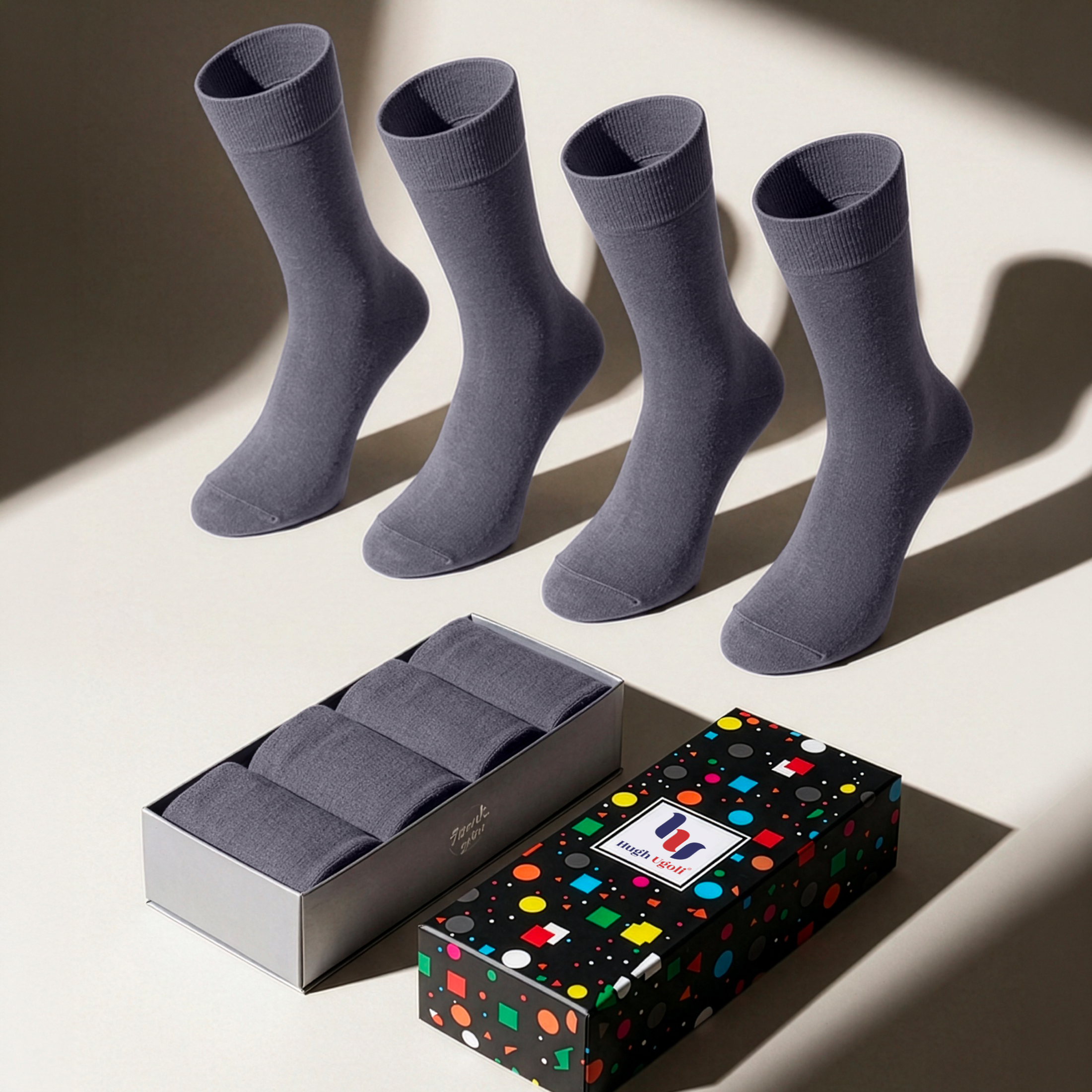
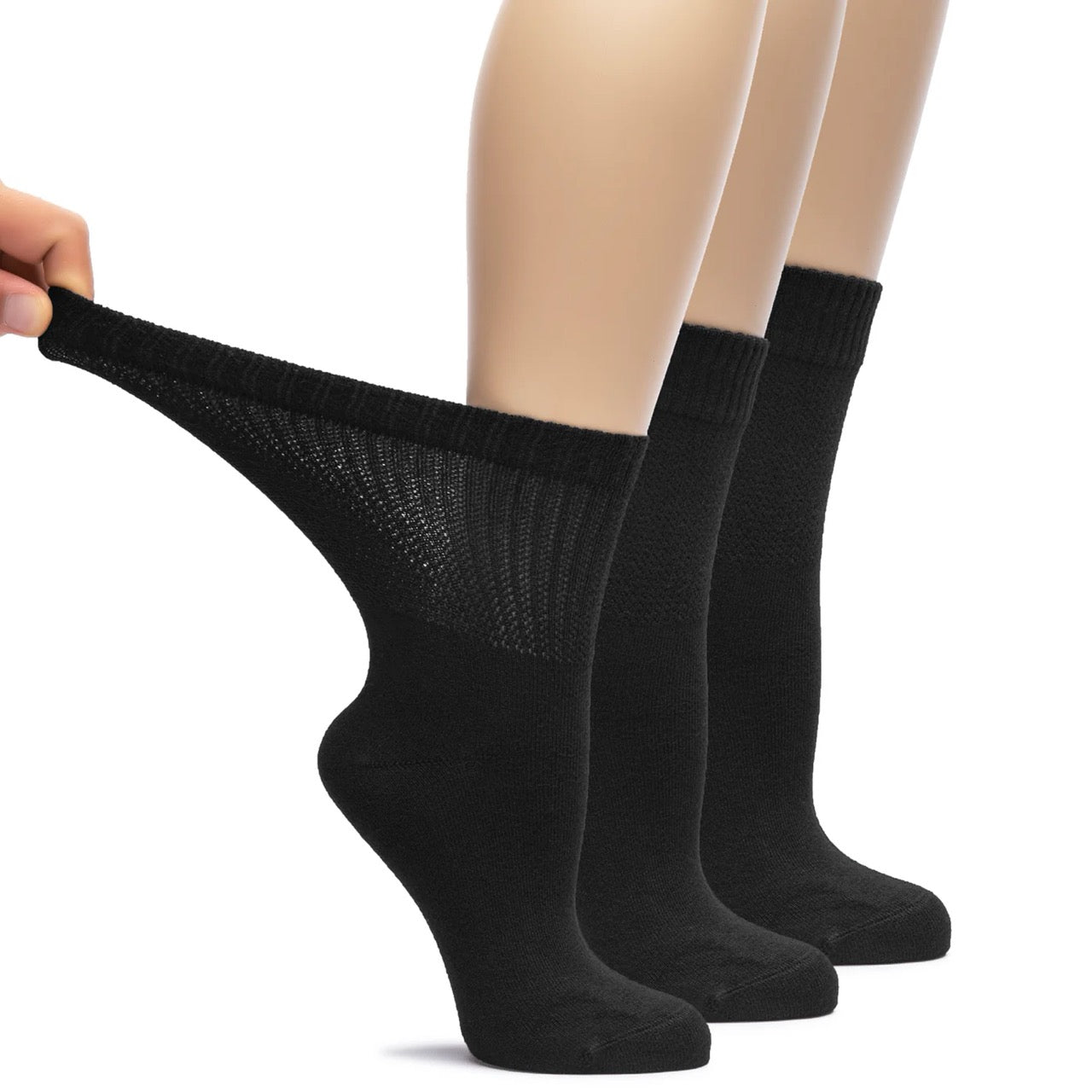
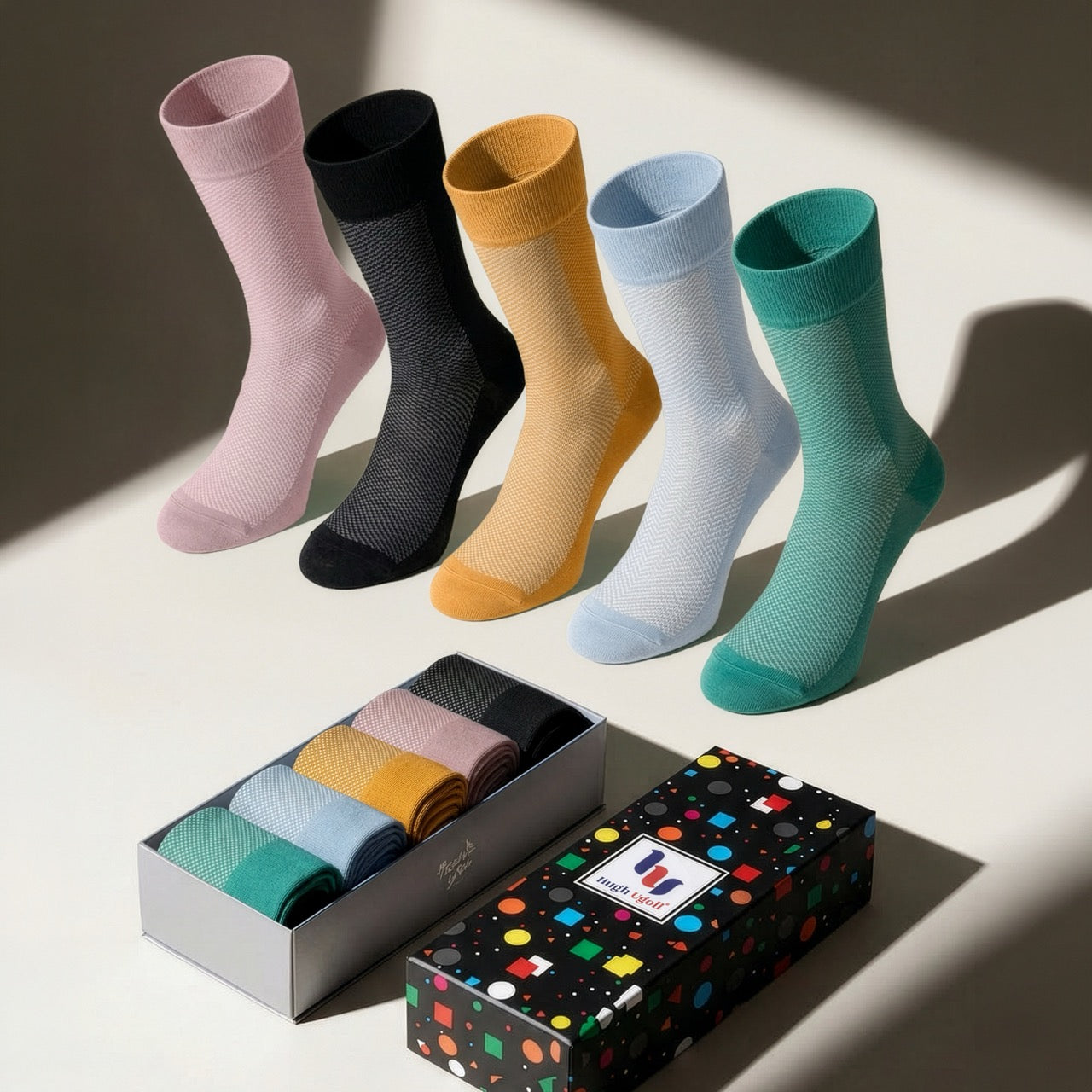
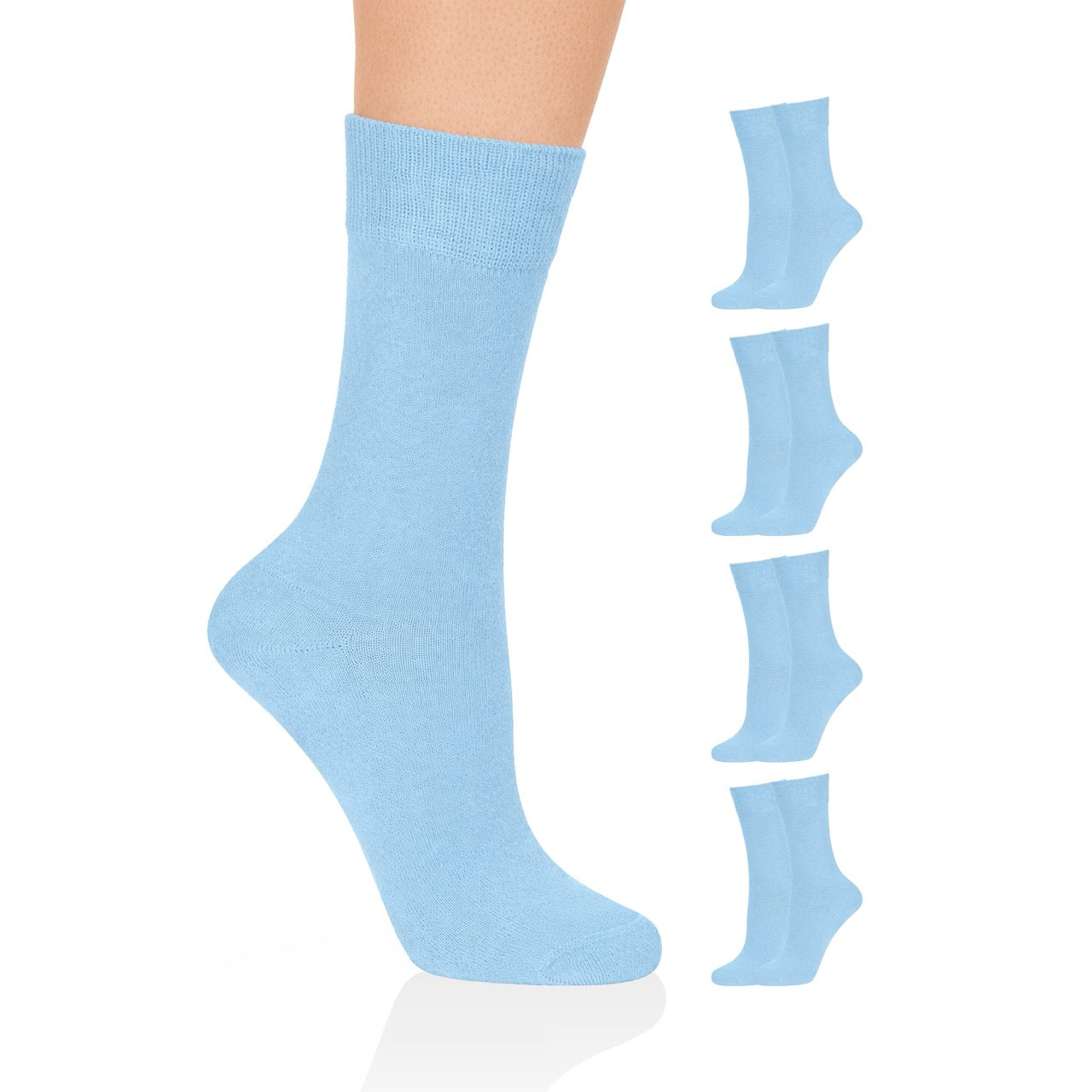
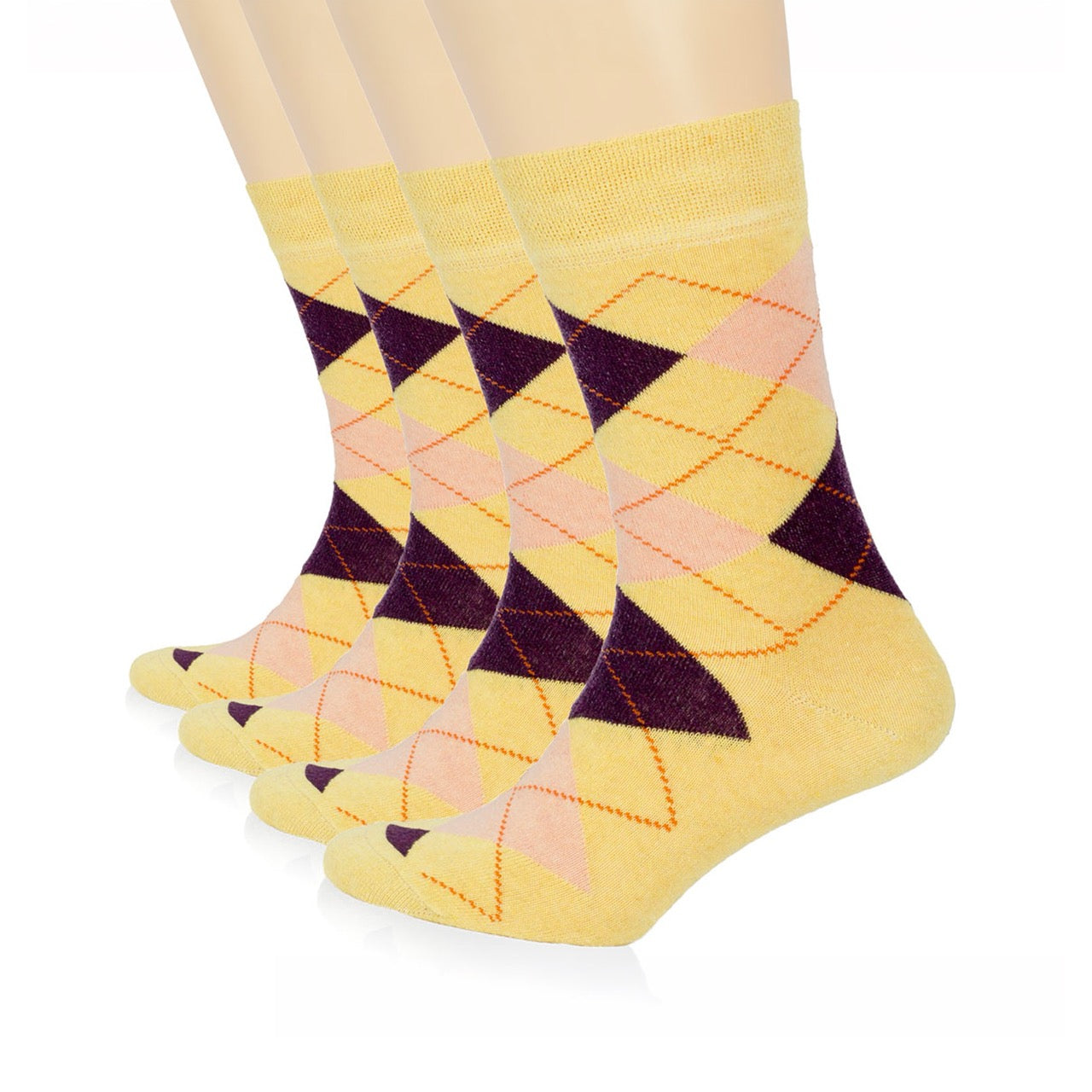
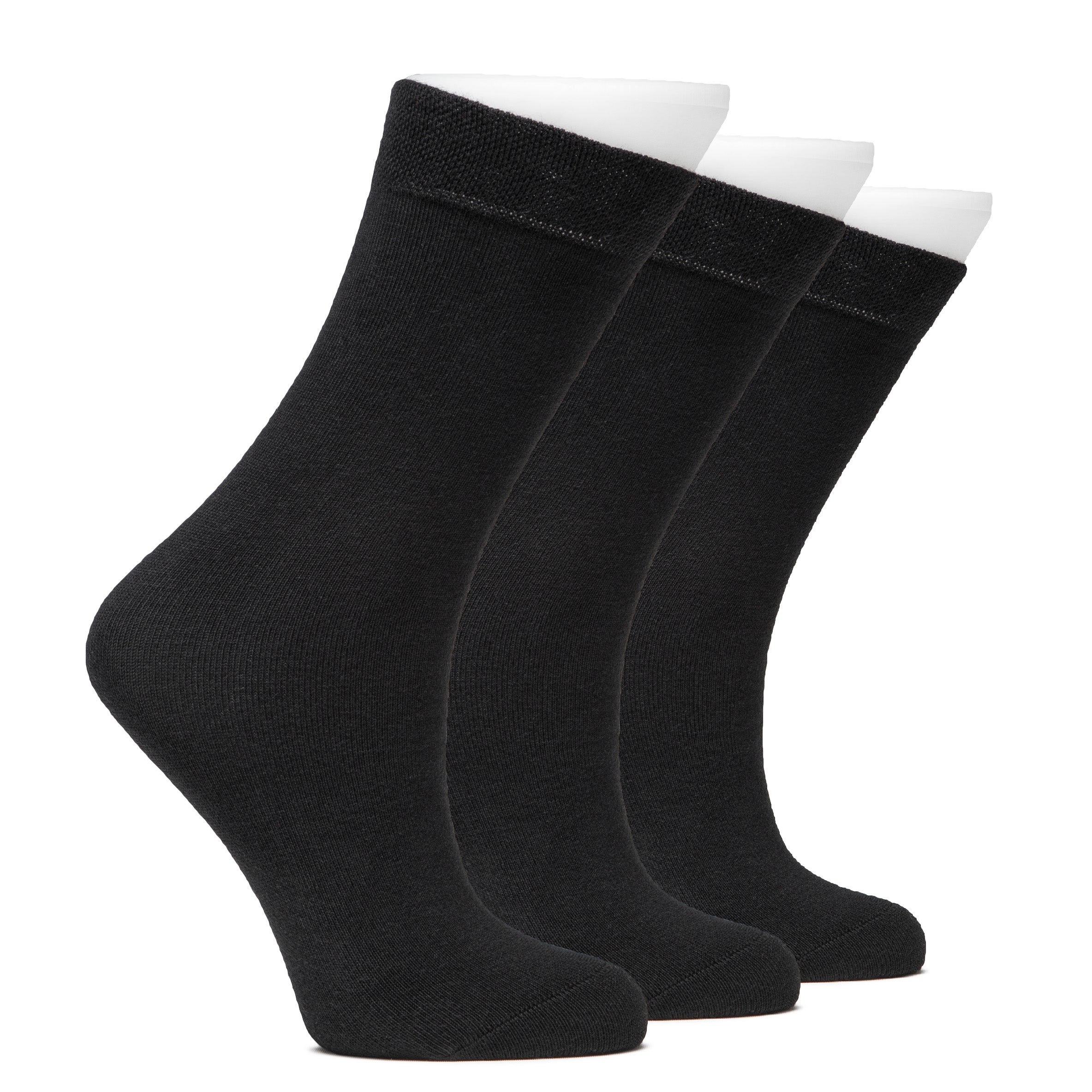
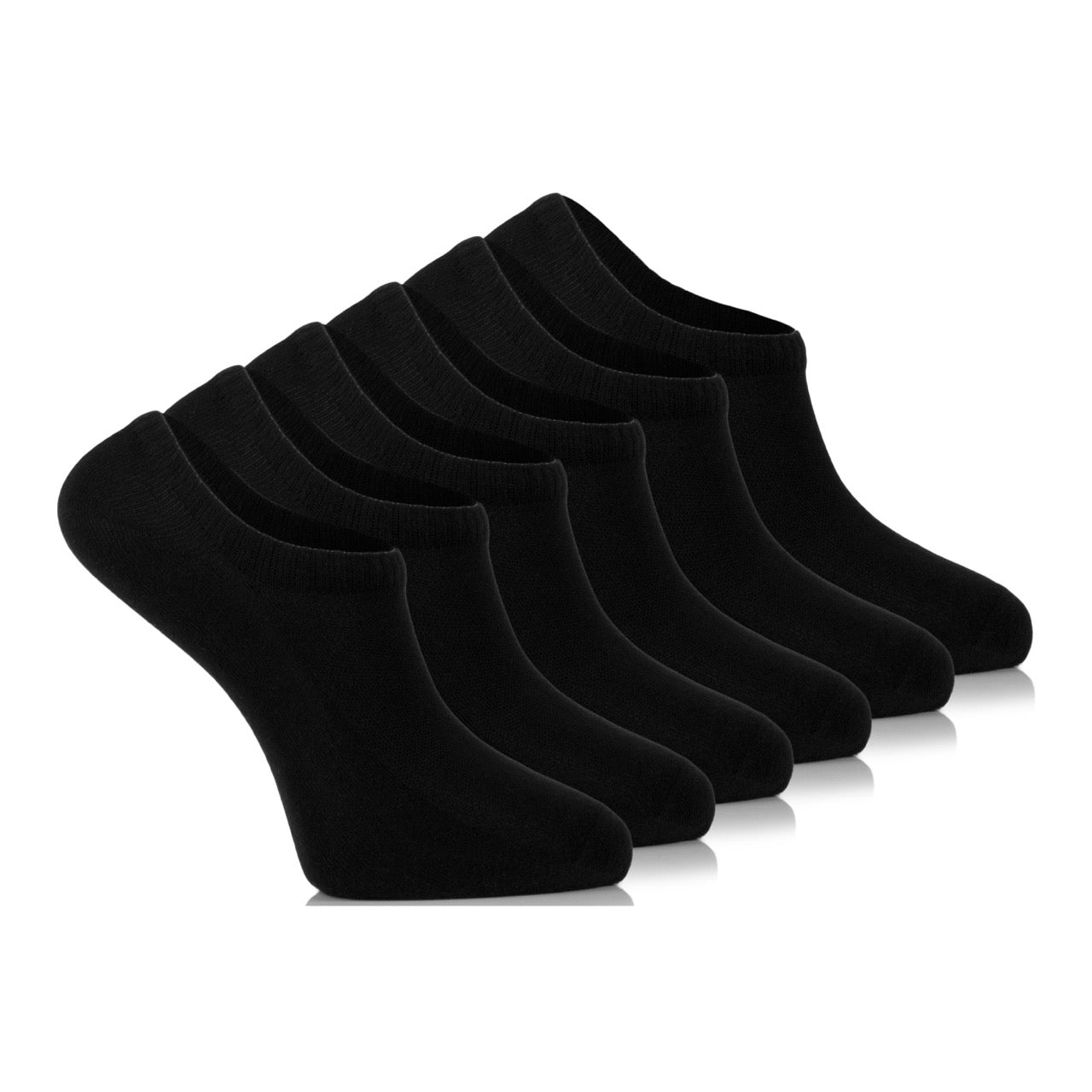
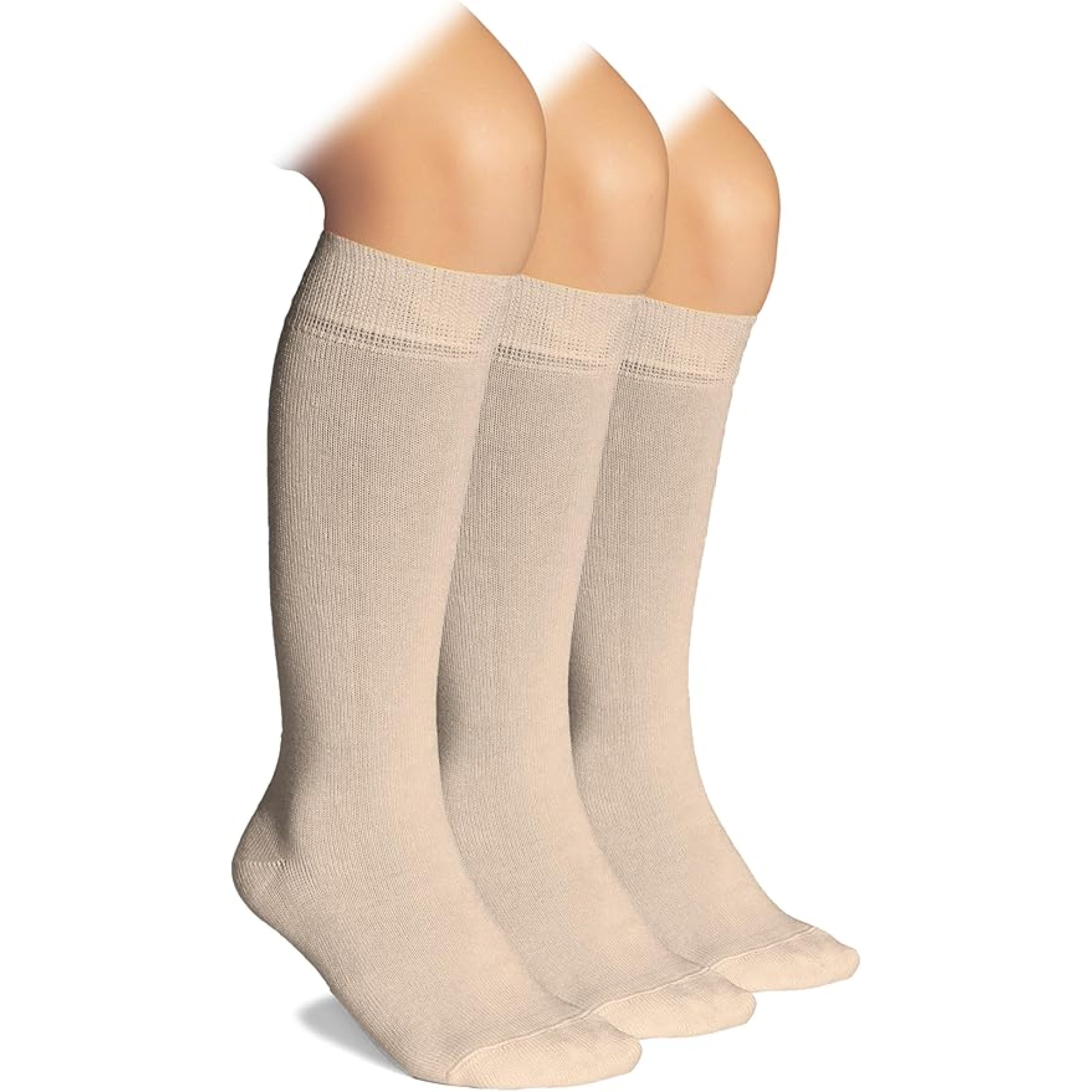


Socks for wheelchair users and people with limited mobility should have a non-binding top, a seamless or flat-linked toe, a wide stretchy opening, and a moisture-moving fibre such as cotton or bamboo viscose. Seated feet face a different set of problems from walking feet: fluid tends to settle at the ankle over a long day, pressure concentrates rather than rotating, and sensation may be reduced so a bunched sock or a digging cuff never gets reported. Buy for how your ankle measures at the end of the day rather than the start. And treat ease of dressing as part of the product — a sock with generous stretch and a smooth interior is far easier to manage one-handed or with a sock aid.
Key Takeaways
Most sock advice assumes you are walking. It talks about impact, arch support, step count, and how a sock performs over a long shift on concrete. If you use a wheelchair, or have limited mobility for any other reason, almost none of that applies — and some of it is actively wrong for your situation.
Seated feet have a different set of problems. Circulation slows in a limb that stays in one position. Fluid settles at the ankle over the course of a day. Skin that bears pressure against a footplate or a shoe does not get the relief that walking provides. And the sock itself has to be manageable — pulled on and off, possibly one-handed, possibly with limited reach, possibly by someone else.
This guide covers what actually matters for socks when you spend most of your day seated, what to look for, what to avoid, and how the practical business of getting them on and off shapes the choice as much as the fabric does.
When you walk, the muscles of the calf compress the deep veins with every step and help move blood back toward the heart. Seated, that pump is largely idle. Over a long day, fluid tends to accumulate in the lower leg and around the ankle. For many wheelchair users this is a normal daily pattern rather than a sign of anything wrong, but it does mean that a sock which fit comfortably at 8am can be leaving a deep ring by 6pm.
The practical consequence: buy for the end of the day, not the start of it. A cuff that is snug in the morning will be tight in the evening. This is the single most common sizing mistake in this category.
Walking distributes and rotates pressure constantly. Sitting concentrates it. For wheelchair users, the well-documented pressure concerns are at the seated contact points, and United Spinal's resource center on skin care and pressure sores is the clearest plain-language explanation of why position changes and regular skin checks matter more than any single piece of equipment.
At the foot, the specific concerns are the heel resting against a footplate or a bed surface, the tops of the toes against the shoe box, and the lateral edge of the foot if it rolls outward. A sock with a bulky toe seam or a thick internal ridge sits directly on top of two of those three.
For people with spinal cord injury, diabetes-related nerve changes, multiple sclerosis, or several other conditions, the foot may not report a problem in time. A sock bunched under the arch, a seam pressing into a toe, a cuff cutting in — none of these register the way they would otherwise. United Spinal's skin care guidance is direct about this: check skin visually at least twice a day, because loss of sensation makes it hard to perceive pressure and pain.
That reframes the sock's job. It is not just comfort. A sock that lies flat and has nothing in it to press into skin removes a whole category of thing you would otherwise have to notice.
This is the factor most sock guides skip entirely. A sock that is wonderful once it is on but requires two hands, a full forward bend, and significant grip strength is not a good sock for someone who cannot easily do those things. Occupational therapists work on exactly this problem — the American Occupational Therapy Association describes adaptive equipment and dressing technique as core parts of what occupational therapy addresses, and a sock aid is one of the most commonly prescribed dressing devices there is.
Practically, that means the sock's opening width, stretch, and cuff behavior matter as much as its cushioning.

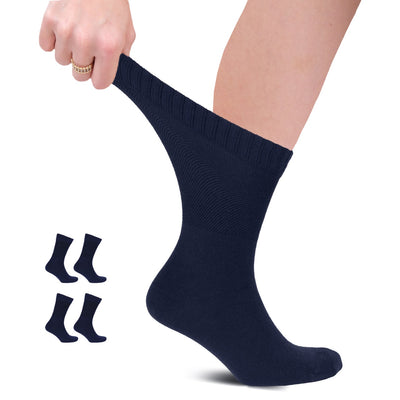
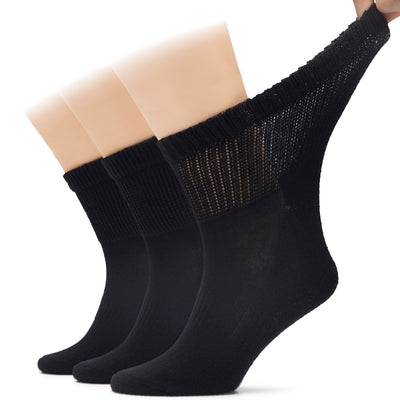
This is the headline feature. A non-binding cuff uses a wider band of gentler, more distributed stretch instead of a narrow, aggressive elastic. It holds position without creating a compression ring. For anyone whose ankle changes size across the day, this is the difference between a sock that remains comfortable at 7pm and one that has to come off at 3pm.
Non-binding is not the same as loose. A properly made non-binding top still stays up; it just distributes its grip over a wider area. Our explainer on what non-binding diabetic socks are covers how this is actually knitted.
A conventional toe seam creates a ridge that sits across the tops of the toes — precisely where a shoe presses down. A hand-linked or seamless toe removes it. If sensation is reduced, this matters more, not less, because you may not get the early warning that would normally make you adjust.
For independent dressing, the opening is the whole game. A sock that stretches generously and recovers well can be worked onto the foot with less grip and less reach. A stiff cuff with limited stretch demands more of both. If you use a sock aid, a sock with good stretch and a smooth interior slides off the aid much more easily than a thick, textured one.
Ankle and quarter lengths are easier to manage, cooler, and generally the default. Crew length gives a little more protection against a footplate or a wheelchair frame contacting bare skin at the ankle, and some people prefer that. Knee-highs are usually only worth the extra effort if there is a specific reason for them.
A foot that does not move still sweats, and a seated foot in a shoe often has less air exchange than a walking one. Cotton and bamboo viscose both move moisture away from skin far better than heavy synthetics. This matters for skin integrity, not just comfort.
Light-coloured socks make it easier to see drainage, bleeding, or discharge you might not feel. This is the reason so many socks in this category are white or cream, and it is a genuinely useful property rather than a marketing point.
| Avoid | Why |
|---|---|
| Tight-ribbed athletic cuffs | Designed to resist a running foot pulling the sock down. Leaves a deep ring on a seated leg where there is no such force. |
| Bulky internal seams | Concentrate pressure at a fixed point on skin that is not getting relief from movement. |
| Heavy acrylic or polyester | Holds heat and moisture against skin all day with no walking airflow. |
| Socks sized by "one size fits all" | Almost always means the cuff is tuned for an average ankle, which is not helpful if yours changes size. |
| Anything worn until it is thin | A sock that has lost its cushioning and cuff recovery has stopped doing its job. Replace on condition, not on a schedule. |
| Graduated compression without guidance | Compression is a clinical tool with specific indications. Whether it is right for you, and at what pressure, is a conversation with your clinician — not a shelf decision. |
That last point is worth expanding. Compression and non-binding socks are often shelved next to each other and sometimes confused, but they do opposite things: compression applies deliberate graduated pressure, non-binding deliberately removes it. We wrote about the distinction in compression vs non-binding for varicose veins, and it applies directly here.
These are the techniques that come up most often from occupational therapists and from people who have solved this for themselves.
Roll rather than pull. Gather the sock down to the toe first so you are working with a short tube rather than a long one, place it over the toes, then unroll up the foot. This needs far less grip strength than pulling a full-length sock on.
Use a sock aid if reach is the limiting factor. A sock aid is a shaped plastic or fabric cradle with long straps: you load the sock onto it, drop it to the floor, slide your foot in, and pull the straps. It removes the forward bend entirely. Thin, stretchy socks load onto one far more easily than thick cushioned ones, which is worth factoring into your purchase.
Dress in the chair or on the bed, whichever gives better positioning. Many people find crossing one ankle over the opposite knee — if that is available to you — brings the foot into far easier reach than bending forward to the floor.
Buy identical multipacks. When every pair in the drawer is the same, a lost or worn sock does not orphan its partner, and you never have to sort. It sounds trivial. It removes a daily task.
Change socks daily, and more often if feet get damp. Fresh socks are one of the lowest-effort things in a skin-care routine.
Pair sock changes with a skin check. Taking the sock off is already a moment when the foot is exposed and in your hands. Building the visual check into that moment means it actually happens. If you have diabetes as well, our 60-second daily foot check is a workable routine.
The socks that work best here are usually the ones marketed as diabetic socks, because that category was built around exactly these construction features: non-binding tops, seamless toes, moisture-moving fibers, light colors. You do not need to have diabetes to benefit from that construction — we covered that question in is it OK to wear diabetic socks if you are not diabetic.
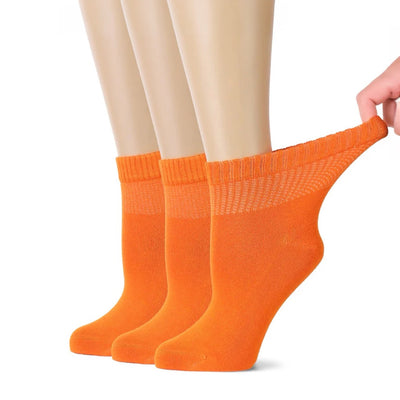
If ankle swelling is the main issue, look for something explicitly built with extra room through the foot and ankle. Our Women's Comfortable Diabetic Bamboo Ankle Socks for Swollen Legs are designed with that in mind. For a simpler everyday option in cotton, the Unisex Cotton Diabetic Crew Socks cover most of the bases in a crew length.
If you want some cushioning under the heel — useful where the heel rests against a footplate or a bed surface for long periods — the Men's Diabetic Ankle Semi-Cushion Cotton Socks add padding without the bulk of a full athletic sock. And for a thinner, cooler option that loads easily onto a sock aid, the Women's Cotton Diabetic Ankle Socks are about as easy to manage as this category gets.
For wider calves, standard sizing often does not work and the cuff becomes the problem regardless of how gentle it is. Our guide to bariatric socks for extra wide calves covers that specific fit problem.
Several adjacent problems overlap heavily with this one, and the advice transfers.
If you take one thing from this article, make it these six checks before buying:
If you are working with an occupational therapist or a physical therapist, bring a pair to your next session. They can tell you in about ninety seconds whether the fit, the cuff, and the dressing method are working for your specific situation — and that is a far better assessment than any article can offer.
Browse the full range in our diabetic socks collection, or narrow to diabetic socks for women and diabetic socks for men.
This article is for general information and is not medical advice. Talk to your healthcare provider about your own feet.
Look for a non-binding top, a seamless or flat-linked toe, generous stretch at the opening, and a cotton or bamboo viscose blend. Socks sold as diabetic socks usually have all four, because that category was built around exactly these construction features.
Walking uses the calf muscles to help move blood back toward the heart. Seated, that pump is largely idle, so fluid tends to settle in the lower leg over the course of a day. For many wheelchair users this is a normal daily pattern, but it means sock sizing should be based on the end of the day.
A sock aid — a shaped cradle with long straps — removes the forward bend entirely: load the sock on, drop it to the floor, slide your foot in, pull the straps. An occupational therapist can fit one to your situation and show you the technique.
That depends on your clinical situation and is a decision to make with your healthcare provider, not from a shelf. Compression is a specific tool with specific indications, and the right pressure level varies. Non-binding socks do the opposite job.
Daily at minimum, and more often if your feet get damp. Fresh socks are one of the lowest-effort parts of a skin-care routine, and each change is a natural prompt to look at your feet.
Discover All Hugh Ugoli Socks
Shop All Socks