Cart
0
You may also like

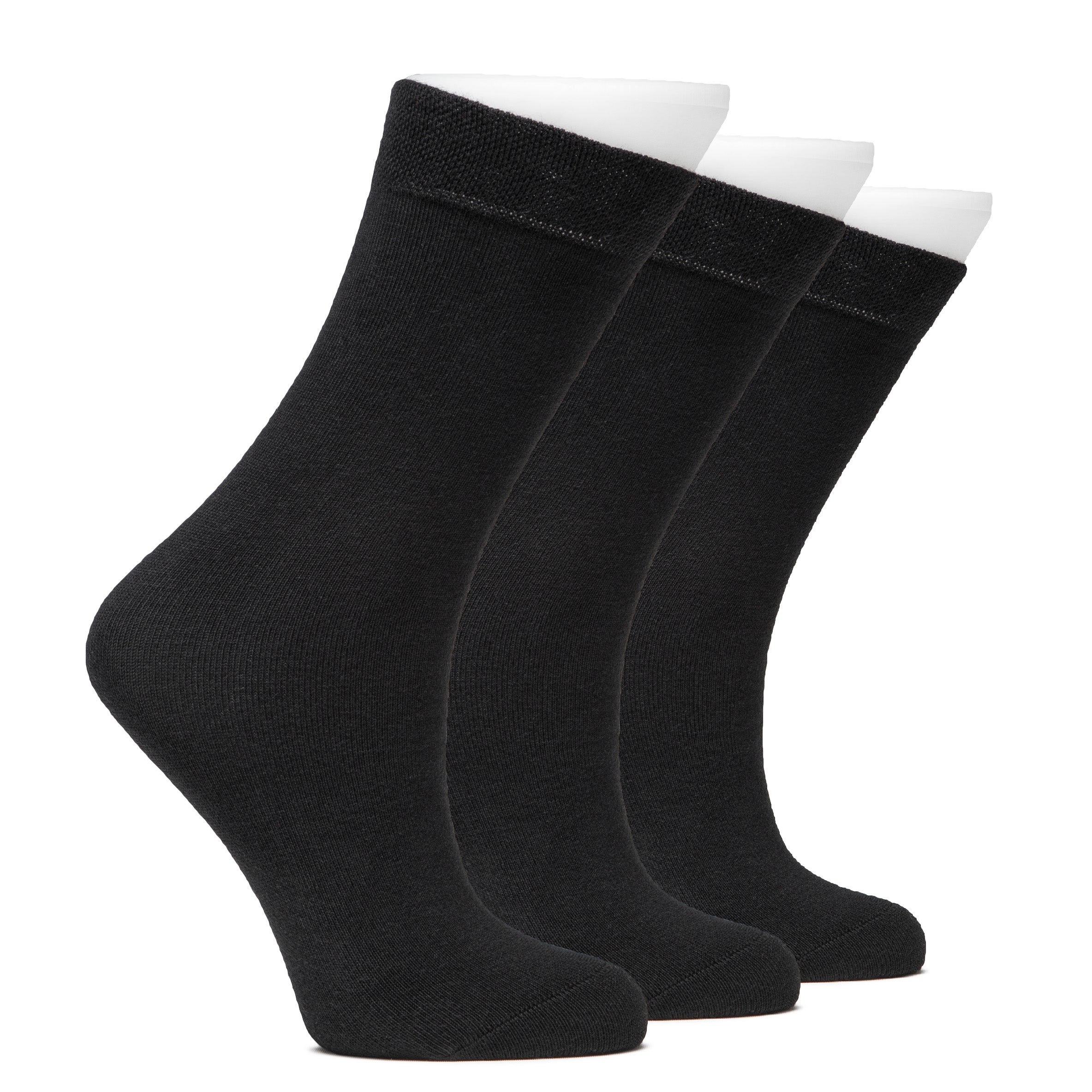
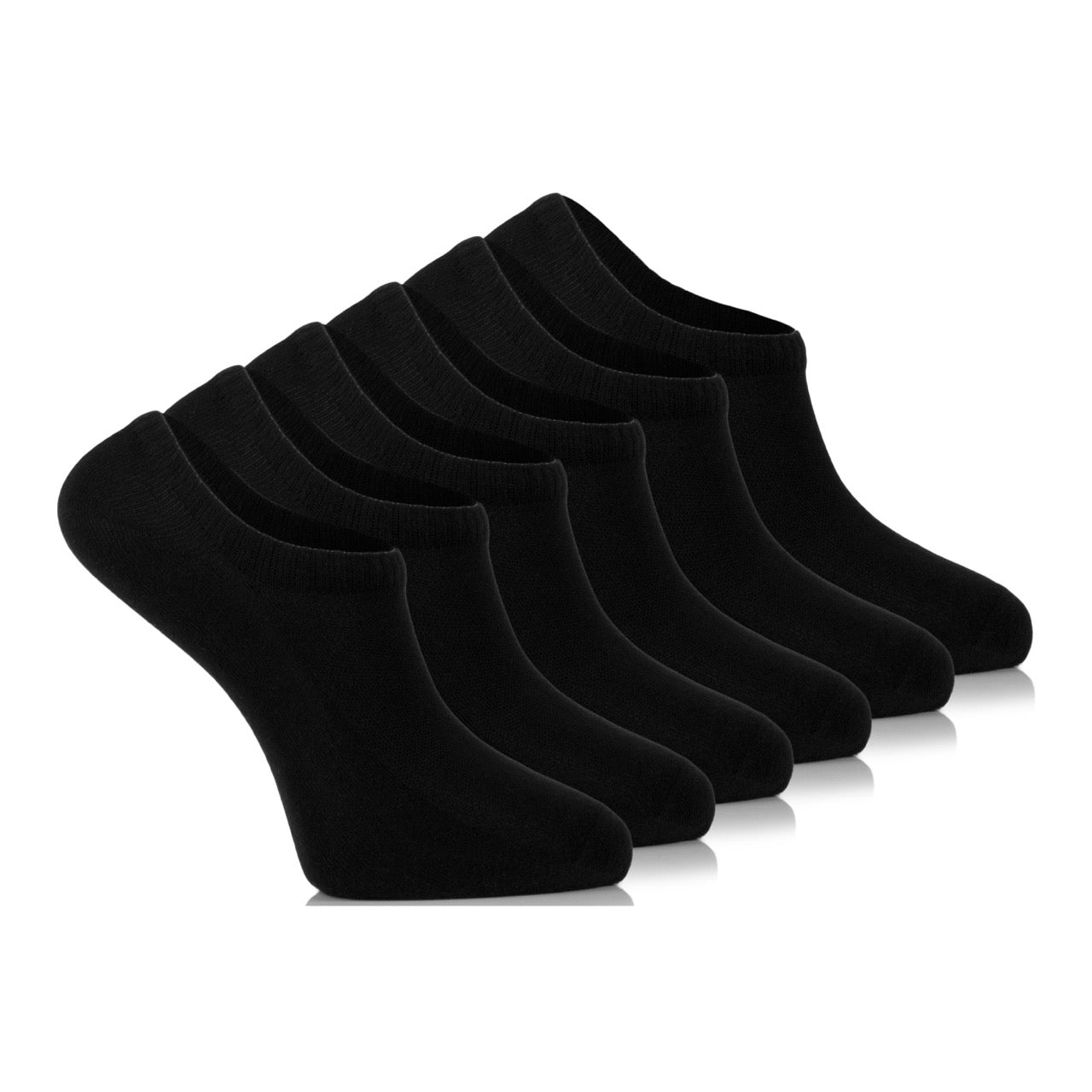
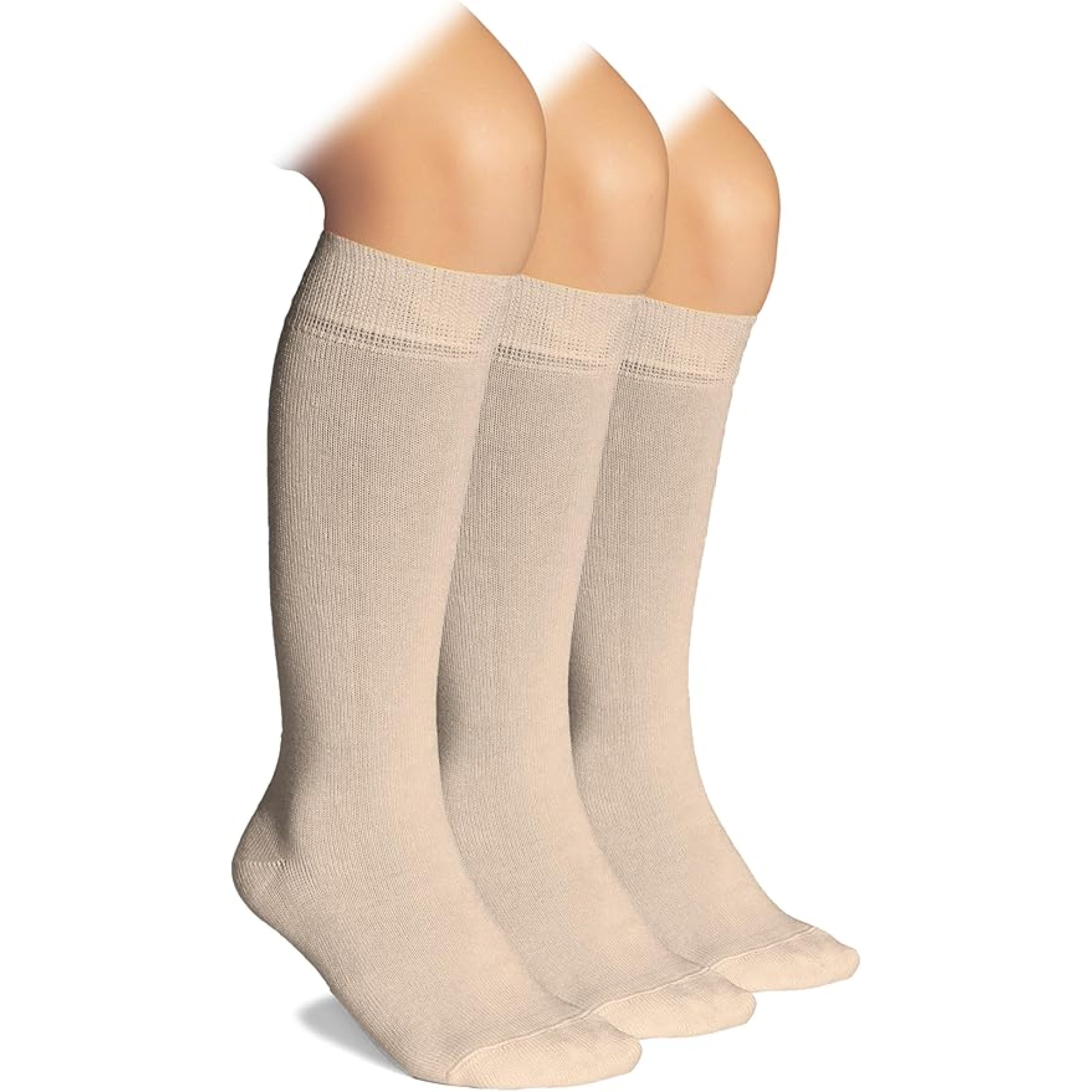


Daily foot inspection is one of the most consistently recommended practices in diabetes management — included in guidelines from the American Diabetes Association, the National Institute of Diabetes and Digestive and Kidney Diseases, and the CDC's diabetes resources. For good reason: the combination of peripheral neuropathy and reduced circulation that commonly accompanies diabetes means that small injuries, developing pressure sores, or early skin changes may go unnoticed without a deliberate check. By the time such issues cause symptoms that are felt, they may already be advanced enough to require significant medical intervention.
The challenge is that daily foot inspection gets recommended in guidelines but rarely gets explained in practice. What exactly are you looking for? In what order? What's normal and what's a reason to call your provider? Most people with diabetes leave a healthcare appointment understanding that they should check their feet daily without a clear sense of how to do it efficiently and what to do with what they find. This article provides a structured, step-by-step approach that takes approximately sixty seconds and covers the most clinically relevant signs to look for.
Peripheral neuropathy — damage to the nerves that serve the feet and lower legs — is among the most common diabetes complications. According to the National Institute of Diabetes and Digestive and Kidney Diseases (NIDDK), roughly half of all people with diabetes may have some form of peripheral neuropathy. When neuropathy affects the feet, it may reduce or eliminate the normal pain signals that would otherwise alert a person to injury, pressure, or friction.
This creates a practical problem: a small blister from a shoe rubbing, a minor cut, or a developing callus that would normally be felt and addressed may go completely unnoticed in feet with reduced sensation. Without early detection, these minor issues can progress. Reduced circulation — another common diabetes complication — slows the healing process further, which means that wounds that would heal quickly in a person without diabetes may take much longer or may not heal well without intervention.
The CDC emphasizes that most serious diabetic foot complications are preventable with consistent foot care, including daily self-examination. The purpose of the daily check is early detection — catching changes when they're small enough to be addressed with simple interventions rather than when they've become more serious. A sixty-second inspection done consistently every day provides the monitoring window that makes early detection possible.
The daily foot check is most useful when done at a consistent time that fits naturally into an existing routine. Bathing is a logical moment — the feet are already bare, already in good light (if you've positioned yourself well), and the check can be done immediately before or after. Some people find that doing the check at the end of the day works well because they're removing shoes and socks anyway; others prefer the morning, before putting footwear on.
The specific time matters less than the consistency. Choose a time that is realistic to maintain every day without requiring extra effort to remember. If the check becomes associated with an existing habit — showering, putting on socks, watching the evening news — it's more likely to happen reliably than if it requires a separate decision each day.
Good lighting is essential. A dim bathroom or a shadowed bedroom floor will cause you to miss things that should be visible. A bright overhead light is ideal; a handheld mirror and a flashlight or phone torch can compensate if overhead lighting in your usual check location is inadequate.

This sequence is designed to cover the most clinically relevant areas efficiently and consistently. Work through the steps in the same order each time — consistency in sequence reduces the likelihood of missing any area.
With your feet flat on the floor or resting on a stool, look at the tops of both feet. You're looking for:
The top of the foot is easier to see without repositioning, so start here. Swelling that's asymmetric — one foot noticeably more swollen than the other — is a finding worth discussing with your healthcare provider, as it can indicate circulatory or inflammatory issues that may need evaluation.
Gently spread each set of toes and look into the spaces between them. The between-toe skin is a common location for moisture accumulation and for developing skin issues that are completely hidden from a surface-level view. Look for:
Between the toes is one of the most commonly overlooked areas in casual foot inspection and one of the most important to check. Fungal infections in this space are common in people with diabetes and, if left untreated, can develop into more significant skin breakdown.
Checking the soles requires a different position: sit in a chair, cross one leg over the other at the knee so the sole faces up, and examine it directly. If this position is uncomfortable or not possible, use a mirror placed on the floor below your raised foot, or a handheld mirror. People with limited mobility may need to ask a family member or caregiver to help with this part of the check.
On the sole, look for:
The heel and ball of the foot are high-pressure zones that are particularly susceptible to callus formation. According to the American Diabetes Association's foot health resources, calluses in people with diabetes may require professional treatment — do not attempt to cut calluses yourself, as this can create an open wound that is slow to heal in the diabetic context.
The heels deserve specific attention beyond what's visible in the sole check. Heel cracking — fissures in the skin at the heel edge — is common in people with diabetes and can develop from surface-level dryness into deeper cracks that reach the dermis. Deep heel fissures can bleed and, in the diabetic context, can become entry points for infection that may heal slowly.
Look at the heel from multiple angles: the back of the heel directly, the outer edges, and the junction between the heel pad and the heel's skin. You're looking for any cracking, any skin that's peeling or separating, and any areas of discoloration or bleeding within the heel tissue.
Look at all ten toenails for:
Nail changes may indicate fungal nail infection, which is more commonly associated with diabetes. Thickened or distorted nails can create pressure points inside shoes. Ingrown toenails in people with diabetes may benefit from professional management rather than home treatment — recommend consulting a healthcare professional before attempting home care.
Finish the check by running your hands lightly over the top and sides of each foot. You're feeling for:
The temperature test is particularly useful because areas of active inflammation often run warm before there are visible skin changes. Comparing the temperature of both feet — and of different areas on the same foot — takes only seconds and can sometimes catch changes that aren't yet visible.
Part of making daily foot checks valuable is knowing what to do with findings. Not everything that looks slightly different requires an urgent call — but some findings warrant prompt contact with your healthcare provider rather than a wait-and-see approach.
Contact your healthcare provider promptly if you find:
Your healthcare provider or podiatrist can also advise on how often professional foot exams are recommended given your specific situation — the NIDDK notes that people with diabetes may benefit from professional foot exams at every healthcare visit or at least annually, depending on their risk level.
Daily foot inspection identifies existing issues; daily foot protection helps prevent new ones from developing. The sock you wear each day is one of the most consistent points of contact between your foot and its environment, and the construction features of that sock can either support the protective environment you're trying to maintain or work against it.
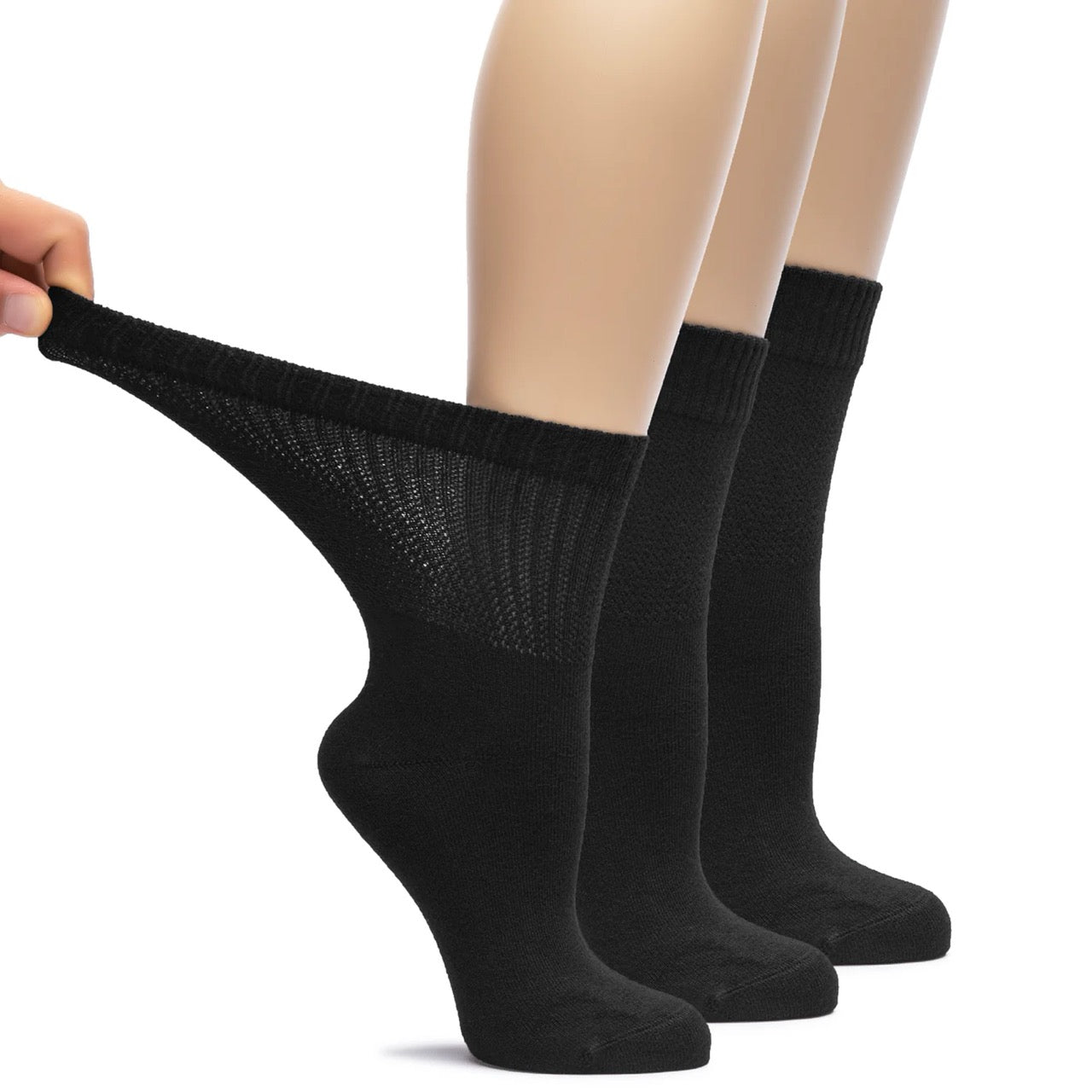
Socks designed for people with diabetes commonly incorporate non-binding cuffs (to avoid restricting circulation at the ankle), seamless toes (to eliminate the pressure ridge that standard toe seams create against the toe tips), and moisture-wicking fibers (to help keep the foot dry and reduce the risk of skin breakdown from prolonged moisture contact). A thin bamboo ankle sock with a non-binding top and seamless toe construction incorporates these features — non-constricting at the ankle, smooth at the toe, moisture-managing throughout the day. For men, the same design is available in a bamboo ankle sock with non-binding cuff construction. Recommend consulting a healthcare professional about footwear choices appropriate for your individual situation.
Putting on a clean pair of appropriately designed socks each morning is a simple practice that works alongside the daily foot check — the check identifies what may have developed overnight or from the previous day's wear; the clean sock provides a fresh protective layer for the day ahead. Together, the two practices take less than two minutes and form the core of a practical daily foot care routine.
Most people who don't do daily foot checks don't skip them because they decided not to — they skip them because the habit never became automatic. A few common barriers and practical ways to address them:
For people with reduced flexibility, excess weight, or other mobility limitations, seeing the soles of the feet directly can be genuinely difficult. Placing a mirror flat on the floor and looking down at it while sitting in a chair is the standard workaround. A long-handled mirror specifically designed for foot inspection is available from many medical supply retailers. If neither option is workable, asking a family member or caregiver to assist with this part of the check is a practical solution that maintains the consistency of the inspection.
Foot checks that require a separate deliberate decision each day are harder to maintain than checks that are attached to an existing routine. Pairing the check with bath time or sock removal removes the decision point — the trigger for the check is already happening daily. A sticky note in the bathroom or a daily phone reminder can provide support during the habit-formation period until the check becomes automatic.
The most consistent aspect of diabetic foot complications that become serious is that they start as something small that went unnoticed. The daily check is valuable specifically because it establishes the baseline that makes changes detectable when they do occur. The days when nothing turns up are still worthwhile.
A daily diabetic foot check doesn't require specialized equipment or more than sixty seconds. It requires a consistent routine, adequate lighting, a systematic approach that covers all surfaces of both feet, and clear criteria for when findings warrant contact with a healthcare provider. The sixty-second sequence outlined here — tops, between toes, soles, heels, nails, and a hands-on temperature check — covers the areas most likely to show early changes and provides a practical framework that can be maintained every day. Combined with appropriate footwear and socks that minimize daily friction and pressure, it forms the foundation of a foot care routine that supports the early detection that makes diabetic foot complications more manageable when caught early.
This article is for general information and is not medical advice. Talk to your healthcare provider about your own feet.
Daily foot inspection is the standard recommendation from the American Diabetes Association, NIDDK, and CDC diabetes guidelines. Daily inspection is recommended because diabetic peripheral neuropathy may reduce pain sensation in the feet, meaning that developing blisters, cuts, or pressure sores may go unfelt. Professional foot exams at healthcare visits are also recommended, but they complement rather than replace daily self-inspection.
The key things to check in a daily foot inspection are: any new cuts, scratches, or abrasions; redness or warmth, particularly if asymmetric between the two feet; swelling; between-toe skin for cracking, peeling, or maceration; heel skin for fissures or cracking; toenails for discoloration, thickening, or ingrowth; and the soles for calluses, blisters, or any area of skin breakdown. Running your hands over both feet to feel for areas of unusual warmth completes the check.
Contact your healthcare provider promptly for any wound that is not healing, any area of spreading redness, any wound with drainage or odor, or any new dark discoloration. Minor cuts without signs of infection can be cleaned gently with soap and water and covered with a clean bandage — but if there is no improvement within 24–48 hours, or if the area worsens, professional evaluation is recommended. Recommend consulting a healthcare professional before attempting home treatment for anything beyond the mildest surface injury.
Yes. A mirror placed flat on the floor, with the foot positioned above it, allows you to see the sole without requiring the flexibility to cross one leg over the other. Long-handled mirrors designed specifically for foot inspection are available from medical supply stores and some pharmacies. If using a mirror is not practical, a family member or caregiver can assist with the sole and heel inspection.
Socks designed for people with diabetes — with non-binding cuffs, seamless toes, and moisture-wicking fibers — are commonly recommended by healthcare providers as part of a daily foot care routine. The non-binding top may help support healthy circulation at the ankle; the seamless toe eliminates the pressure ridge that standard toe seams can create against the toe tips; and moisture-wicking fibers may help keep the foot dry, reducing the risk of moisture-related skin breakdown. These features are commonly associated with better daily foot comfort for people with diabetes. Recommend consulting a healthcare professional about footwear choices appropriate for your specific situation.
He has been working for more than 20 years in the textile industry and has work experience in many parts of the world.