
Cart
0
You may also like
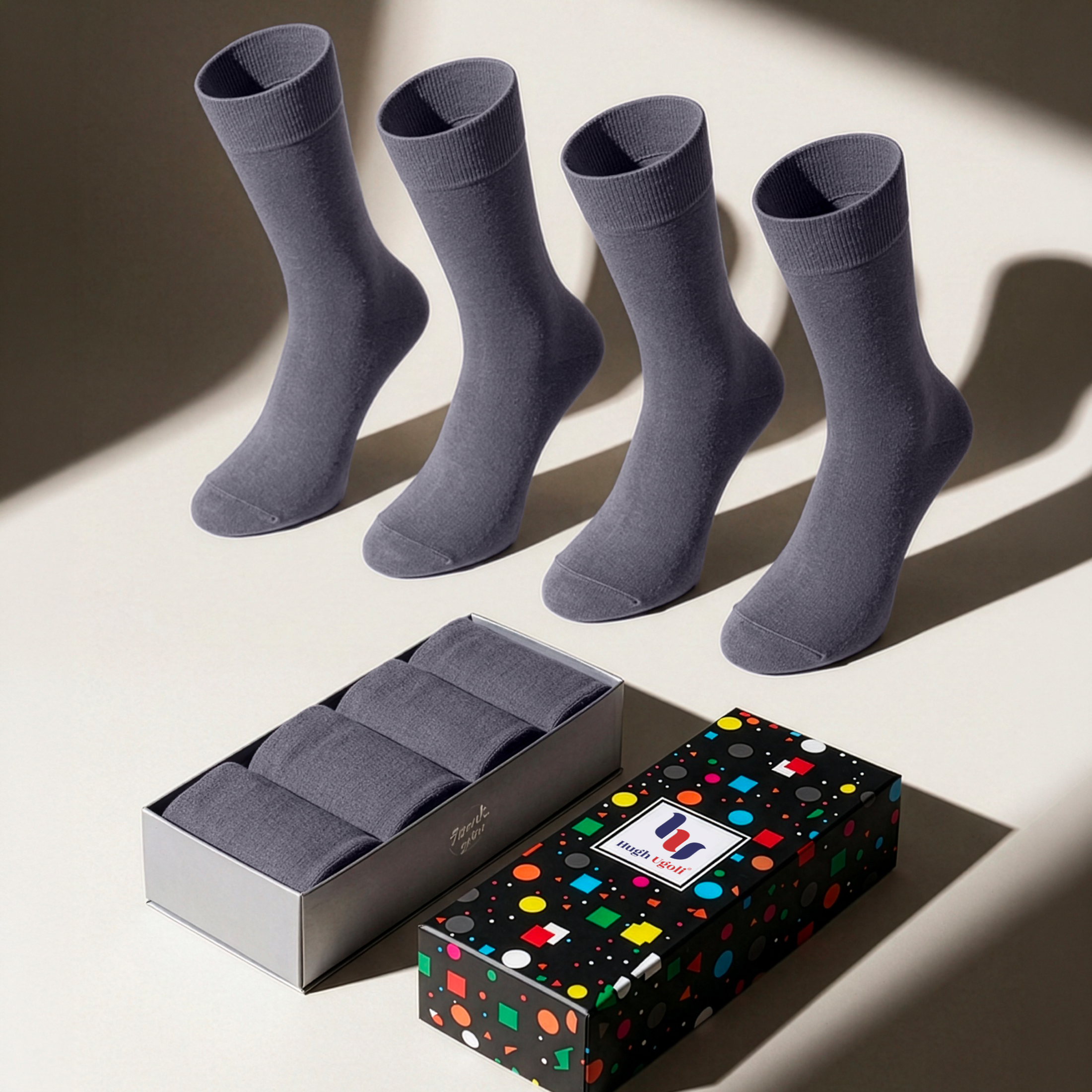
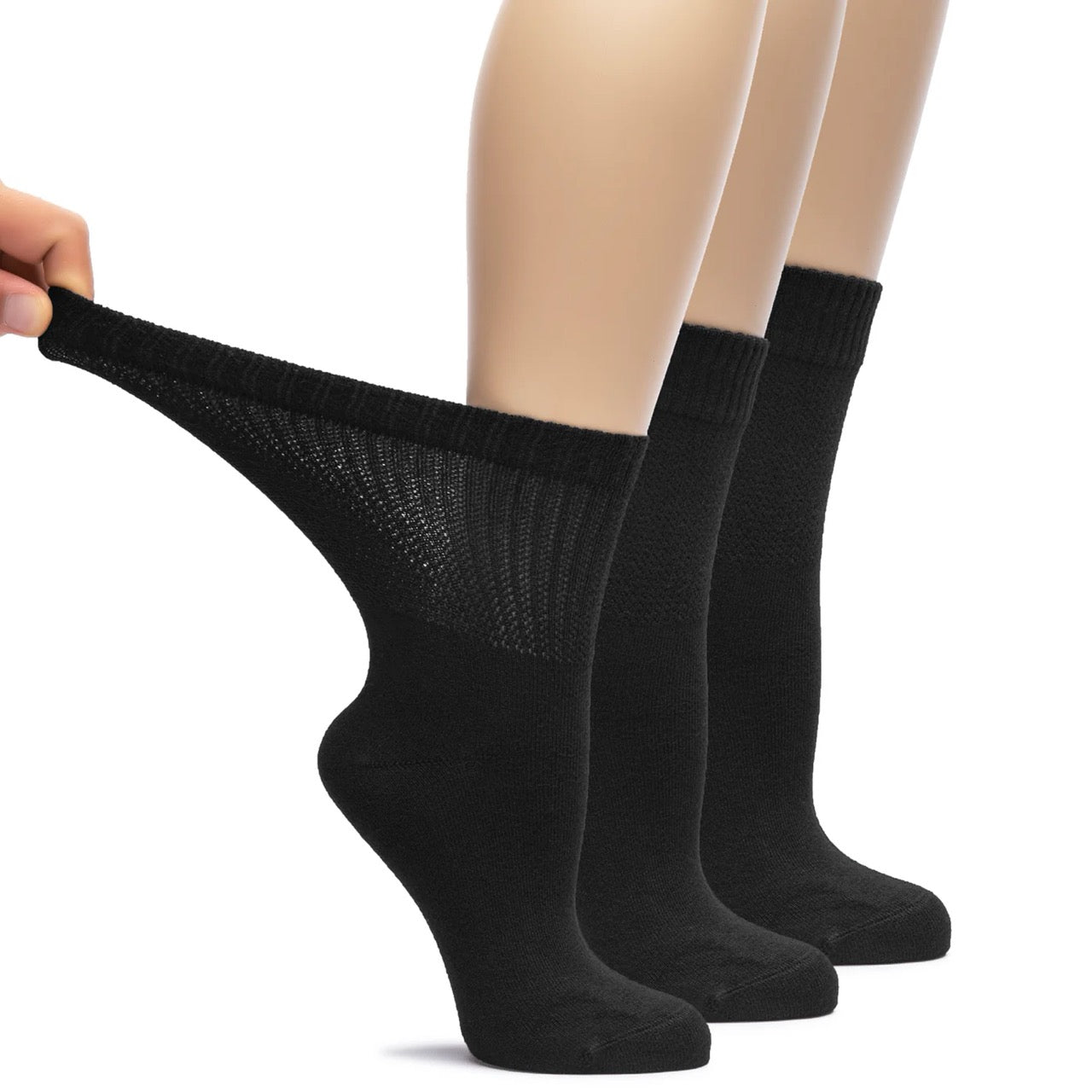

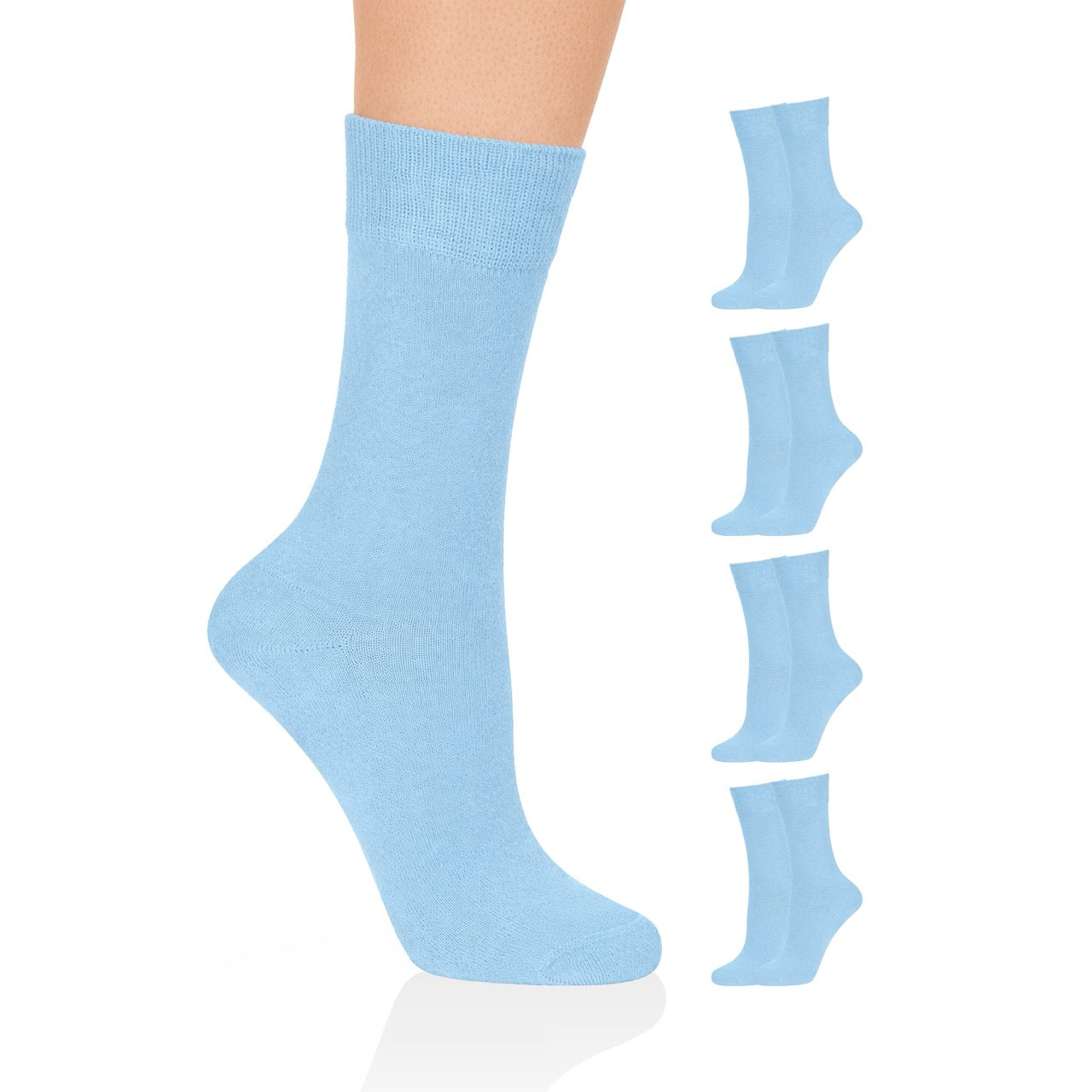
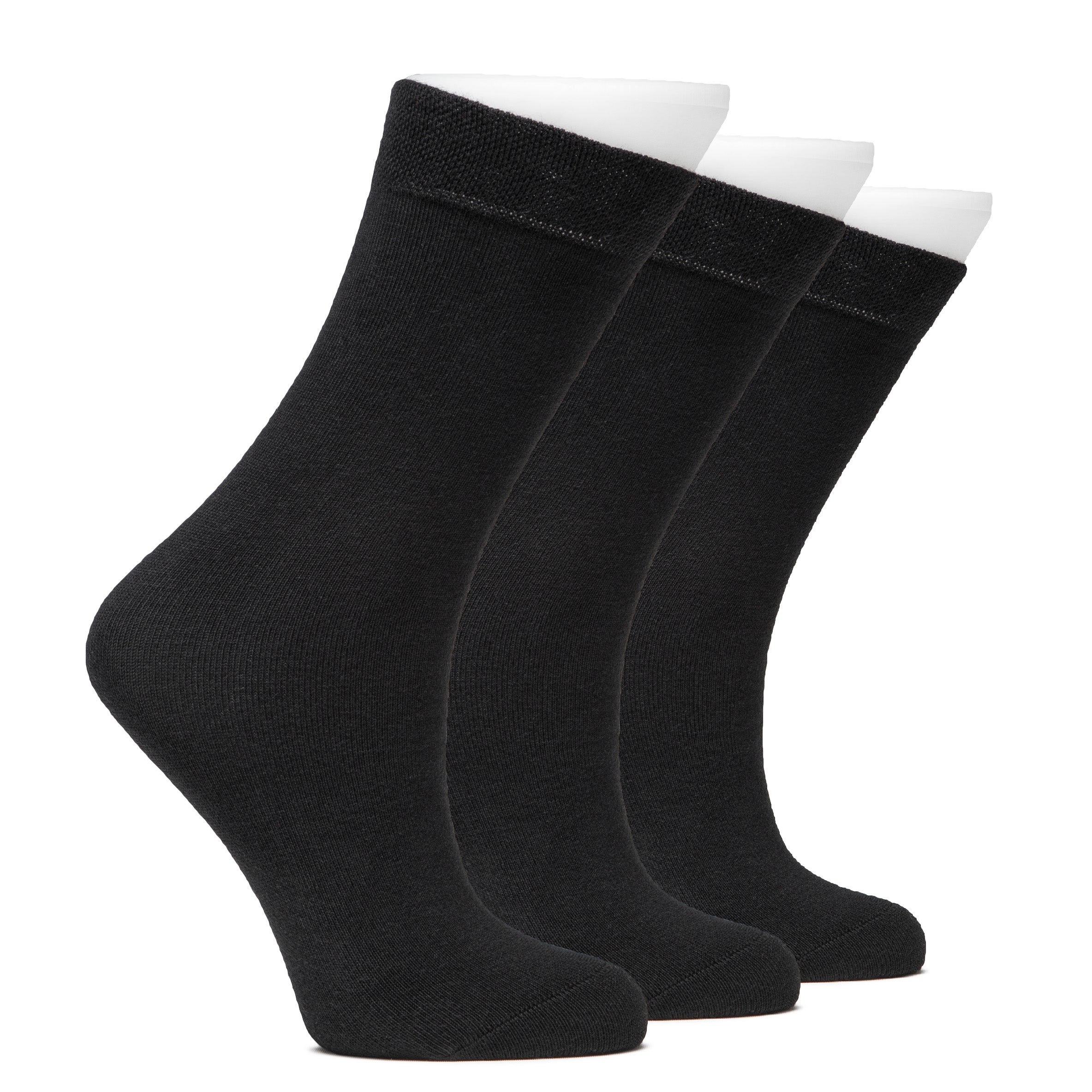
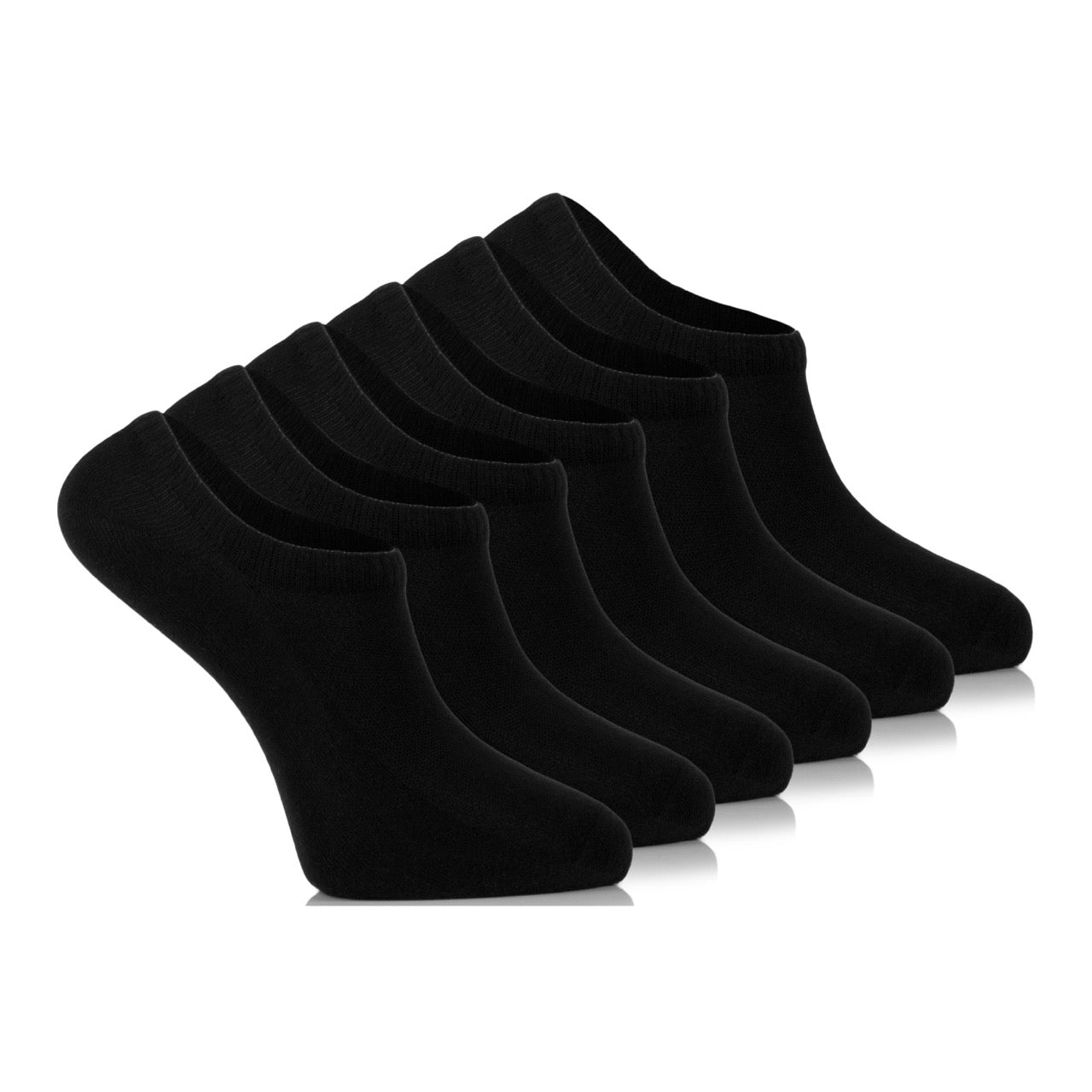
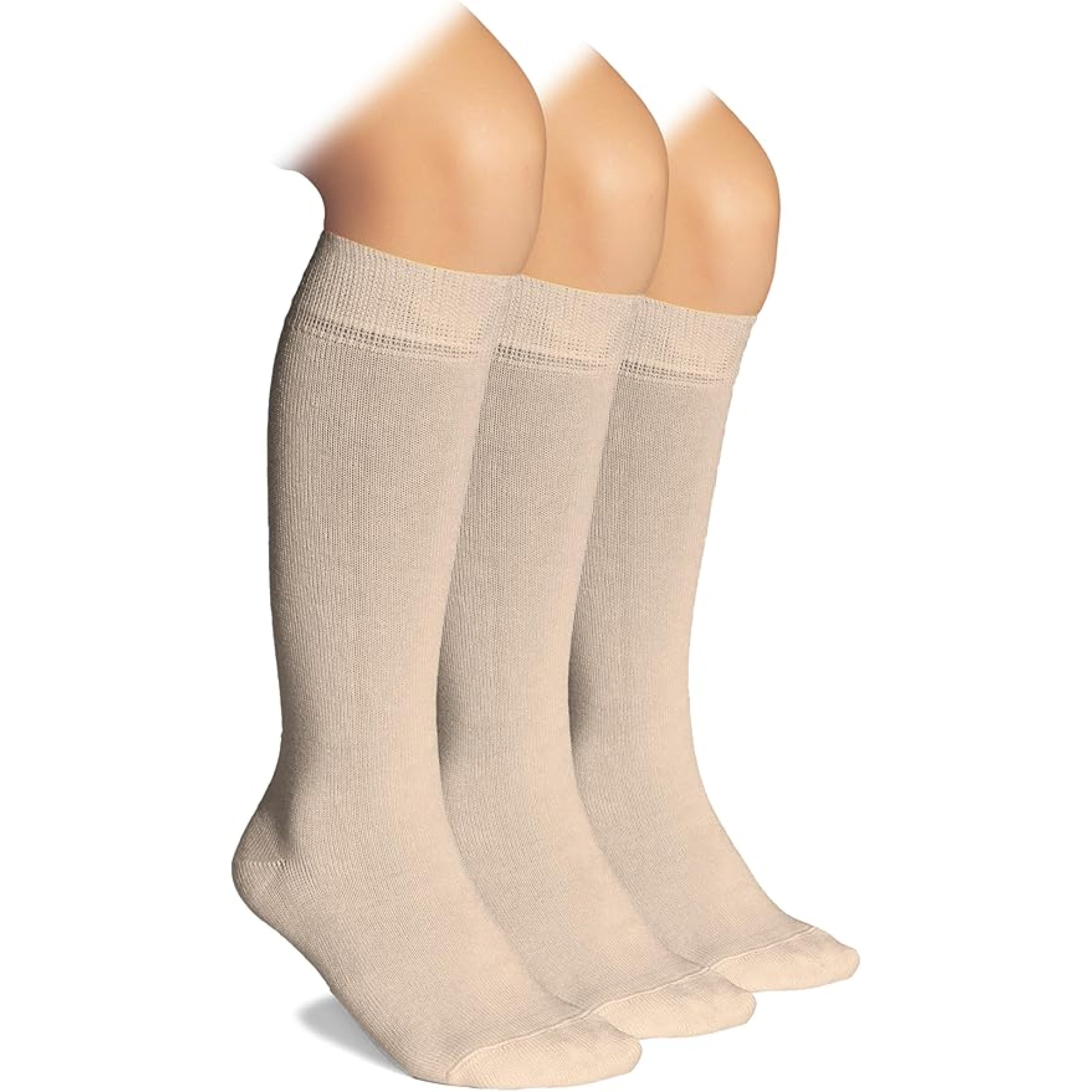


Drivers' ankles swell because sitting still switches off the calf muscle pump, and a truck cab adds heat, a firm seat edge, a fixed ankle angle on the pedal, high-sodium food and restricted fluids on top of that. The sock fix is a crew-height, non-binding sock in a breathable fiber: it removes the tight cuff that traps swelling without adding any pressure. Graduated compression is a different tool for a different problem — useful for swelling that does not clear overnight, but not appropriate for everyone, and the pressure level should be chosen with a healthcare provider rather than guessed.
Key Takeaways
Ask a long-haul driver what hurts and you will usually hear about the back first. Ask again at the end of a fourteen-hour day and the answer changes: it is the ankles. Boots that went on easily at 5 a.m. have to be pried off at the truck stop. There is a deep red line above each ankle where the sock cuff sat. The feet feel tight, heavy and hot, and the whole thing resets and repeats tomorrow.
This is one of the most predictable occupational foot problems there is, and it is one of the least discussed. Trucking is a job that requires sitting nearly motionless for eight, ten or eleven hours in a warm cab, in a fixed posture, with one foot working a pedal. Those are precisely the conditions that cause fluid to collect in the lower legs. This guide explains what is happening, what actually helps, and what to look for in a sock that has to survive an eleven-hour shift.
Blood returning from your feet to your heart is working against gravity, and it does not have a pump of its own down there. It relies on the calf muscles: every time you take a step, the calf contracts and squeezes the deep veins, pushing blood upward past one-way valves. It is often called the "calf muscle pump," or less formally the second heart.
Sitting turns that pump off. Blood pools in the lower leg veins, pressure inside those veins rises, and fluid pushes out into the surrounding tissue. That fluid is the swelling — the medical term is dependent edema. It is why the swelling is worst at the ankle, worst at the end of the day, and largely gone by morning after a night lying flat.
Several things specific to a truck cab make it worse than ordinary desk sitting:
Swelling is uncomfortable, but prolonged immobility carries a smaller and more serious concern too. The CDC notes that anyone immobile for more than about four hours — in a plane, a bus or a vehicle — carries some increased risk of a clot forming in a deep leg vein, and that risk rises with the length of time spent immobile. NIOSH's research on long-haul truck driver health documents higher rates of obesity, diabetes, hypertension and heart disease among drivers compared with the general working population — all conditions that interact with circulation in the legs.
None of this means swollen ankles at the end of a shift are an emergency. It does mean that pain, warmth, redness or swelling in one leg that is clearly worse than the other is not something to sleep on. That combination warrants prompt medical attention rather than an extra pillow under the feet.

Most drivers wear whatever is in the drawer: a cotton or polyester work crew with a firm ribbed top, or a heavy boot sock. Both create the same issue over a long shift.
A conventional sock cuff is engineered around one leg circumference. Your calf at hour eleven is not the same size as your calf at hour one. What was a comfortable grip in the morning becomes a band of concentrated pressure by afternoon, sitting in one narrow ring right where you least want it — above the swelling, trapping it below. The red indentation is the visible evidence, and once it is deep enough to still be there twenty minutes after the sock comes off, the sock has been working against you all day.
Thickness is the second problem. A heavy cushioned boot sock in a warm cab adds insulation to a foot that is already too warm, which means more sweat, more moisture in the boot, and softer, more fragile skin by the end of the run.
These are two different tools and drivers frequently confuse them.
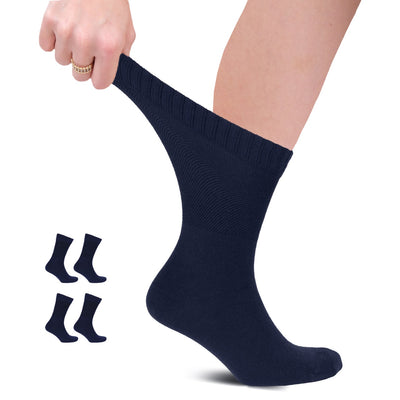
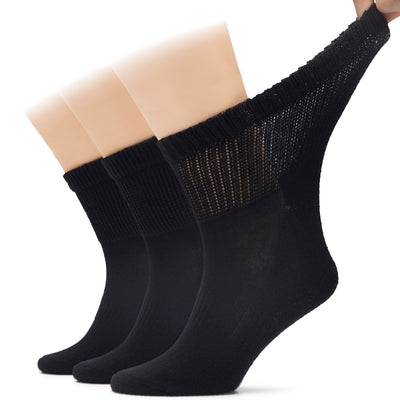
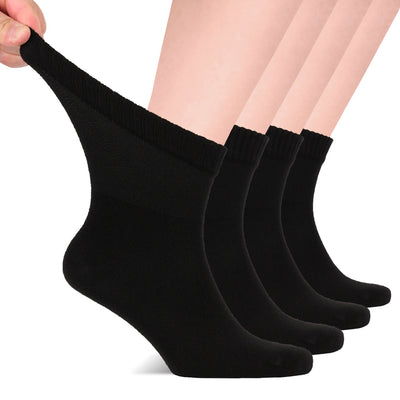
A non-binding sock has a cuff engineered to stretch and accommodate a leg that changes size through the day, holding position without leaving a mark. It does not compress. It removes an obstacle rather than adding a force.
Best for: drivers whose main complaint is the red ring, tightness at the cuff, or feet that feel constricted by evening; drivers with diabetes or neuropathy; anyone who wants something they can wear every day without thinking about it. Our Unisex Cotton Non-Binding Crew Socks and the wider non-binding range are built to this brief.
Graduated compression applies the most pressure at the ankle and progressively less moving up the calf, which supports the upward return of blood while you are sitting still. It is an active intervention.
Best for: drivers with significant, persistent swelling that does not clear overnight, or with a diagnosed venous condition. Important caveat: compression is not appropriate for everyone. Anyone with peripheral artery disease, significant neuropathy, or a heart condition affecting fluid balance should confirm with a healthcare provider before wearing it, and should have the pressure level chosen for them rather than guessing. Our breakdown of compression socks for long journeys covers what the evidence supports, and compression versus non-binding for varicose veins compares them directly.
Many drivers land on a rotation: non-binding socks as the daily default, compression reserved for the longest legs of a run or for days when swelling has carried over from the day before. That keeps compression as a tool rather than a permanent state, and it avoids the mistake of wearing a worn-out compression sock that is no longer applying the pressure it claims to.
Feet swell over a shift regardless of what you do, so a boot that fits perfectly at 5 a.m. can be too tight by 4 p.m. Buy boots in the afternoon when your feet are already at their largest, and choose a lacing system you can loosen mid-shift without unlacing the whole boot. Keeping a pair of loose slip-ons in the cab for fuel stops and breaks is one of the highest-value habits a driver can build.
Sock choice removes an obstacle. Movement is what actually restarts the pump. Build these into stops you are already making.
Diabetes is meaningfully more common among long-haul drivers than in the general workforce, which makes this worth calling out specifically. If you have diabetes and drive for a living:
Our printable diabetic foot care checklist is designed to live somewhere visible — a cab visor works as well as a bathroom mirror.
End-of-shift swelling in both ankles that resolves overnight is the ordinary occupational pattern. These are the presentations that are not:
Drivers are conditioned to push through discomfort and to avoid anything that costs a day off the road. This is the category where that instinct works against you.
This article is for general information and is not medical advice. Talk to your healthcare provider about your own feet.
Sitting still stops the calf muscle pump that normally pushes blood back up from your legs. Blood pools in the lower leg veins, pressure rises, and fluid moves into the surrounding tissue. Cab heat, a firm seat edge, a fixed ankle angle on the pedal, high-sodium food and limited fluid intake all add to it. It is the standard occupational pattern for anyone who sits for a living, and it is most pronounced in drivers because of the heat and the fixed posture.
Non-binding socks suit most drivers as a daily default — they remove the tight cuff that traps swelling without adding pressure, and they carry no medical caveats. Graduated compression is the better tool for significant swelling that does not clear overnight or for a diagnosed venous condition, but it is not right for everyone and the pressure level should be chosen with a healthcare provider, particularly if you have any arterial circulation concerns or neuropathy.
Many people wear graduated compression through a full working day, but that should be a decision made with your provider rather than a default. Compression is generally removed for sleeping unless specifically directed otherwise. Worn-out compression socks that have lost their elasticity should be replaced rather than relied on — typically every three to six months of regular wear.
Crew height. It keeps the boot shaft off bare skin, sits between your calf and the seat edge, and stays put over a long shift. Ankle socks let the boot rub directly on the leg, and a knee-high adds unnecessary warmth in a hot cab unless it is a compression sock chosen for that purpose.
One per day plus two spares — nine pairs for a week. Sweat, rain at a loading dock, and a spilled coffee all happen, and a fresh pair midday on a long run is one of the cheapest comfort upgrades available. Keep them somewhere reachable from the driver's seat rather than buried in a bag in the sleeper.
Discover All Hugh Ugoli Socks
Shop All Socks


