Cart
0
You may also like


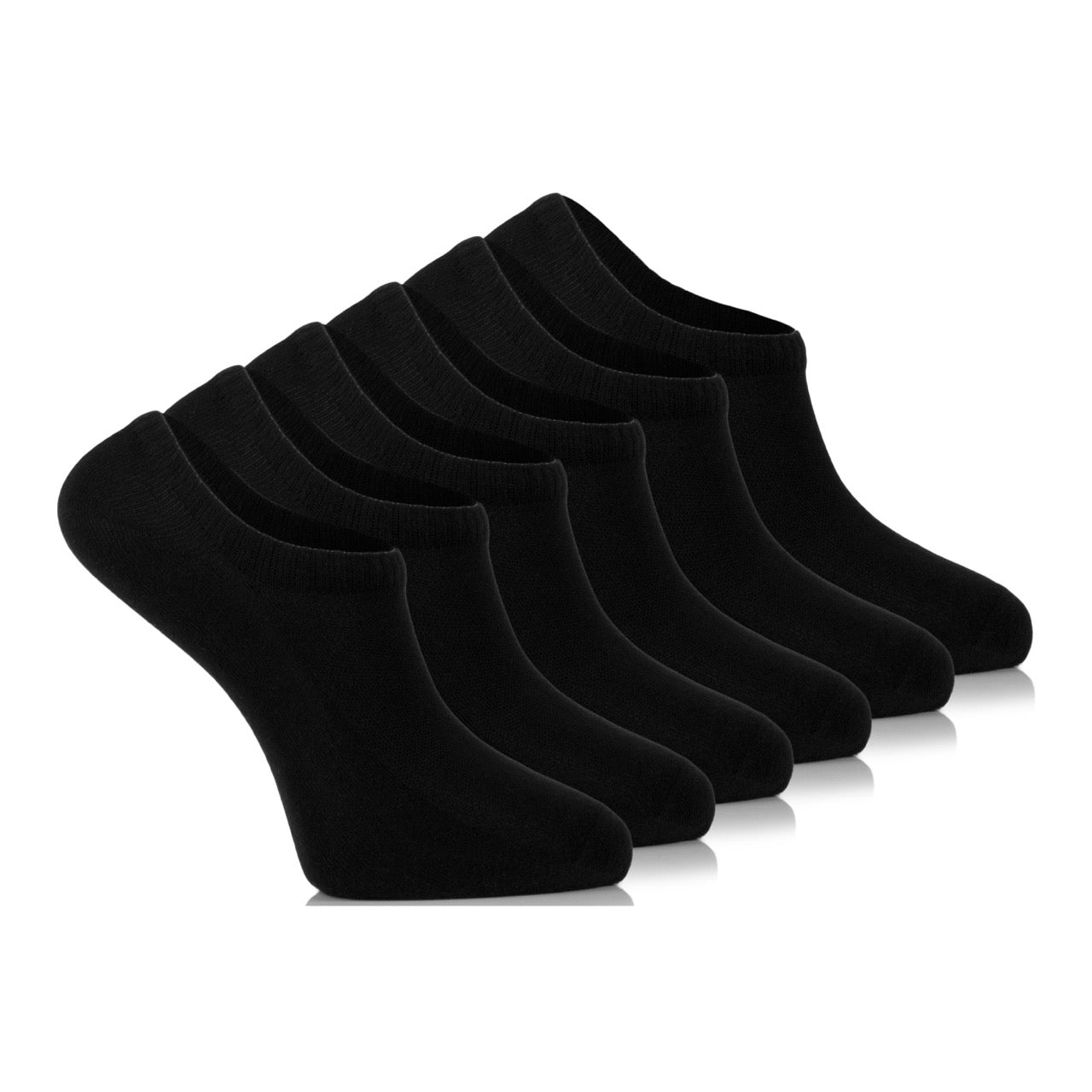
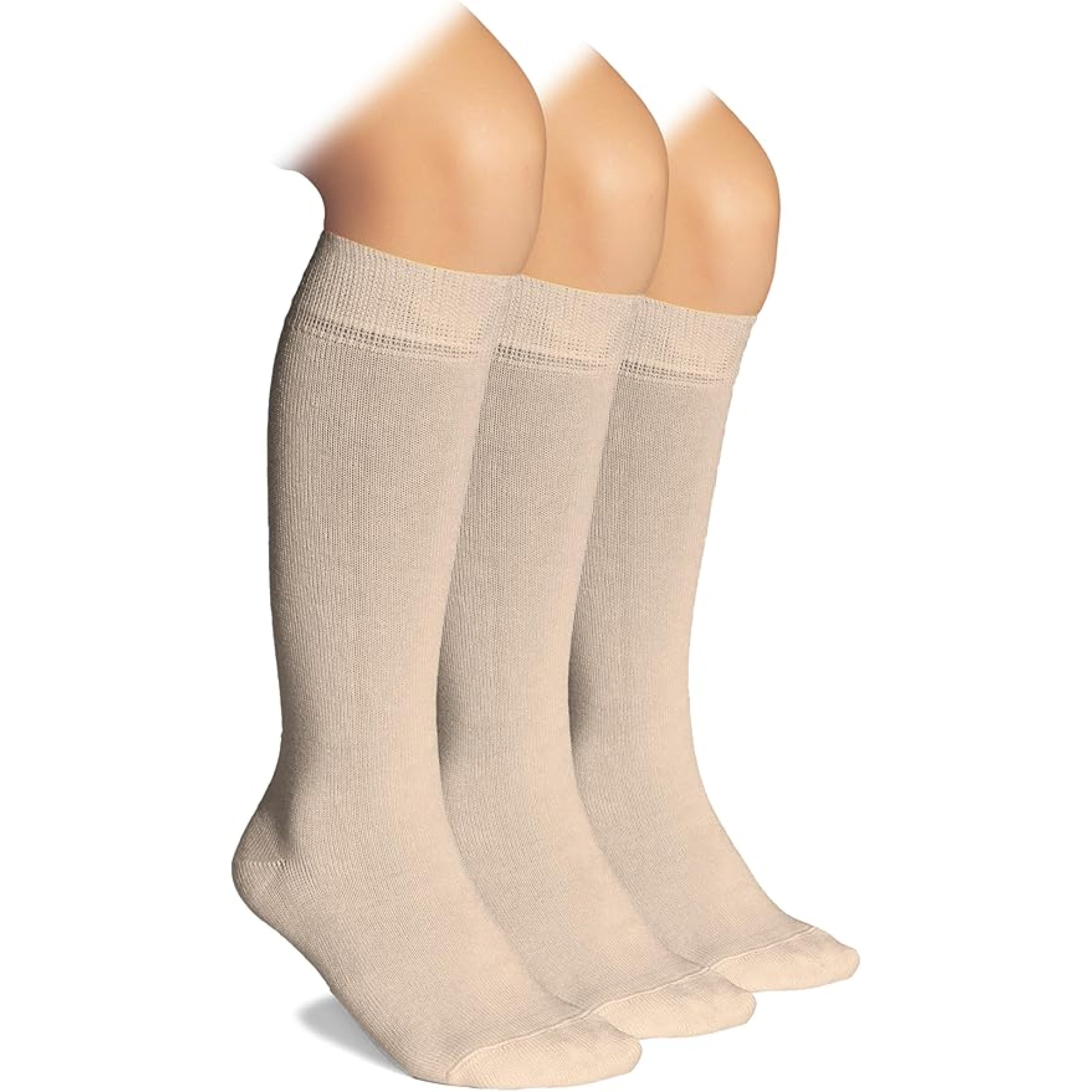


Charcot foot is a condition in which the bones and joints of the foot and ankle weaken and can fracture, dislocate and change shape. It is most often linked to peripheral neuropathy from long-standing diabetes, because reduced sensation lets small injuries go unnoticed and keep being walked on. The earliest signs are usually warmth, swelling and redness in one foot, often with little or no pain, and it is frequently mistaken for a sprain, gout or infection. Comparing both feet every day and contacting your healthcare provider promptly about a warm, swollen foot are the most practical ways to catch it early.
Key Takeaways
Charcot foot is one of the less familiar complications of diabetes, and that is part of what makes it serious. Many people with diabetes have heard about foot ulcers and nerve damage. Far fewer have heard of a condition in which the bones and joints of the foot weaken, shift and, over time, change the shape of the foot itself. Because it often starts without pain, it can be mistaken for a sprain, an infection or gout, and the window for early action can close before anyone realizes what is happening.
This guide explains what Charcot foot is, why it develops, what the early warning signs look like, how it differs from conditions it is often confused with, and what daily habits can help you notice changes sooner. It is written for people living with diabetes and neuropathy, and for the family members and caregivers who help them look after their feet.
Charcot foot, also called Charcot neuroarthropathy or Charcot arthropathy, is a condition in which the bones, joints and soft tissue of the foot and ankle become weakened and damaged. The name comes from Jean-Martin Charcot, the 19th-century French neurologist who described the joint changes associated with nerve disease.
The key point is that Charcot foot is closely linked to peripheral neuropathy, the nerve damage that can develop with long-standing diabetes. The American Podiatric Medical Association describes it as a pattern of bone and joint damage that can leave the structure of the foot weaker and, if it progresses, lead to deformity.
With healthy nerves, a small injury to the foot sends a clear pain signal. You limp, rest, and the injury gets time to recover. With significant neuropathy, that signal is weak or missing. The sequence often goes something like this:
Changes in blood flow and the body's inflammatory response are also thought to play a part. Researchers still debate the exact mechanism, but the connection with neuropathy is consistent across sources.
One of the most recognizable late-stage changes is the so-called rocker-bottom foot. The normal arch collapses and the midfoot drops so that the sole becomes convex, like the bottom of a rocking chair. The National Institute of Diabetes and Digestive and Kidney Diseases (NIDDK) notes that nerve damage from diabetes can lead to shape changes like this, and that people whose feet have changed shape may need special shoes or inserts.
A foot shaped this way puts pressure on areas of the sole that were never meant to bear weight, which is why Charcot foot and foot ulcers are so closely connected.

Charcot foot is relatively uncommon, but the risk is concentrated in a specific group. People most likely to develop it typically have:
Charcot foot can affect one foot or, less commonly, both. Having it in one foot means the other foot deserves close attention too.
The early (or "active") phase is the most important time to catch Charcot foot. At this stage, the foot usually has not changed shape yet. What you are looking for are signs of inflammation.
An affected foot is often noticeably warmer than the other one. This is one of the most consistent early signs. The difference can be several degrees, and many people notice it simply by placing a hand on each foot and comparing.
Swelling of the foot or ankle, often without an obvious injury. It may be sudden. Socks and shoes may feel tighter on one side than the other.
The skin over the affected area may look pink or red. On darker skin, redness can be harder to see, so warmth and swelling become even more important signals.
Because Charcot foot is linked to neuropathy, pain is often mild or absent. Some people do feel an ache, but many don't. The lack of pain is one reason it is missed. APMA's patient page also lists burning, tingling or numbness among the symptoms people may notice.
If a shoe that fitted last week suddenly feels tight across the midfoot or instep on one side, that is worth paying attention to, especially alongside warmth or swelling.
As the condition progresses, the arch may flatten, the foot may widen, or the ankle may look unstable or turned. By the time shape changes are visible, the condition is usually past its earliest stage.
| Sign | What to look or feel for | How to check |
|---|---|---|
| Warmth | One foot warmer than the other | Back of the hand on each foot, same spot |
| Swelling | Puffiness at foot or ankle, one side | Compare both feet; notice sock marks |
| Redness | Pink or red skin, often over the midfoot | Good light; compare to the other foot |
| Shoe fit change | Sudden tightness on one side | Notice while putting shoes on |
| Shape change | Flattened arch, widened midfoot | Look from the side and from above |
Early Charcot foot can look like several other conditions, which is one reason it is sometimes misdiagnosed at first. According to APMA, it is frequently confused with gout or cellulitis. Other possibilities include:
This is not something to sort out at home. If you have diabetes and neuropathy and you notice a warm, swollen foot, it is worth telling your healthcare provider promptly and mentioning that you are concerned about Charcot foot specifically. Clinicians use examination, temperature comparison and imaging to tell these conditions apart. The Cleveland Clinic's overview of Charcot foot describes the kind of assessment involved.
Clinicians often describe Charcot foot in stages. One commonly used framework (the Eichenholtz classification) has three main phases, sometimes with an earlier "stage 0" added.
Warmth, swelling and redness with little or no change on standard X-ray. This is the phase where early recognition matters most.
Bones and joints begin to break down. X-rays may show fractures, dislocations and fragments. The foot is warm and swollen.
Inflammation begins to settle. The body starts to absorb fragments and bone begins to heal, although not necessarily in the original shape.
The foot stabilizes in its new shape. Warmth and swelling have largely gone. If deformity has occurred, it is now permanent, and pressure points may make ulcers more likely.
A detailed clinical review in Diabetes Care, published by the American Diabetes Association, covers these phases and current approaches to diagnosis and management for readers who want more depth.
Management is always directed by a healthcare team, typically including a podiatrist, orthopedic specialist and the person's diabetes care provider. In broad terms, the approach usually focuses on:
The general principle from APMA is that catching Charcot foot early and protecting the foot while it recovers may help limit how far the condition progresses. Lifelong attention to the affected foot is usually needed.
Nothing here replaces professional care, but a few daily habits make it much more likely that changes are noticed quickly.
Look at both feet every day, including the soles and between the toes. Use a mirror or ask someone to help if you can't see the bottom of your feet easily. Our step-by-step guide to doing a daily diabetic foot check in 60 seconds walks through exactly what to look for.
Charcot foot usually affects one side. Comparing left to right is the most useful single check. Warmth, swelling, redness and shape are all easier to notice as differences between two feet than as absolute changes in one.
Place the back of your hand on the top of each foot and on each ankle. If one side feels warmer, check again later in the day. Some healthcare providers recommend using an infrared skin thermometer for more consistent readings. Ask your podiatrist whether that makes sense for you.
Socks are a surprisingly useful early-warning tool. At the end of the day, look at the marks your socks leave. A deeper cuff line on one leg than the other, or a sock that feels noticeably tighter on one foot, can be a sign of one-sided swelling. White or light-colored socks also make it easier to spot drainage or blood from a wound you may not have felt.
If one shoe suddenly feels tighter, or you notice new wear patterns on the sole, mention it at your next appointment, or sooner if it comes with warmth or swelling.
People with diabetes and neuropathy are usually advised to have their feet examined by a healthcare professional regularly. If you have had an ulcer or Charcot foot before, you may be seen more often.
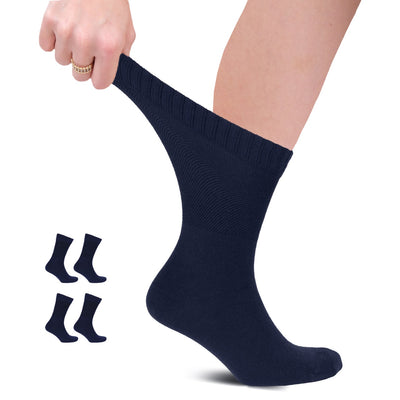
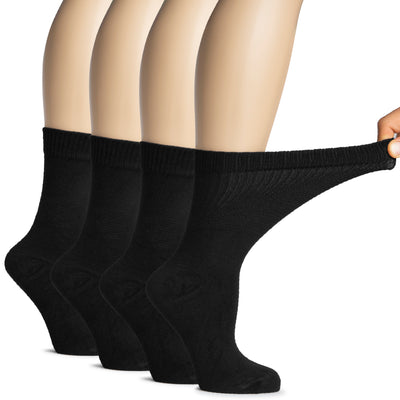
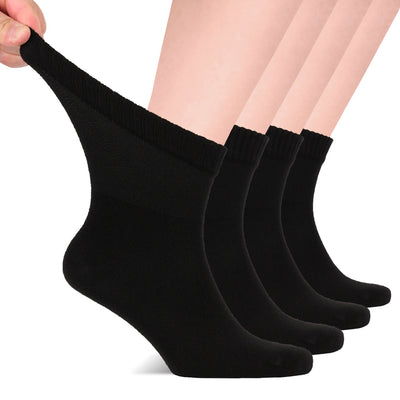
Socks can't stop Charcot foot from developing, and they are not a substitute for the offloading, casting or footwear a specialist prescribes. They do, however, affect day-to-day comfort and how easily you can monitor your feet. For someone with neuropathy, the things that matter most in a sock are:
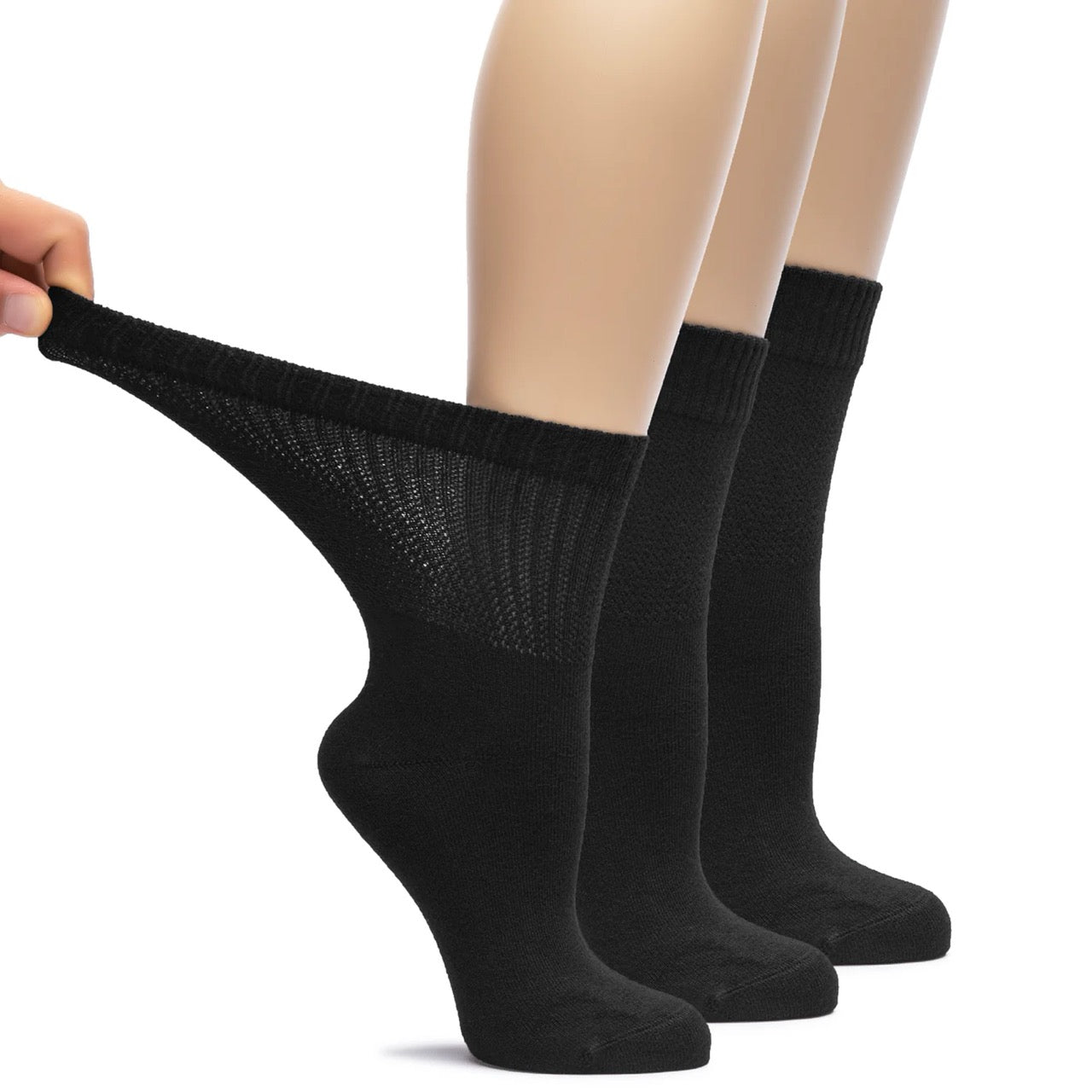
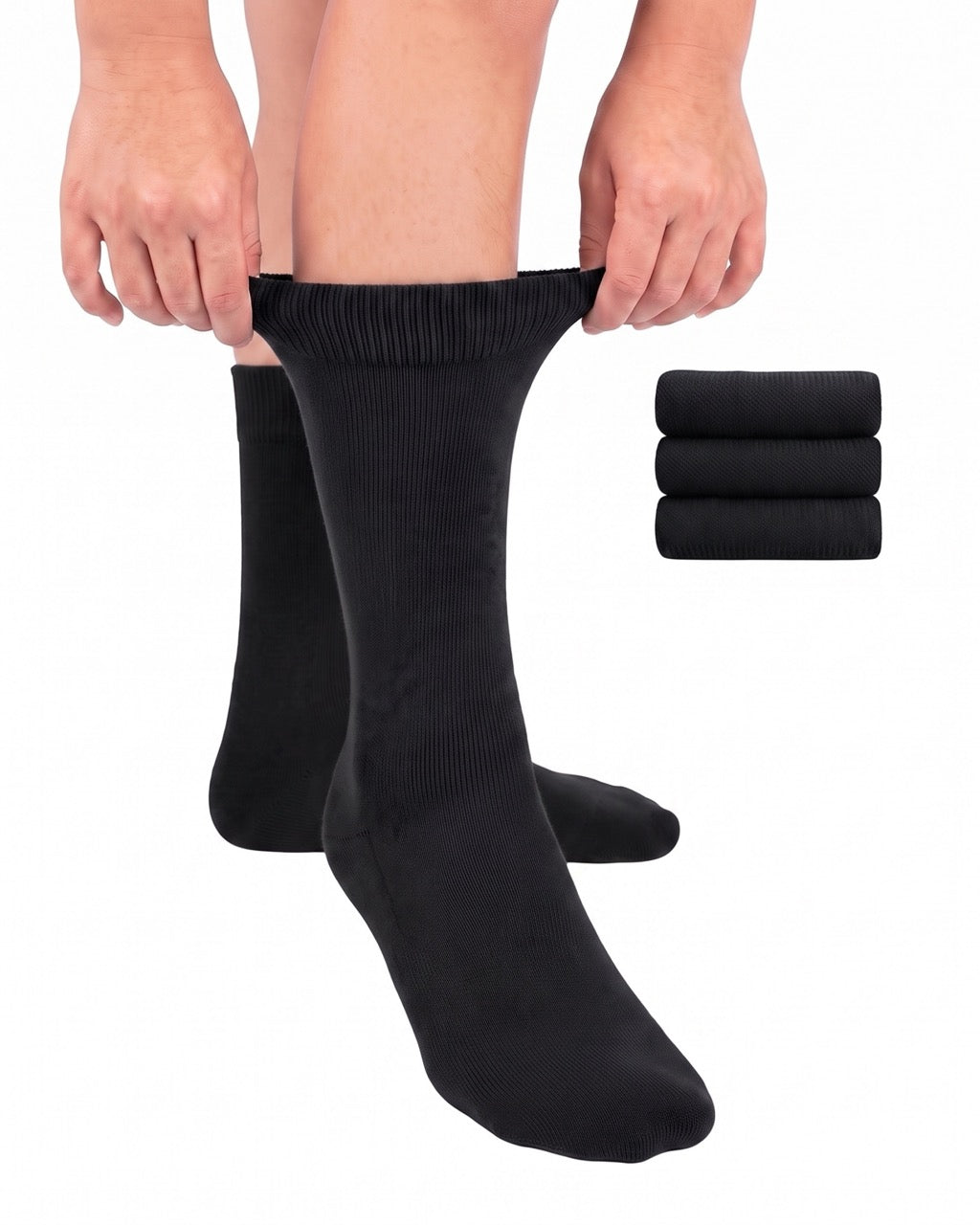
Our unisex cotton diabetic crew socks are designed around a gentle top and smooth toe. For women who prefer a lighter feel, the women's thin bamboo diabetic crew socks are a popular choice, and the men's lightweight bamboo diabetic ankle socks suit warmer weather or low-cut shoes. If you wear a cast, walker boot or custom footwear, ask your care team what sock they want you to use with it, since some devices come with specific liners.
For a broader look at what to look for, see our guide to the best socks for neuropathy, or browse the full diabetic socks collection.
When a foot changes shape, pressure is concentrated on bony areas that used to be protected by the arch. That pressure, combined with reduced sensation, creates conditions in which ulcers can develop. This is why people with Charcot foot are usually monitored closely for skin breakdown, and why custom footwear matters so much once the foot has stabilized.
If you want to understand how foot ulcers are described and what each stage looks like, our article on diabetic foot ulcer stages explains the grading systems in plain language.
If you have diabetes and neuropathy, contact your healthcare provider promptly if you notice any of the following, especially in one foot only:
When you call, it helps to say clearly that you have diabetes and neuropathy and that you are worried about possible Charcot foot. That context helps the person on the other end decide how quickly you need to be seen. Until you have been assessed, it is sensible to limit walking on the affected foot.
A Charcot foot diagnosis usually means a long period of offloading, followed by lifelong attention to footwear and foot checks. It can be frustrating, especially during months in a cast or boot. Many people do return to a reasonably active life once the foot has stabilized, though the details depend heavily on each person's situation.
The practical habits that help most are the same ones that apply to all diabetic foot care: check your feet every day, wear footwear and socks that don't create pressure points, keep regular appointments, and act quickly when something changes. The diabetic foot care checklist is a useful printable reminder to keep near where you put on your shoes.
This article is for general information and is not medical advice. Talk to your healthcare provider about your own feet.
Early Charcot foot usually shows up as a foot that is warmer than the other, swollen and red, often without an obvious injury and with little pain. The shape of the foot has usually not changed yet at this stage.
Often not very. Because it is linked to neuropathy, many people feel mild discomfort or none at all. That lack of pain is a major reason it can be missed or mistaken for a sprain.
People with long-standing diabetes and significant peripheral neuropathy are at the highest risk, especially those with previous foot ulcers or foot surgery. Other nerve conditions can also be involved.
It is a late-stage change in Charcot foot where the arch collapses and the sole becomes rounded, like the bottom of a rocking chair. This shape puts pressure on areas that aren't meant to bear weight, which raises the risk of ulcers.
Socks can't stop Charcot foot or replace the casting, offloading or custom footwear a specialist prescribes. Seamless toes, non-binding tops and light colors can make daily comfort and foot checks easier. Ask your care team what sock to use with any cast or boot.
Discover All Hugh Ugoli Socks
Shop All Socks