
Cart
0
You may also like
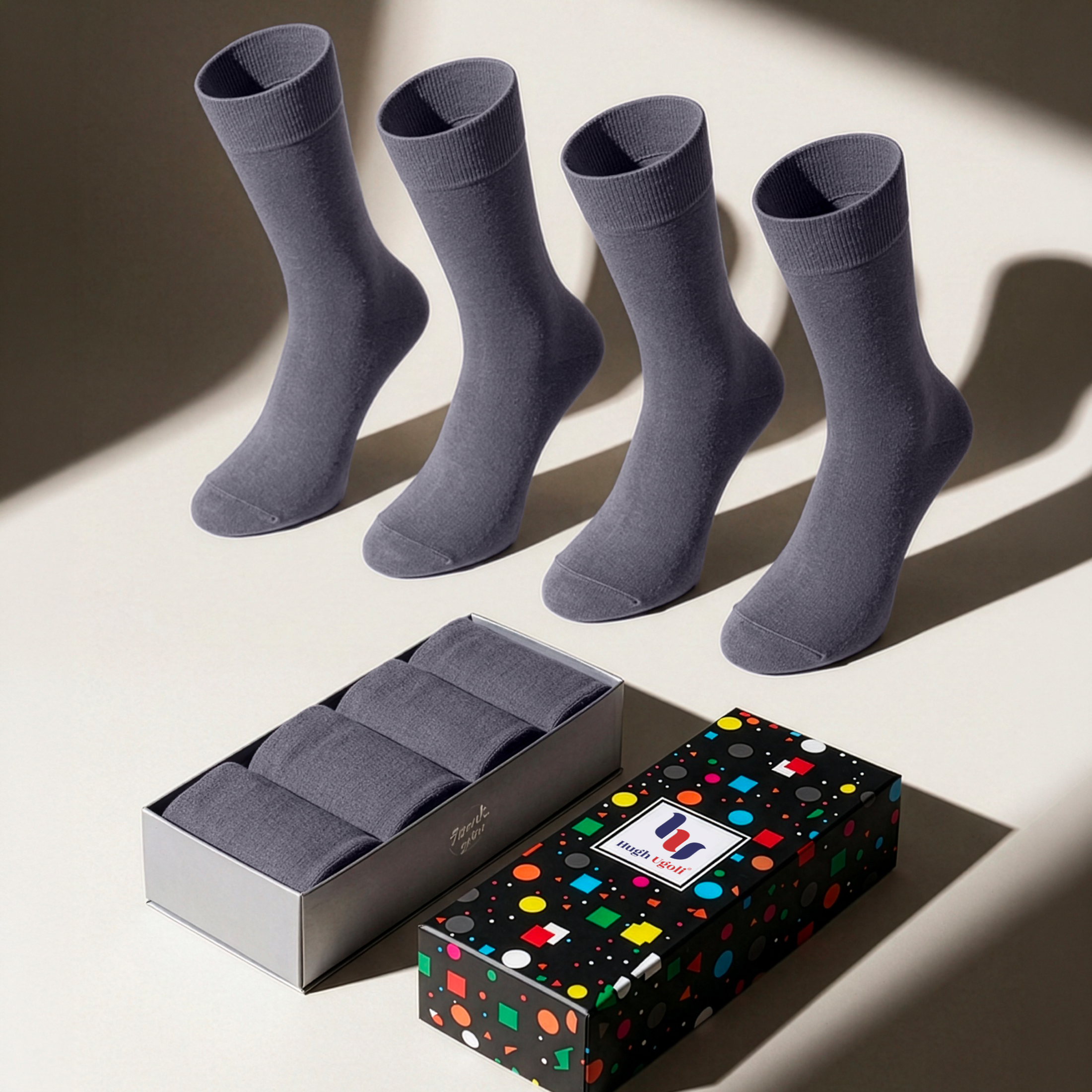
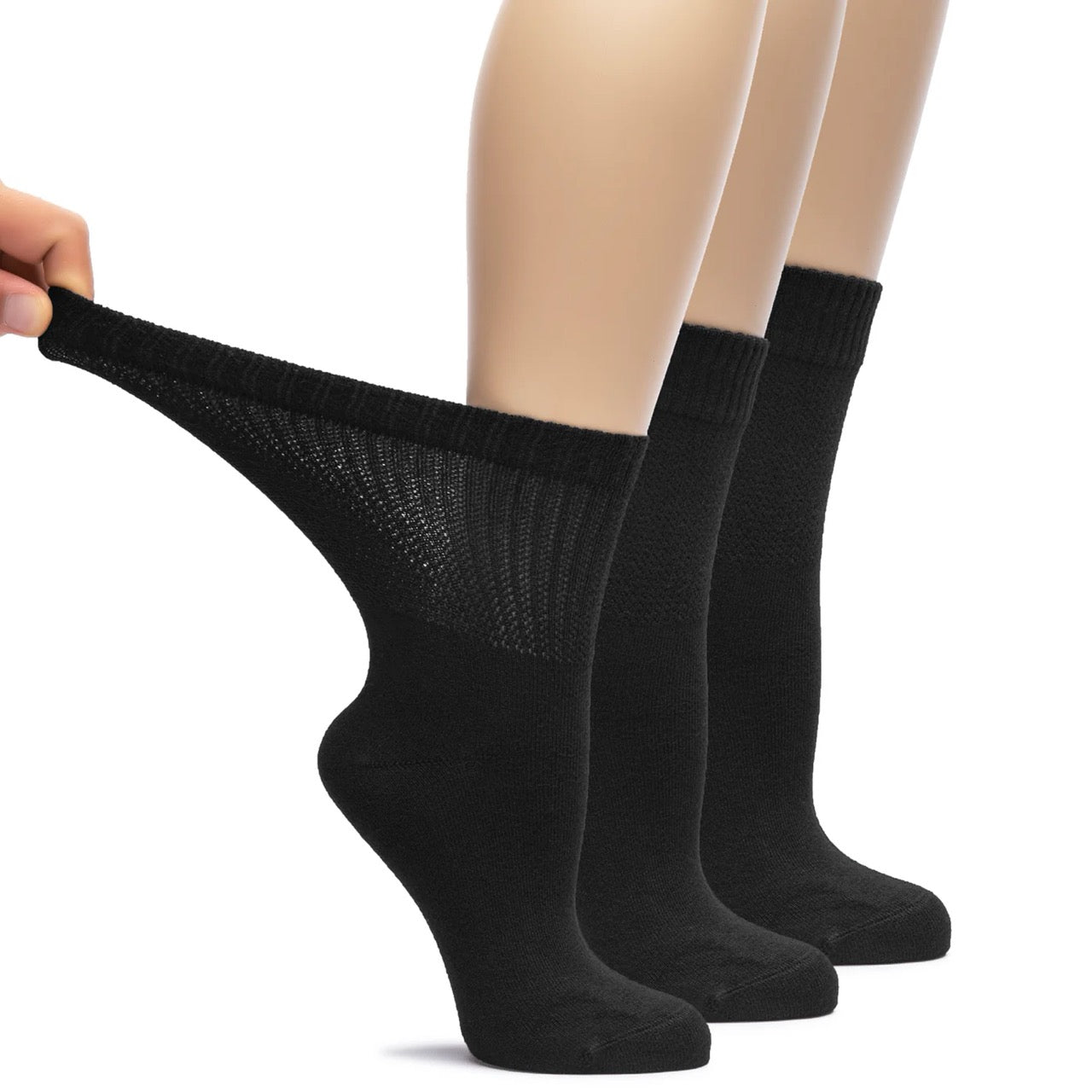
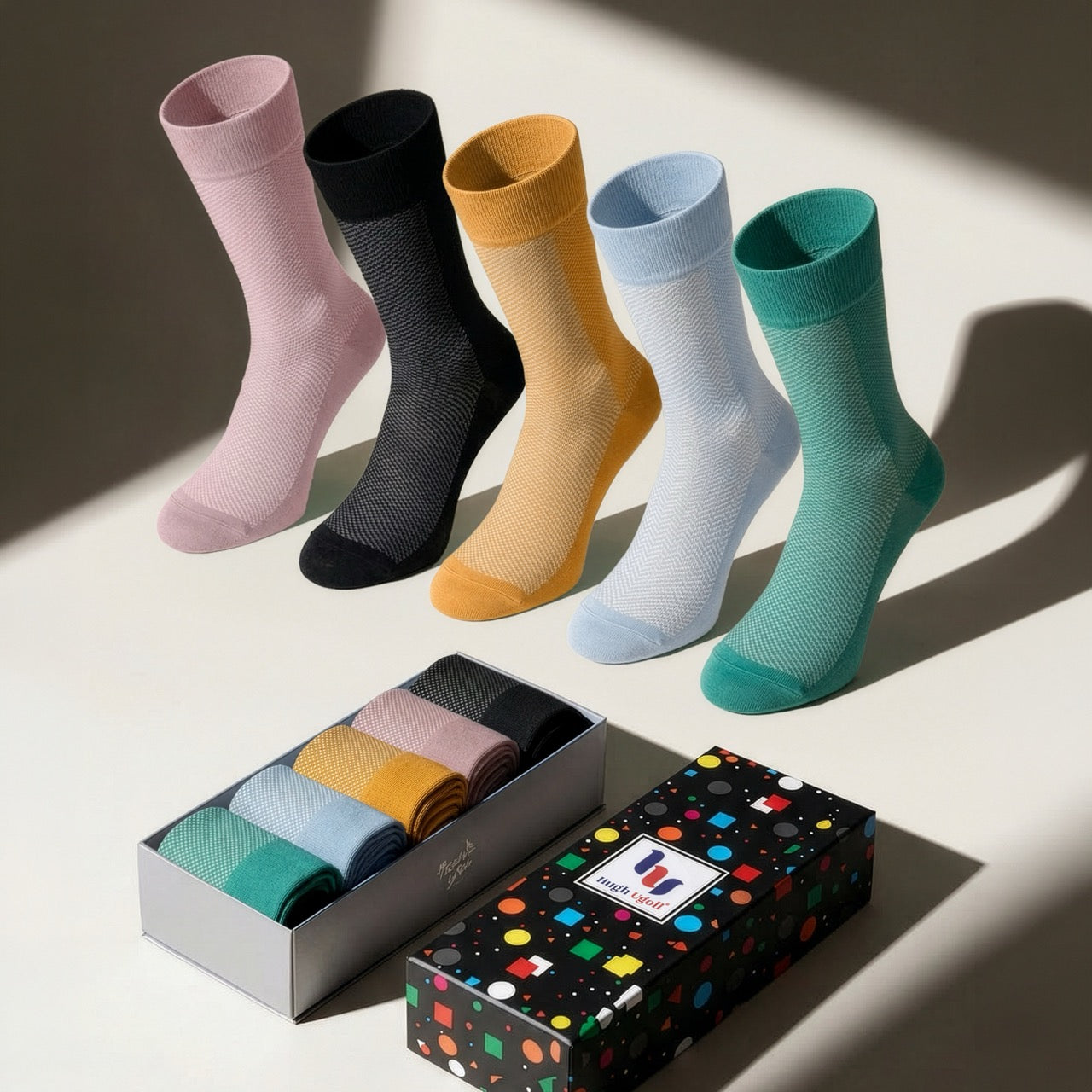
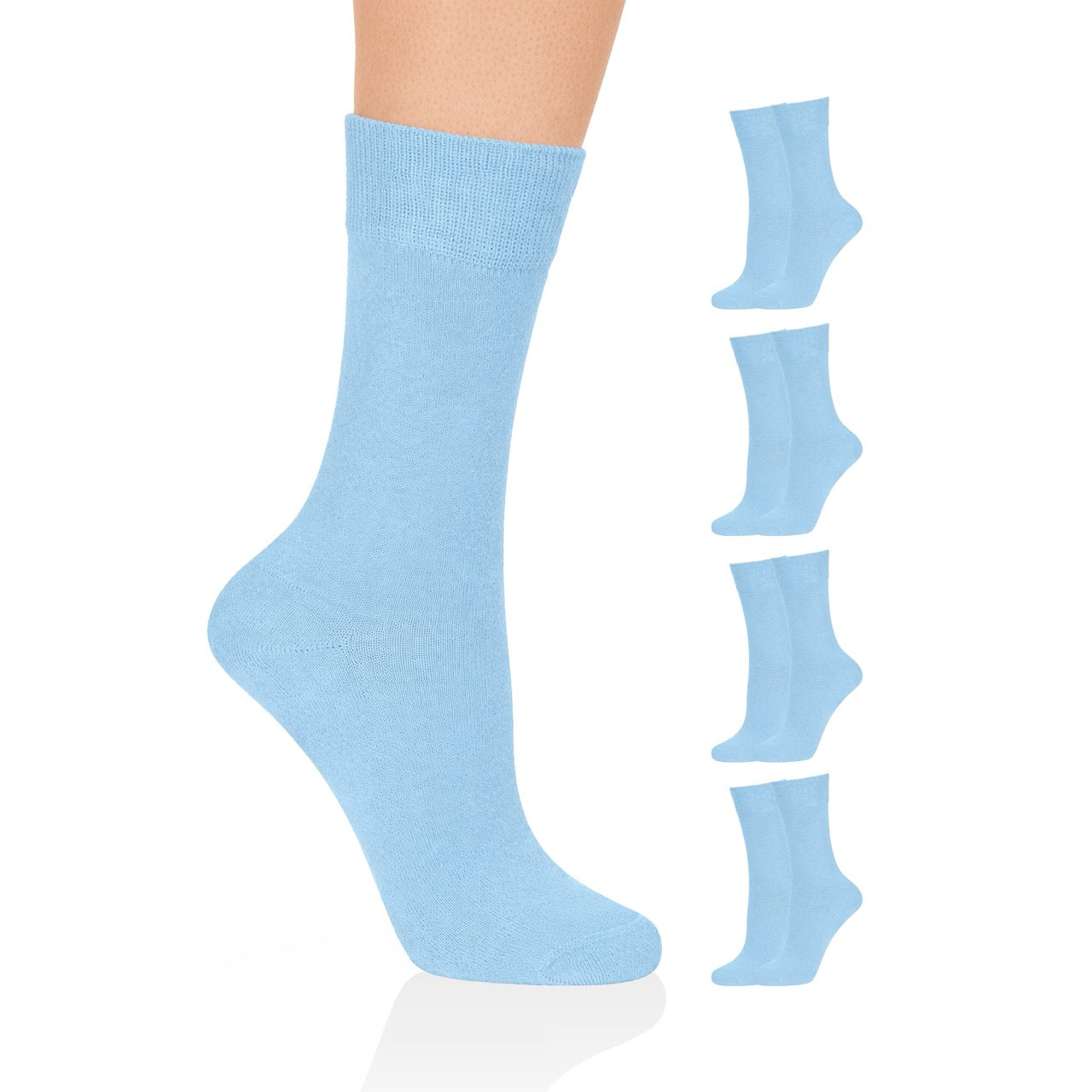
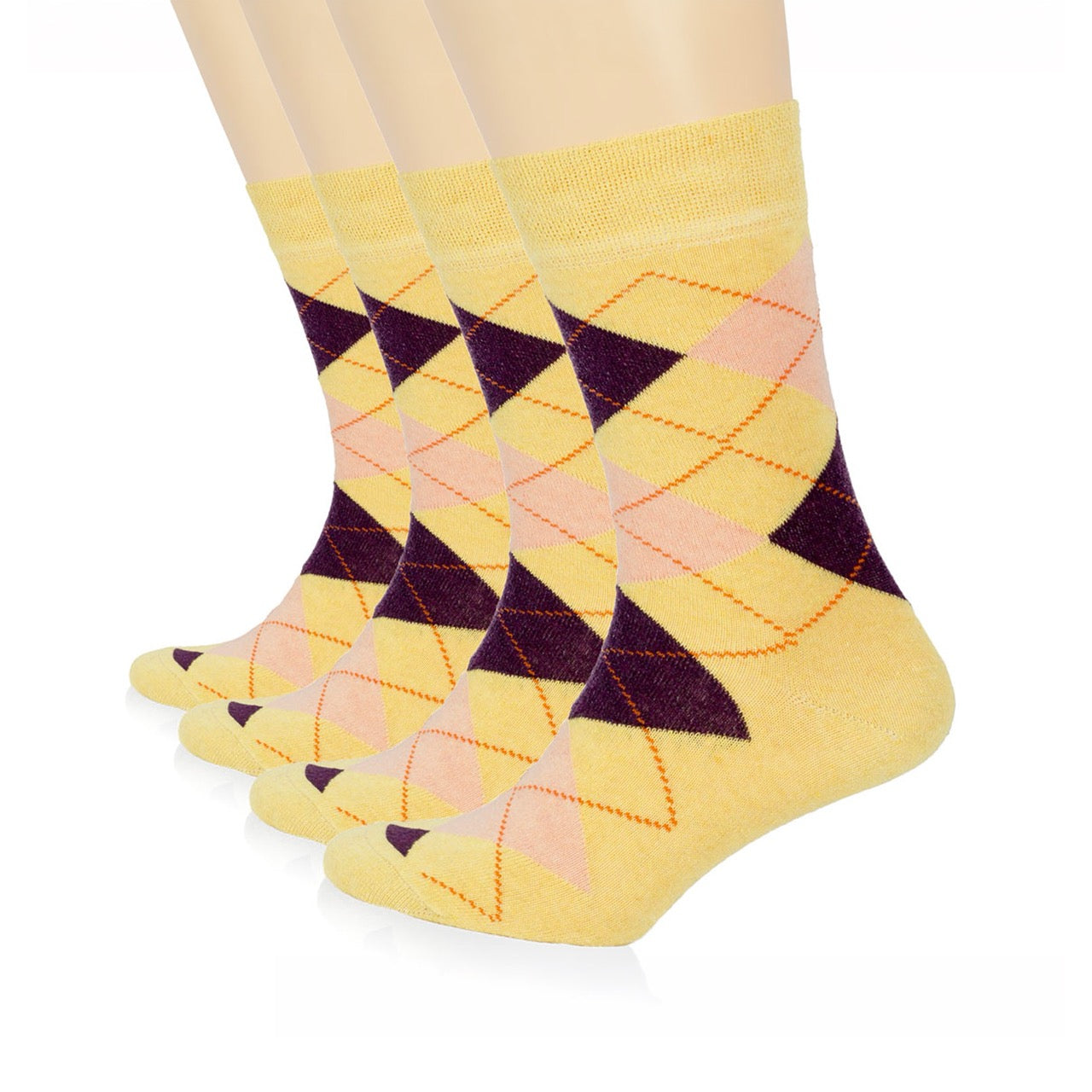


Use your shoe size — it is the most reliable input and every Hugh Ugoli chart is built around it. Traditional "sock size" numbers are foot length in inches rather than shoe sizes, which is where most of the confusion comes from, and letter sizes mean nothing without the shoe-size equivalent printed next to them. Our women's ranges run 5–14 US depending on the style, men's run 6–15, and kids' socks are sized by age band from three years up with shoe-size equivalents on the chart. If you fall between two sizes, go up: a sock held at maximum stretch every day wears out at the toe and heel much faster.
Key Takeaways
Sock sizing is one of the few areas of clothing where the industry never agreed on a standard. One brand labels by shoe size, another by S/M/L, a third prints a number like "10–13" that refers to a measurement almost nobody has heard of, and a fourth just says "one size fits most" and hopes for the best. If you have ever ordered socks online and received something that bunched at the toe or cut into your calf, none of that was your fault.
This guide gives you a straightforward way to answer the question. There is a shoe-size-to-sock-size chart below, an explanation of what those old "9–11" numbers actually mean, a method for measuring your foot properly when the chart is not enough, and notes on the situations where the standard chart breaks down — wide calves, in-between sizes, and children.
For most adults, your sock size follows directly from your US shoe size. This is the general industry pattern:
| US Women's Shoe Size | US Men's Shoe Size | Typical Sock Size Label |
|---|---|---|
| 4 – 6 | — | Small (often 9–11) |
| 6 – 9 | 5 – 8 | Medium (often 9–11) |
| 9 – 12 | 8 – 11 | Large (often 10–13) |
| 12+ | 11 – 14 | X-Large (often 12–15) |
Two immediate caveats. First, women's and men's shoe sizes run about 1.5 sizes apart in US sizing, which is why the columns are offset. Second, the numbers in the third column are sock sizes, not shoe sizes — and that is the single biggest source of confusion in this whole subject.

If you have ever looked at a package that says "Sock Size 10–13" while your shoe size is 9 and wondered whether you were reading it wrong, here is the explanation.
Traditional sock sizing measures the length of the sock's foot in inches, from heel to toe, when the sock is laid flat and unstretched. A "size 10" sock has a foot roughly ten inches long. That number was never meant to match your shoe size — it just happens to land in a similar numeric range, which is why the two get confused constantly.
The rough translations:
| Sock Size (flat length) | Roughly Fits US Men's Shoe | Roughly Fits US Women's Shoe |
|---|---|---|
| 9 – 11 | 6 – 8.5 | 7 – 10 |
| 10 – 13 | 8 – 12.5 | 9 – 13 |
| 12 – 15 | 12 – 15 | — |
The overlap is real, and it is why a sock labeled 10–13 genuinely does fit a wide range of feet. Sock knits stretch substantially — a sock is designed to be shorter than your foot when flat and to expand onto it. That built-in stretch is why sock sizing is more forgiving than shoe sizing, and also why brands get away with such wide ranges.
We label by shoe size rather than by flat length, because it removes a conversion step. Here is how the ranges work across the range:
| Range | Sizes offered |
|---|---|
| Men's socks | Shoe Size 8–11 and Shoe Size 11–13 |
| Women's socks | Shoe Size 6–9 and Shoe Size 9–12 |
| Unisex styles | Medium, Large, X-Large |
| Kids' socks | 3–5, 6–8, 9–11 and 12–14 years, depending on style |
If you sit exactly on a boundary — a men's 11 or a women's 9 — see the section on in-between sizes below. A handful of styles have narrower ranges noted in the product title, so check that line if you are close to the edge. You can browse by range in the men's socks, women's socks and kids' socks collections.
To see how that looks on an actual product page: the men's lightweight bamboo ankle socks are offered in Shoe Size 8–11 and 11–13, the women's bamboo thin crew socks in Shoe Size 6–9 and 9–12, and the kids' bamboo crew socks in four age bands from 3–5 up to 12–14 years. Unisex styles such as the unisex cotton crew socks use Medium, Large and X-Large instead, which map onto roughly the same foot lengths.
Charts are a starting point. If you are between sizes, buying an expensive pair, or have had fit problems before, measuring takes two minutes and removes the guesswork.
As a reference, a foot length of about 9.5 inches corresponds roughly to a US men's 8 or women's 9.5; 10.5 inches to about a men's 11 or women's 12.5. Use your measured length against a specific brand's chart rather than against a general one where you can.
The forgotten measurement. Sock length is about the foot, but sock comfort above the ankle is about the calf — and calf circumference varies far more between people than foot length does. Measure around the widest part of your calf, standing, with a soft tape. If that number is above roughly 16–17 inches, standard crew socks will feel tight at the top even when the foot fits perfectly, and knee-highs may be genuinely uncomfortable.
That is a fit problem with a real solution rather than something to put up with. Our guide to finding socks for extra wide calves covers what to look for, and non-binding constructions generally accommodate a wider leg without the band digging in.
Most people who have trouble with sock sizing are sitting on a boundary. The right answer depends on which sock and which situation.
Sometimes the diagnosis is easier from the symptom than from the tape measure. Each of these points to a specific mismatch:
Children's socks are usually labeled by age rather than shoe size, which is a rough average and not a measurement. Two five-year-olds can be a full size apart. Where a brand gives a shoe-size equivalent alongside the age range, use that.
Two rules that differ from adult sizing. Do not buy up for growth — a sock that is too long puts the heel pocket in the wrong place and simply does not work, unlike a shoe that a child eventually grows into. And re-measure often: toddler and preschool feet can change size in two to three months, and school-age feet in four to six.
Our age and shoe-size chart for kids' socks has the full conversion, when to size up covers how often to check, and if the problem is socks coming off rather than fitting, toddler socks that actually stay on deals with that directly.
Worth separating clearly, because people conflate them. Size is about fit. Height is about where the sock ends on your leg, and it does not change which size you need.
| Height | Ends | Typical use |
|---|---|---|
| No-show | Below the shoe line | Loafers, low sneakers, summer |
| Ankle | At or just above the ankle bone | Trainers, casual wear, warm weather |
| Crew | Several inches above the ankle | Everyday wear, dress shoes, boots |
| Knee-high | Just below the knee | Tall boots, uniforms, cold weather |
Our full breakdown of sock lengths and heights goes into which works with which footwear. If you are shopping by height, the men's crew, women's crew, women's knee-high, men's ankle and women's no-show collections are organized that way.
You wear a 10–13 in one brand and it fits; you buy the same label elsewhere and it does not. Several things vary underneath the label:
The practical response is to note your measured foot length and calf circumference once, keep them somewhere you can find them, and check them against each brand's chart rather than assuming your size travels. Related reading: the ultimate size guide and how to tell if socks are high quality before buying.
If your feet swell during the day, or you have reduced sensation, fit matters more than it does for most people — because a sock that is slightly too tight may not register as uncomfortable until it has already left a mark.
Measure in the evening when swelling is at its greatest. Prioritize a non-binding cuff over trying to find a wider size, since the cuff is usually the actual constraint. Choose a seamless toe so there is no ridge pressing into skin. And if your calf measurement is near the top of a size range, take the larger option. The non-binding sock collection is built around these constraints, and the same design suits anyone whose ankles swell — after a long flight, during pregnancy, or at the end of a day on your feet.
A US women's 9 sits at the top of the 6–9 range and the bottom of the 9–12 range, so you are on a boundary. Take the smaller size for thin and dress socks, and the larger for thick or cushioned styles. A US men's 9 falls comfortably in the middle of an 8–11 range, or a traditional 10–13 flat-length label.
Not in the traditional system. A number like "10–13" refers to the flat length of the sock's foot in inches, not to a shoe size, which is why it appears higher than your shoe size. Some brands, including ours, label by shoe size directly to remove that step — so always check which system the package is using before converting.
Size down for thin and dress socks, so they stay smooth in a fitted shoe. Size up for thick, cushioned, or wool socks, and size up if your calf is on the wider side even when your foot suggests otherwise. For compression socks, do not choose from a range at all — measure your ankle and calf and use the manufacturer's chart.
The clearest signs are the toe seam pressing against your toes, the heel pocket sitting above your heel rather than cupping it, a deep ring left by the cuff that lasts more than a few minutes, and holes appearing quickly at the big toe. Toenails catching on the toe seam is another reliable indicator.
Some do. Cotton shrinks more than bamboo viscose, and wool can shrink significantly in hot water or a hot dryer. Washing cool and drying on low or line drying keeps a sock closest to its original dimensions — and also protects the elastic, which is usually what fails before the fabric does.
Find your US shoe size on the chart at the top, and check whether the brand is labeling by shoe size or by traditional flat length before you convert anything. If you are on a boundary, let the sock's thickness decide: down for thin, up for thick. Measure your calf as well as your foot if you wear crew or knee-highs, because that is where most fit complaints actually come from. And write both numbers down — they will save you the next four sock purchases.
In our women's ranges a US 9 sits at the top of the 6–9 band and the bottom of the 9–12 band, and the general rule is to size up when you are on that boundary. In men's ranges a US 9 falls inside the 8–11 band. Because the exact ranges differ by style, check the chart linked on the product page before ordering.
It is the traditional hosiery system, where the number is the length of the foot in inches rather than a shoe size. A sock size of 10–13 corresponds roughly to a US men's shoe size 8–12.5. If a pack gives a plain number range like this with no "shoe size" label, that is the system being used.
Stand on a sheet of paper with your weight on the foot, mark the back of the heel and the tip of the longest toe, and measure between the marks. Do both feet and size to the larger one, and do it at the end of the day, since feet are meaningfully larger in the evening than in the morning.
Size up. A sock held at maximum stretch all day wears through at the toe and heel much faster and the cuff loses its recovery quickly. Sizing down does not produce a snugger fit — it produces bunching and early holes.
No, and this is a common gift-buying error. The same letter size means different shoe-size spans for men and women, and our men's and women's ranges use different numbers entirely. For unisex styles, check the chart for both the men's and women's shoe-size equivalents rather than relying on the letter.

Discover All Hugh Ugoli Socks
Shop All Socks


