Cart
0
You may also like
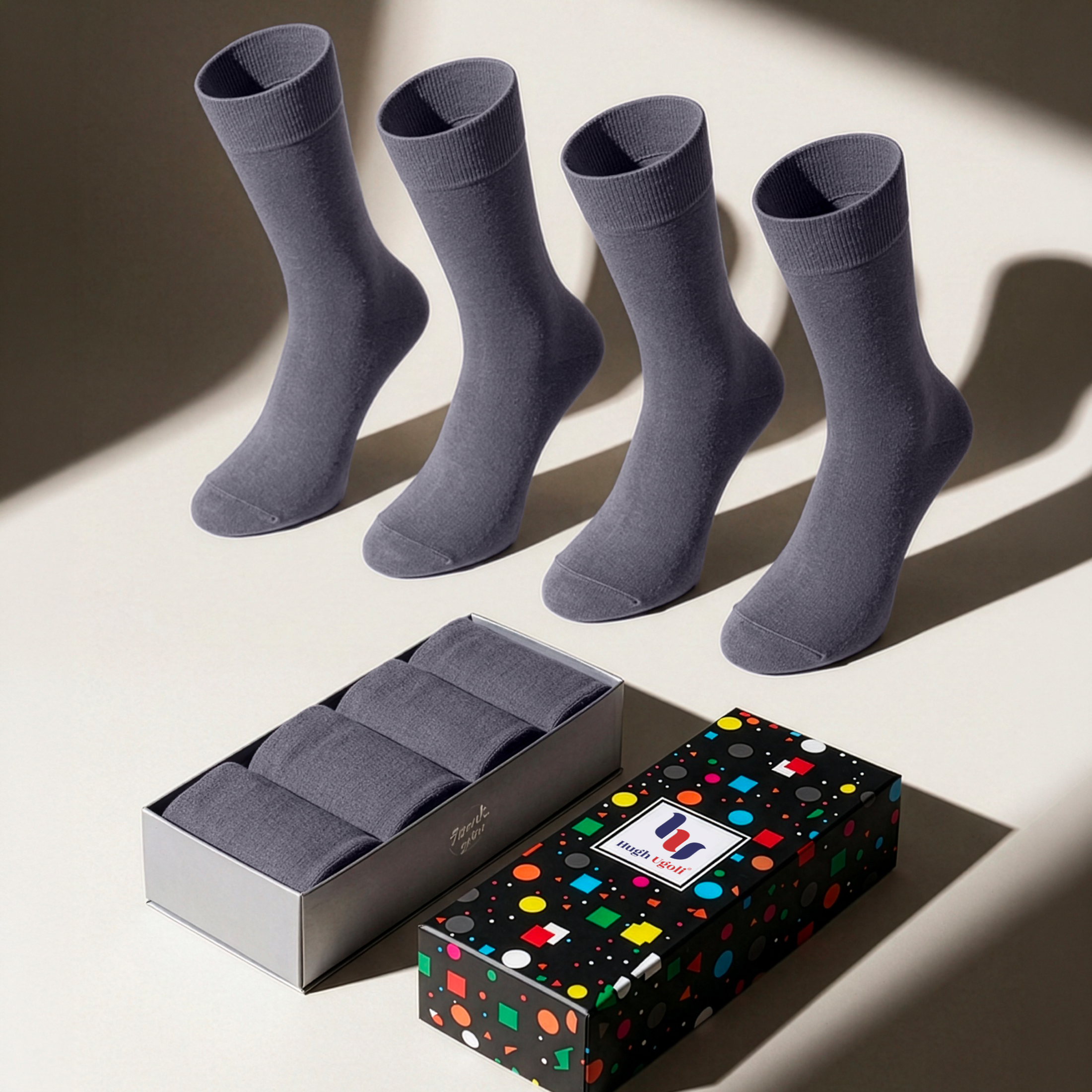
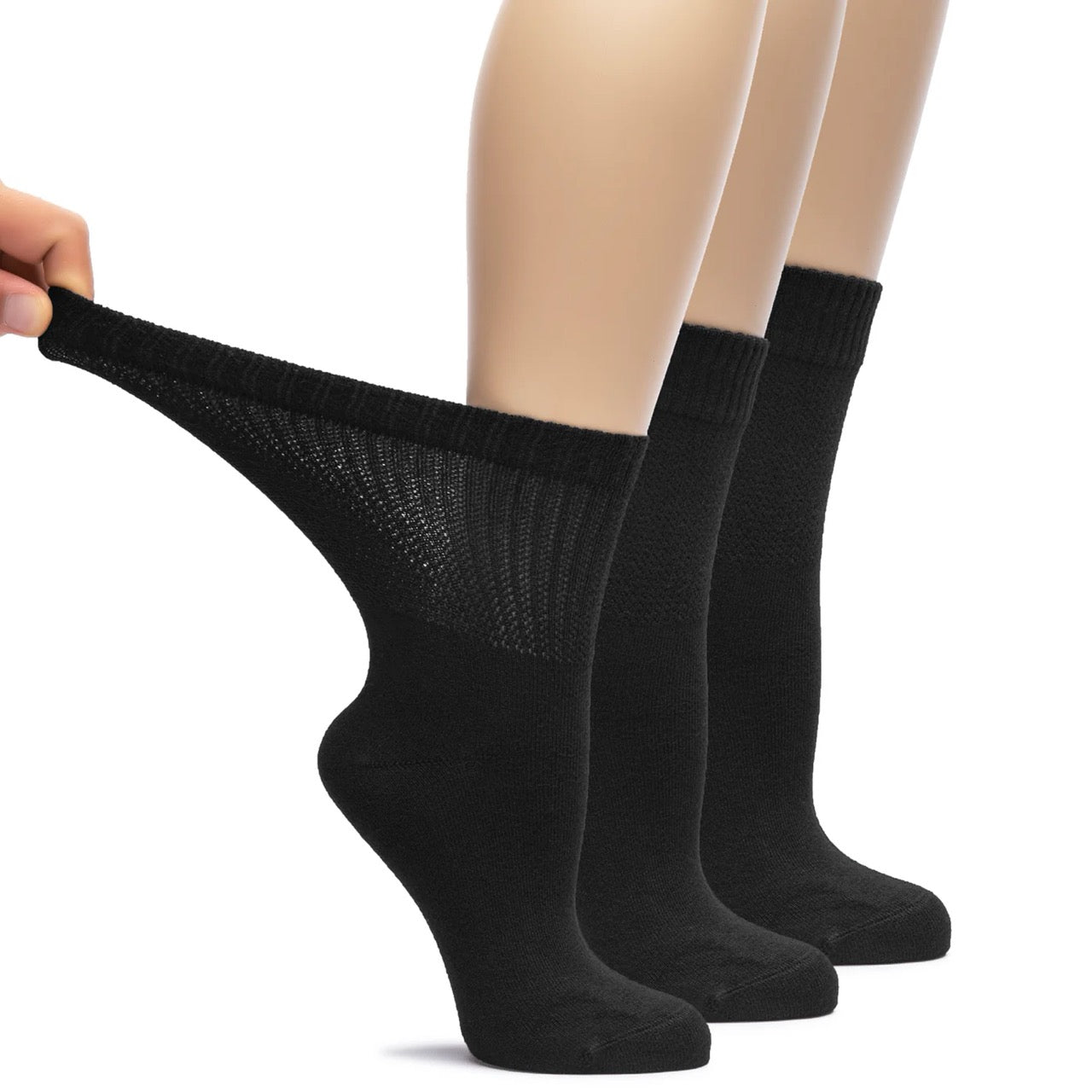
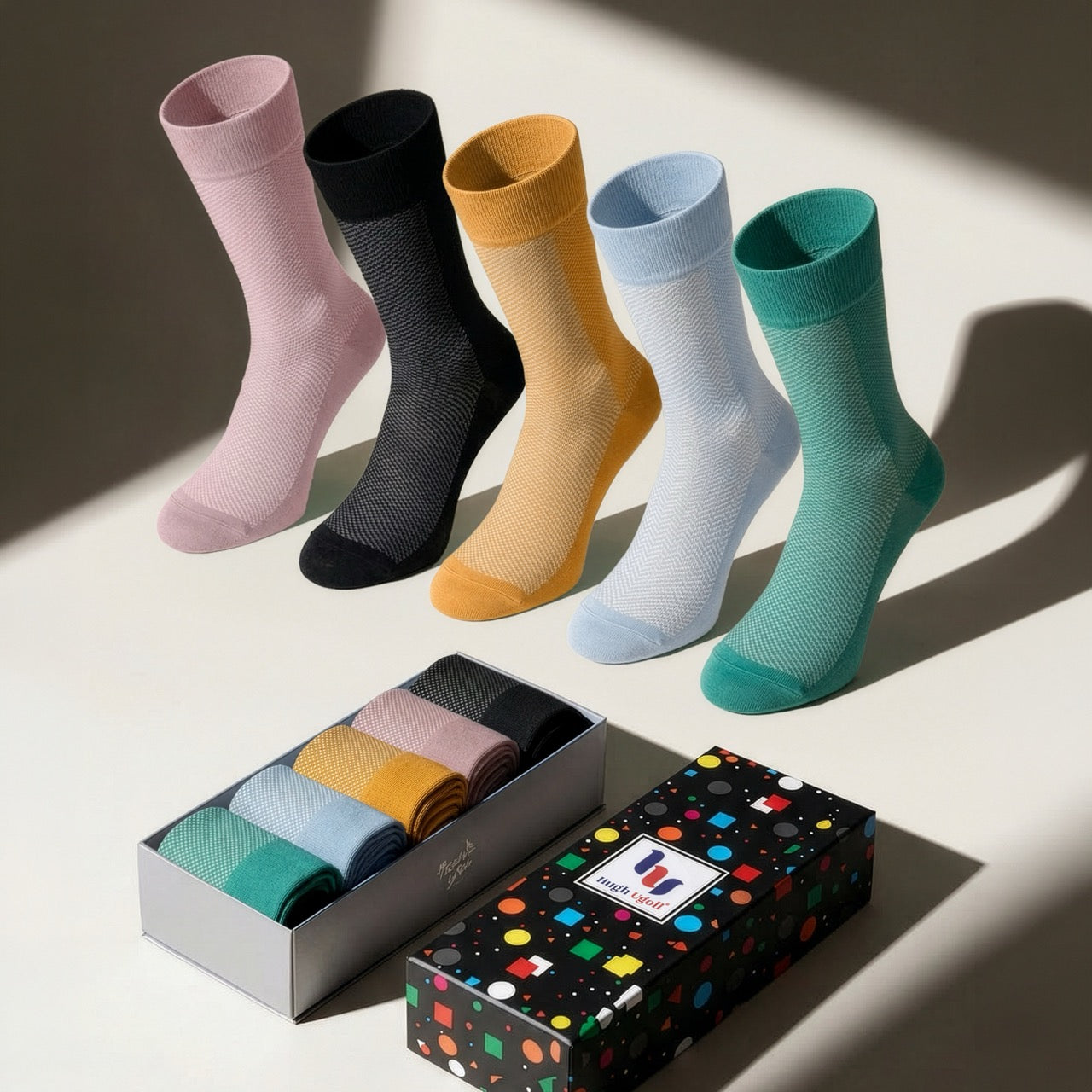
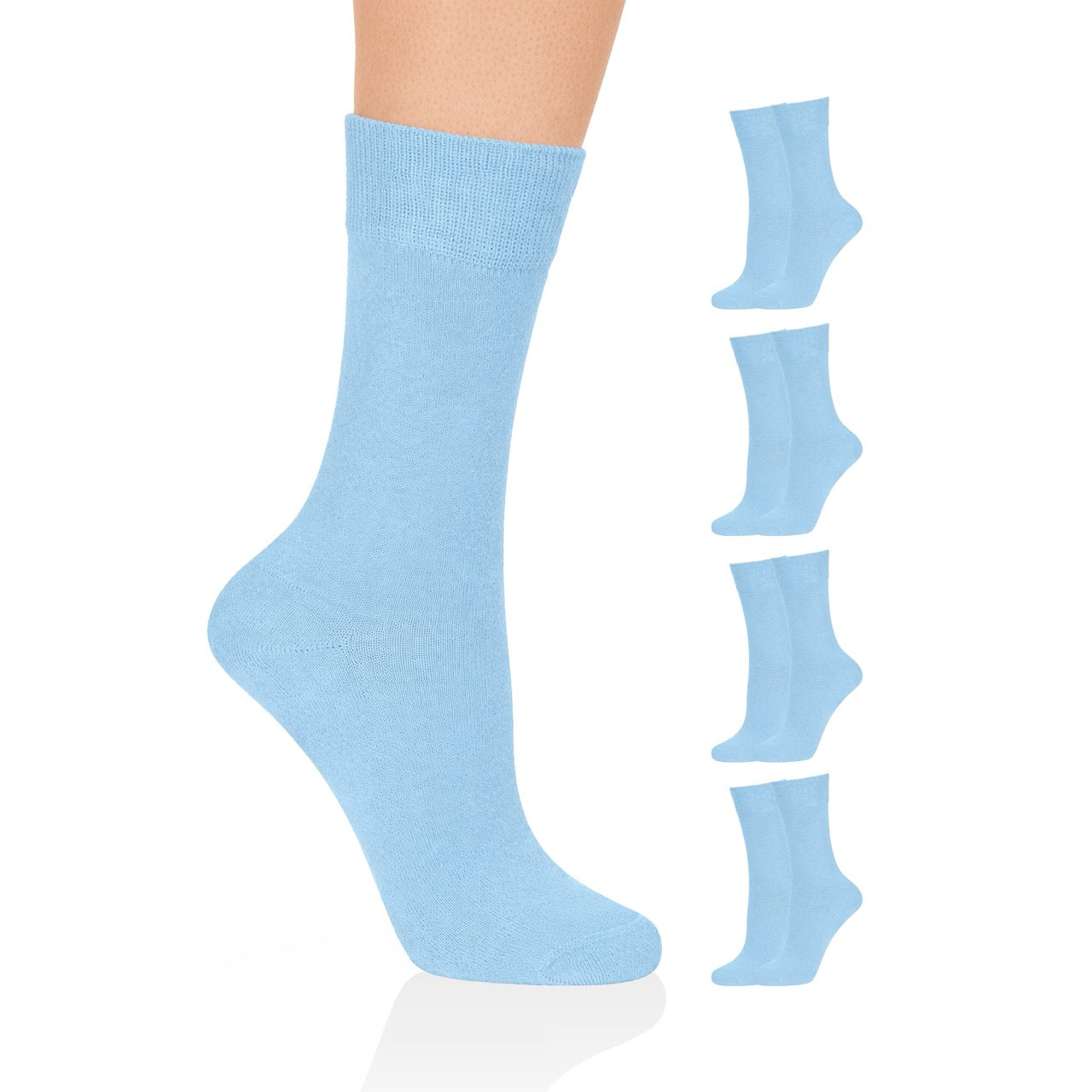
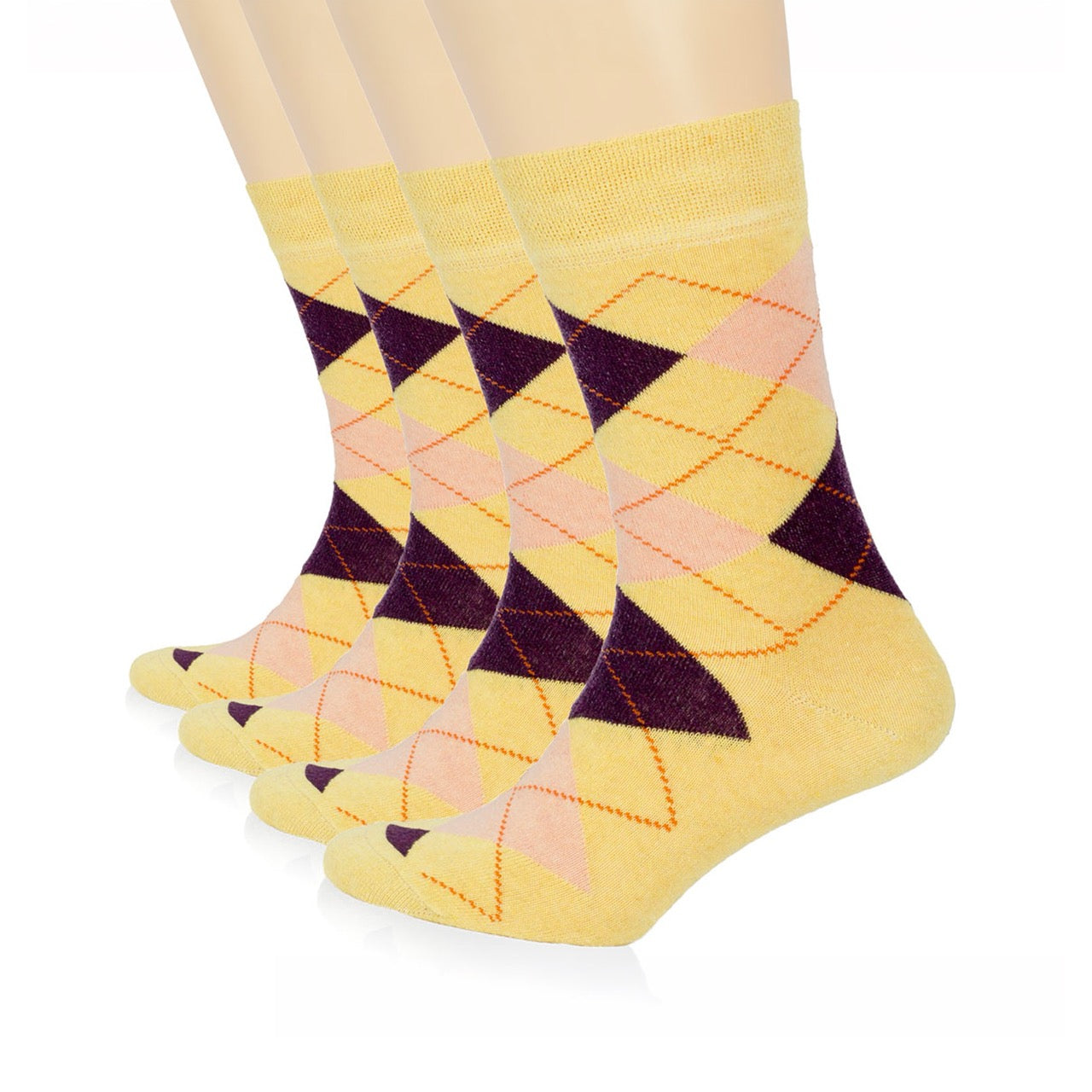
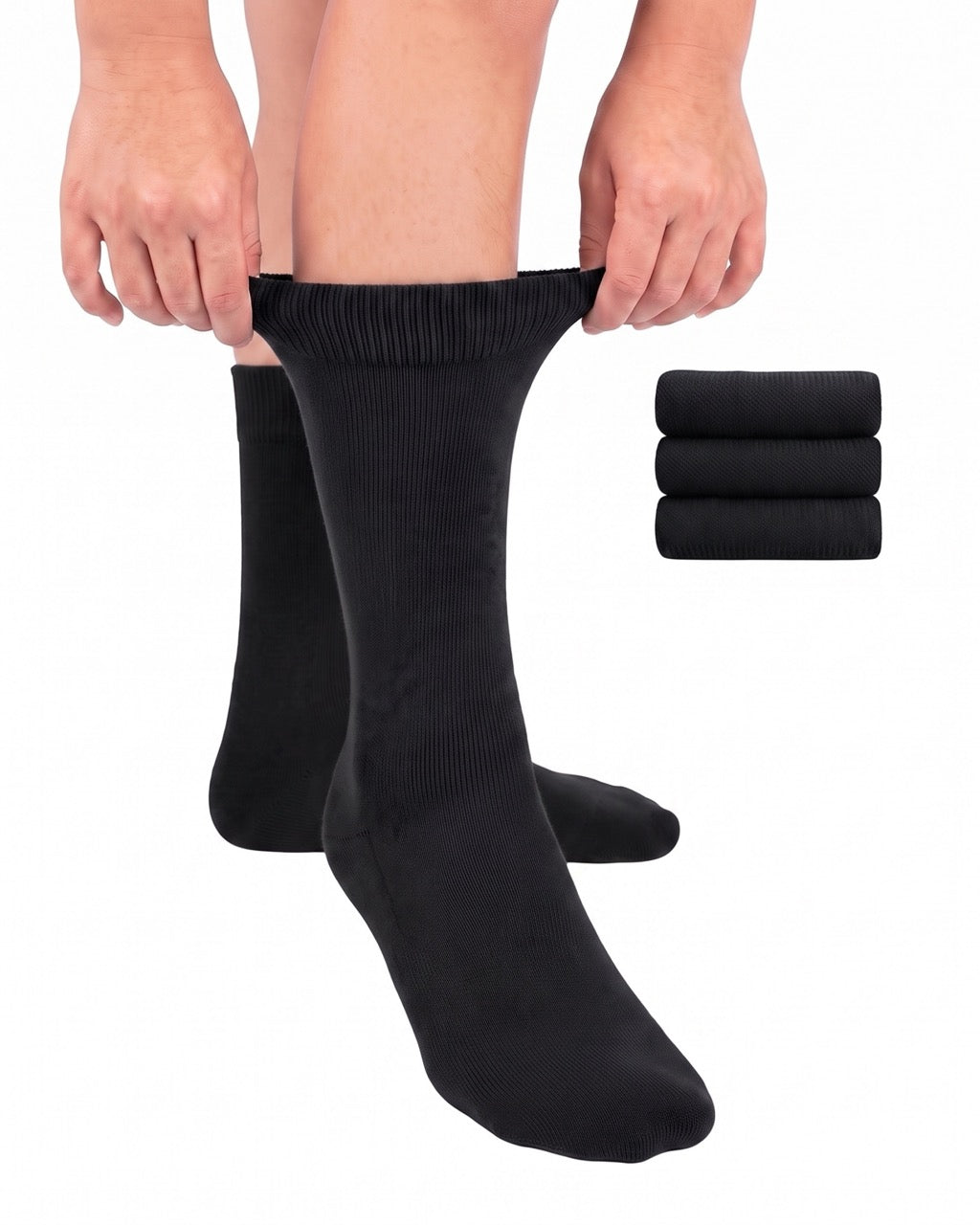


Regular socks use firm elastic in the cuff to stay up, which suits most people with stable foot size and healthy skin. Non-binding socks use a wider, softer top that holds the sock in place without squeezing, which many people prefer if their feet swell, their skin is sensitive, they have reduced sensation or they simply dislike marks on their legs. Test your current pair at the end of the day: a deep groove that lingers after you take the socks off, or a band you cannot slide a finger under, suggests the top is too snug.
Key Takeaways
Most people buy socks the way they buy paper towels: grab a pack, check the size, move on. Then one day you take your socks off and notice a deep red ring around your calf, or a family member mentions that their doctor suggested "non-binding" socks, and suddenly the sock aisle feels like it has a vocabulary test attached.
This guide compares regular socks and non-binding socks in practical terms. We will look at how each one is built, what the difference feels like on your leg, who tends to be happier in which style, and how to test your own socks at home in about two minutes. By the end you should know which type belongs in your drawer, and whether you need both.
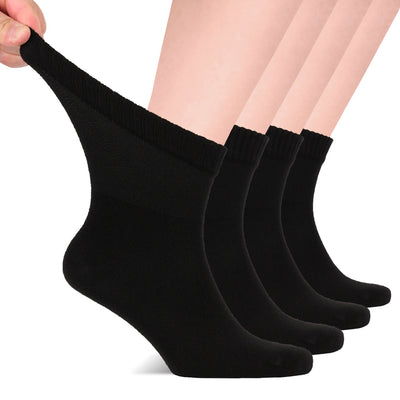
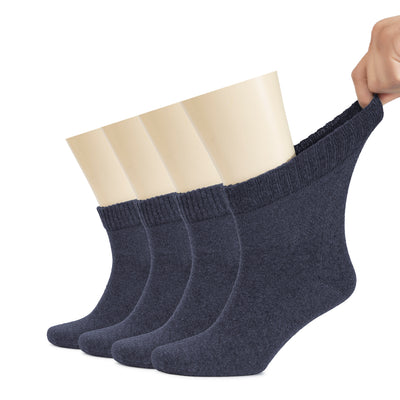
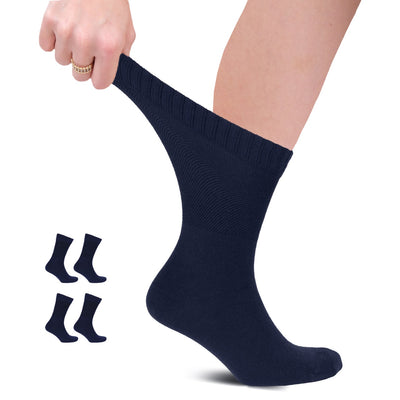
Regular socks use elastic in the cuff, and often through the leg of the sock, to stay up. That elastic grips. It does its job well for most feet most of the time. Non-binding socks (also called non-constricting or loose-top socks) are built so the top band holds the sock in place without squeezing the leg. The yarn, the knit and the width of the cuff are all chosen to give gentle contact rather than firm grip.
If your feet and ankles are the same size at the end of the day as they were in the morning, you will probably be fine in regular socks. If they swell, if you leave marks, if you have sensitive skin or reduced feeling, or if someone on your care team has suggested a looser fit, non-binding is the style to look at first.

A typical sock is knitted from a main yarn, such as cotton, wool, bamboo viscose or a synthetic, together with a thin elastic thread, usually spandex or elastane. The elastic is what lets a sock stretch over your heel and then snap back to its shape. In a standard sock it appears in several places:
That is a sensible design. A sock that cannot stay up is irritating, and a sock that slides into the shoe and bunches under the heel is worse. The trade-off is that the same grip that keeps the sock in place also presses on your skin. With ordinary feet that pressure is barely noticeable. With feet that change size during the day, it can become a constant squeeze.
Non-binding socks start from the same basic ingredients but make different choices about how the top works. While every brand does it a little differently, you will usually see some combination of the following:
People sometimes assume this means the sock will fall down. A well-made pair should stay up by sitting snugly, not tightly, and by using a stretch that adapts to your leg. If a sock falls down after ten steps, that is a poor sock, not proof that non-binding does not work. We explain the design in more detail in What Are Non-Binding Diabetic Socks?.
| Feature | Regular Socks | Non-Binding Socks |
|---|---|---|
| Cuff | Narrow, ribbed, firm grip | Wider, softer, light contact |
| Elastic content | Higher, spread through cuff and leg | Lower, designed not to squeeze |
| Marks on skin | Common, especially at end of day | Usually minimal when sized correctly |
| Stays up | Very reliably | Depends on quality; good pairs stay put |
| Best for | Healthy feet, athletic use, snug fit preference | Swelling, sensitive skin, reduced sensation, all-day wear |
| Typical price | Wide range, often lowest | Mid-range; varies with fiber and construction |
| Style range | Almost unlimited | Growing, but narrower |
You do not need a medical device to find out whether your socks are squeezing. Try these checks at the end of a long day.
We go deeper on the subject of fit in How Tight Is Too Tight?, which covers compression styles but offers fit checks that apply to any sock.
Regular socks are a perfectly good choice for plenty of people, and we would not suggest changing a pair that works. They tend to suit:
If this sounds like you, a quality regular sock in a breathable fiber is a good fit. Our men's socks and women's socks collections include options in bamboo and cotton.
Non-binding styles first became popular with people managing diabetes, because loose tops are a common recommendation in foot-care guidance. But the audience is much wider now. People often reach for them when:
A related point worth knowing: the idea that a looser top can be easier on circulation is part of why healthcare providers often mention non-binding socks. Our piece on how non-binding socks support better circulation covers the reasoning in more depth. As always, your own provider is the right person to ask about your own legs.
It is easy to mix these up, so here is the distinction. Compression socks are deliberately tight, and in a graduated design the pressure is highest at the ankle and lower up the leg. They are meant to be firm. Non-binding socks are the reverse: they aim for the lightest hold that still keeps the sock in place. Some people need compression, and some should avoid it, which is a conversation for a healthcare professional. If you want to see the comparison laid out, Compression Socks vs. Regular Socks is a helpful companion piece.
Whichever style you choose, the fiber affects how the sock feels and behaves.
If you are not sure what the label means, our guide to reading a sock label decodes the marketing terms so you can see what you are actually buying.
If you are curious but unsure, a low-risk way to test is to buy one pack and wear a pair on a day when you are on your feet for several hours. Compare how your legs look and feel at the end of the day with how they feel after a normal day in regular socks. A few practical tips:
Good starting points include the Men's Lightweight Bamboo Diabetic Ankle Socks, the Men's Diabetic Ankle Thin Cotton Socks and the Unisex Cotton Diabetic Crew Socks. All three are listed as loose-fit diabetic socks with a wide, non-binding top. You can also browse the full diabetic socks collection.
Non-binding socks often cost a little more than the cheapest regular pack, mainly because the construction is more specialized and the yarns tend to be softer. Whether that is worth it depends on how much your socks bother you. If you wear socks twelve hours a day and feel the squeeze every afternoon, a modest price difference spread over a year of wear is easy to justify. If you only wear socks for short periods and never notice them, stick with what you have. Our comparison of drugstore diabetic socks versus specialty brands goes into what the price differences really cover.
The sock you choose also changes how your shoe fits. A wide, soft non-binding top sits comfortably under trousers and inside most shoes, but a thicker knit takes up more room than a thin dress sock. When you buy a new style, wear it with the shoes you plan to use most and walk around the house for ten minutes. Pay attention to the toe box, the instep and the back of the heel. Tight spots in any of those places mean the combination is too crowded, and you may need a thinner sock or a roomier shoe. This matters most for work shoes, boots and slim sneakers, where there is little spare space to begin with. If your shoes feel snug even with thin socks, a fitting at a shoe store is a worthwhile next step.
You do not have to pick a side. Many people keep a few non-binding pairs for long days, travel and weekends, and wear regular socks for workouts or when they want a particular color or pattern. Rotating between the two also spreads wear across more pairs, which means each pair lasts longer.
Regular socks and non-binding socks are tools for slightly different jobs. If your feet stay the same size, your skin is not bothered by cuffs, and you like a firm grip, regular socks do the job. If you notice marks, swelling, sensitivity or a feeling of being squeezed, a non-binding sock is built to feel gentler and is worth a trial. Do the groove test tonight, check how your current pair sits on your leg, and let what you find guide your next purchase. If you have a medical condition, ask your healthcare provider what is right for your feet.
It means the top is built to hold the sock in place without squeezing the leg, using a wider, softer cuff and less elastic than a standard sock.
A well-made pair stays up by sitting snugly rather than tightly. If a sock slides down after a few steps, it is a poor sock, not proof that the style does not work.
No. Compression socks are deliberately firm, often tightest at the ankle. Non-binding socks aim for the lightest hold that keeps the sock in place.
People whose feet or ankles swell, who have sensitive skin or wide calves, or who have reduced sensation often prefer them. Ask your healthcare provider if you have a medical condition.
Look for a deep groove that lingers after you remove them, a band you cannot slide a finger under, or tingling or numbness after hours of wear.
Discover All Hugh Ugoli Socks
Shop All Socks