Cart
0
You may also like
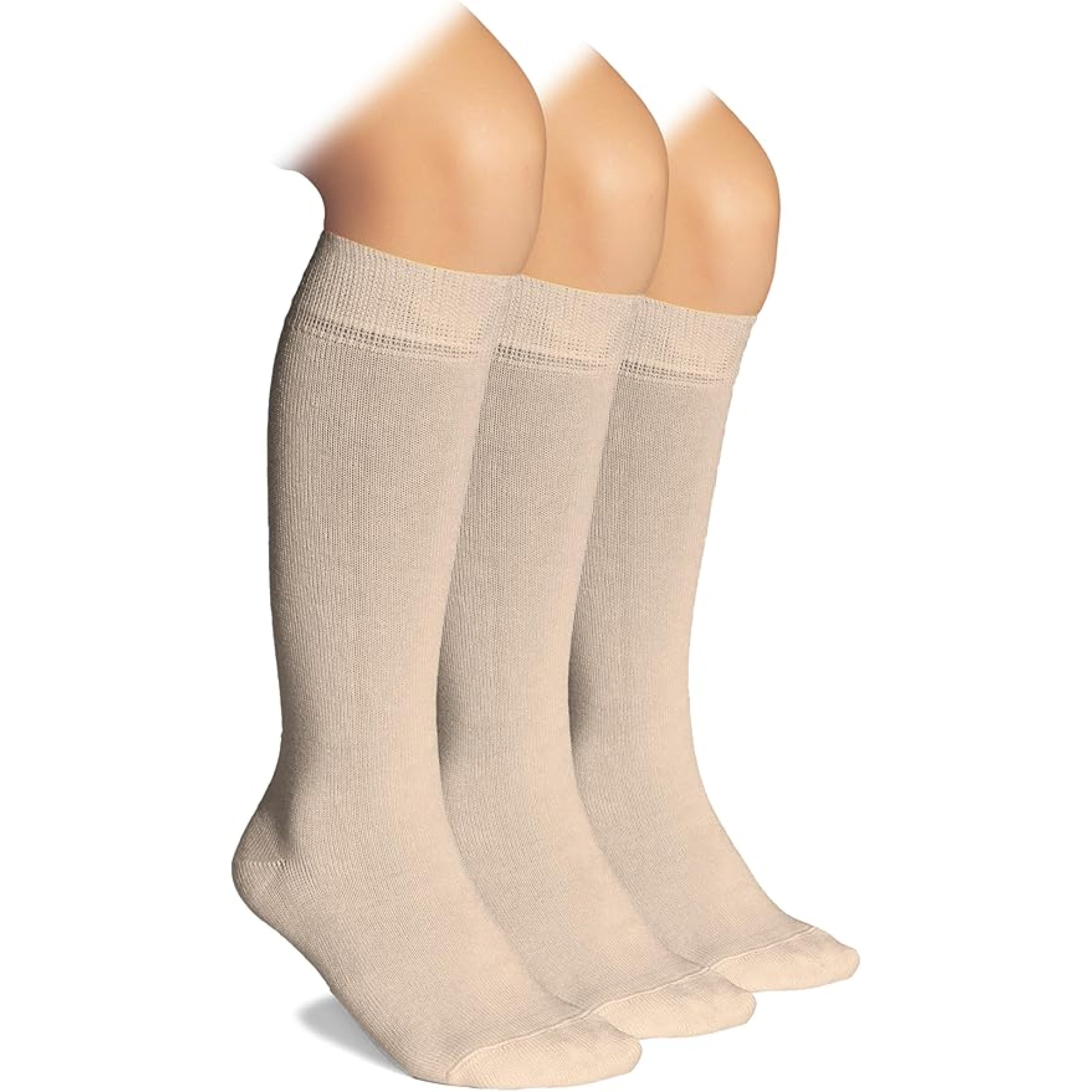


Buying socks for kids sounds simple until you're standing in the aisle, looking at a label that says "size 2–4" on one package and "shoe size 4–8" on another, and you can't remember whether your seven-year-old is a youth size six or a women's size four. Kids' sock sizing is genuinely confusing because there is no single standard — manufacturers use age ranges, shoe sizes, and generic small/medium/large designations interchangeably, and the mappings between them don't always agree. What follows is a plain-English guide to how children's sock sizing actually works, how to find the right size for any age, and when it's time to move up.
Getting the size right matters more than most parents expect. A sock that's too small bunches at the toe and creates friction that leads to blisters; one that's too large wrinkles inside the shoe and does the same thing. For children who are still building their walking gait, an ill-fitting sock inside the shoe is an active problem, not just a minor annoyance. A sock that fits correctly lies flat against the foot, stays in place through the day, and doesn't bunch, slip, or constrict — and finding that fit starts with understanding what the numbers on the package actually mean.
Children's socks are sold using three different sizing conventions, and all three appear regularly on store shelves and online listings.
Age-based sizing is the most commonly seen format on children's socks, particularly for infants and toddlers. You'll see labels like "0–6 months," "12–24 months," or "4–6 years." This is the least precise system because children's foot growth varies considerably — a four-year-old in one family might wear a children's shoe size 9, while a four-year-old in another wears a size 11. Age ranges are useful as a starting estimate but become less reliable as children get older and growth rates diverge.
Many sock manufacturers, particularly for school-age children, list a shoe size range rather than an age range. This is more accurate because shoe size directly corresponds to foot length, which is what actually determines sock fit. A sock labeled "shoe sizes 4–7" will fit any child — regardless of age — whose foot fits that range of shoes. When you know your child's current shoe size, this is the number to match against sock packaging.
Some brands assign their own proprietary sock size numbers (S1, S2, M1, etc.) or list a numeric sock size (size 4, size 5, size 6) that corresponds loosely to shoe size but isn't directly equivalent. These require a conversion table specific to that brand, which should be available on the brand's website or on the packaging insert.
The following table reflects typical developmental averages. Because children grow at different rates, these figures should be treated as starting points rather than guarantees. If your child wears a shoe size that's significantly different from what their age would suggest, trust the shoe size, not the age range.
These are US sizing standards. If you're shopping from a brand that uses European sizing, add approximately 31–32 to the US children's shoe size to get the EU equivalent in the toddler range, and note that EU sock sizing often corresponds directly to foot length in centimeters.

The most reliable method for buying correctly sized kids' socks is to start with your child's current shoe size and work backward from there. Most sock manufacturers publish a shoe-size-to-sock-size conversion on their packaging or website. In general terms:
The shoe size approach works better than the age approach particularly for children whose foot growth is ahead of or behind the average curve — which is common. If your nine-year-old wears a size 5 youth shoe, buy socks in the 8–12-year range or adult small, regardless of what the age-based label says.
A few patterns come up repeatedly when parents report sock problems, and most trace back to sizing rather than product quality.
When you have access to your child's shoe size — which for any child old enough to have worn shoes, you do — the shoe size is always more accurate than the age range. Age ranges are designed for newborns and very young infants who haven't yet been sized for shoes; past that stage, shoe size is the reliable reference point. A parent who knows their child wears a size 11 shoe shouldn't buy socks sized "5–7 years" just because their child is six years old — they should buy the sock size that corresponds to shoe sizes 10–12.
It's tempting to buy one size up from the current fit so the socks last longer before needing to be replaced. The problem is that a sock that's a full size too large will wrinkle inside the shoe — typically at the toe or along the arch — and the wrinkles create localized pressure points that cause blisters during active wear. Children's feet grow quickly enough that buying the current correct size and replacing when needed is genuinely better for foot comfort than buying ahead. If you want to hedge, buying the sock at the top of its listed range (so a shoe-size-8 foot in a sock labeled 6–9) is a reasonable middle ground, but going an entire size above the listed range creates fit problems.
Some children's socks — particularly those with higher cotton content — shrink measurably in the first few washes. A sock that fits correctly when purchased can become noticeably snug after its first hot wash cycle. If socks that fitted fine at purchase begin leaving elastic marks or feel tight at the toe after washing, check the care label; if the sock is meant to be washed in cold or warm water and you've been washing it hot, that's a likely cause. Replacing rather than continuing to wear socks that have shrunk to below-fit is worth the cost of the socks, because the heel and toe of a too-small sock wear out faster and the fit throughout is compromised.
Children's socks can look fine while their elastic has already degraded to the point where they won't stay up during wear. If a child is constantly pulling up their socks, the most likely cause isn't the child's movement — it's that the cuff elastic has given out. This happens faster with frequent high-heat washing and is the most common reason kids' socks need replacing even when the fabric itself still looks intact. Stretch the cuff before putting socks in the drawer; if it doesn't snap back firmly, the sock will slide down during the day.
Children's feet grow at a rate that surprises most parents when they see it stated plainly. From birth through age five, children's feet grow approximately half a size every two to three months on average — meaning a child can go through two or three shoe sizes per year during early childhood. The growth rate slows but remains significant through early adolescence, averaging one to two shoe sizes per year between ages six and twelve.
Practically, this means that socks bought to fit in October may be too small by February. Periodic sock size checks are worth adding to the routine that already includes shoe size checks. A quick finger-width test at the toe — there should be about a finger-width of space at the end of the sock, not more, not compressed — takes five seconds and reveals whether the current socks still fit or have been outgrown.
The transition from children's to adult sock sizing typically happens sometime between ages eleven and fourteen, depending on foot growth. For girls, it often happens earlier — a twelve-year-old in a women's shoe size 6 is already within the range of adult women's small socks. For boys, the transition tends to happen slightly later but then moves quickly through the small and medium adult range.
The practical signal for transition is when your child's shoe size moves out of the youth range and into adult sizing. In US sizing, this is when boys move from youth sizes into men's sizes (typically at a US men's 7 or so) and when girls move from youth sizes into women's sizes (typically around women's 5–6). At that point, children's sock sections will no longer carry the right sizes, and adult socks — particularly those with a smaller adult size option — become the correct choice.
Adult socks designed with quality construction in mind can be a meaningful upgrade from the thin, quick-wear kids' socks that many families default to through the school years. A thin bamboo ankle sock in an adult small fits a young teen whose foot has transitioned into women's sizes while providing the softness and breathability that thinner kids' socks often lack — particularly relevant for active wear where moisture management matters. For teen boys who have transitioned into adult men's sizing, a bamboo ankle sock with a non-binding cuff stays up without the tight elastic that causes discomfort during long school days or sports.
Sock fit for children under two years old carries a specific safety consideration that doesn't apply to older kids: very small socks that come off a baby's or toddler's foot are a choking hazard. This is a practical argument for fitted socks over loosely sized ones in the infant and toddler range — a sock that consistently stays on is safer than one that slides off during the night or during movement. Socks with a grippy sole or a snug ankle band provide some additional retention without being constrictively tight.
For newborns specifically, sock length matters more than most parents expect. A crew-length sock on a newborn — even in the correct size — often folds over at the top because the foot is proportionally short relative to the total sock height. This fold can create a pressure point against the shin in a swaddled or car-seat-positioned baby. Newborn-specific socks with a shorter cuff avoid this; longer socks should be rolled down rather than left folded.
If you're ordering online and want to be certain about sizing, measuring foot length takes two minutes and removes the guesswork entirely.
Do this in the afternoon or evening rather than in the morning — feet are slightly longer after a day of being on them, and sizing to the end-of-day measurement means socks will fit comfortably at the time of day when the foot is at its largest.
Beyond size, the type and length of sock affects how well it works for different ages and activities.
Crew-length socks work best for children not yet walking — they're easy to put on, stay in place during movement, and are less likely to be kicked off than ankle styles. Non-slip socks with grippy soles become genuinely useful once a child starts pulling to stand and taking first steps on hard floors. At this stage, the grip element is a real safety feature, not a marketing add-on.
Ankle socks become more common once children start wearing closed shoes consistently — the shoe holds the sock in position, and ankle length is more comfortable during active play without extra fabric bunching inside the shoe. Crew socks remain useful for colder months and for children who find ankle socks slide down during the day. Athletic socks with some cushioning at the heel and ball of the foot are worth considering for children who are active in sports, as the cushioning provides impact absorption that thin dress-style socks don't.
At this stage, sock preference becomes more personal. Many tweens and teens care about the sock being invisible above the shoe — pushing them toward no-show and low-cut styles. These work well when the sock has good elastic that stays in place without a shoe cuff to help anchor it. Crew and quarter-length socks remain practical for athletic and outdoor activities where additional coverage matters.
Kids' sock sizing is more layered than it appears, but it simplifies considerably once you know to prioritize shoe size over age range, measure periodically rather than assuming last season's size still fits, and watch for the specific signs that a size has been outgrown. Children grow out of socks faster than most clothing because foot growth is so rapid through the first decade of life — treating socks as something to check and refresh seasonally rather than annually keeps feet comfortable, avoids the blistering and pressure problems that poorly fitting socks cause, and makes the next shopping trip considerably faster when you know exactly which shoe size to match.
A child in a US youth shoe size 10 is typically in the 6–8 year range for socks or a size labeled "medium" in children's sizing. Most sock brands list shoe sizes 9–12 or 10–12 as a single sizing tier for this range. If you're buying from a specific brand, check their packaging or website for the shoe-size-to-sock-size conversion — some brands separate shoe sizes 9–10 and 11–13 as distinct tiers.
Children typically transition to adult sock sizes when their shoe size moves into the adult range — generally around a US women's size 5–6 for girls and a US men's size 7–8 for boys. For most children this happens somewhere between ages 11 and 14, though individual variation is wide. When you can no longer find a children's sock that covers their listed shoe size, adult small or women's small is the natural next step.
For children under age five, checking every two to three months is reasonable given how quickly feet grow in this range — roughly half a shoe size every two to three months is average. For school-age children, checking at the start of each season (four times per year) is a practical rhythm. The practical test is a finger-width check at the toe: there should be roughly a finger-width of space, not more and not zero.
The most common causes are a size that's too large (more sock than foot means the cuff has nothing to grip), degraded elastic in the cuff (most common after repeated high-heat washing), or a style without enough cuff height to anchor without a shoe helping. Check the elastic by stretching the cuff and releasing — it should snap back immediately. If it returns slowly or doesn't return fully, the elastic has given out and the sock will slide regardless of how it's positioned.
Size down, not up. A sock that's slightly snug will stretch to fit comfortably during wear; a sock that's too large creates wrinkles inside the shoe that become pressure points and cause blisters. If a child is on the boundary between two sizes — for instance, at the top end of one range and the bottom of the next — buying the current size rather than the next one up will serve the foot better during wear, even if it means replacing sooner as the foot continues to grow.
He has been working for more than 20 years in the textile industry and has work experience in many parts of the world.