Cart
0
You may also like
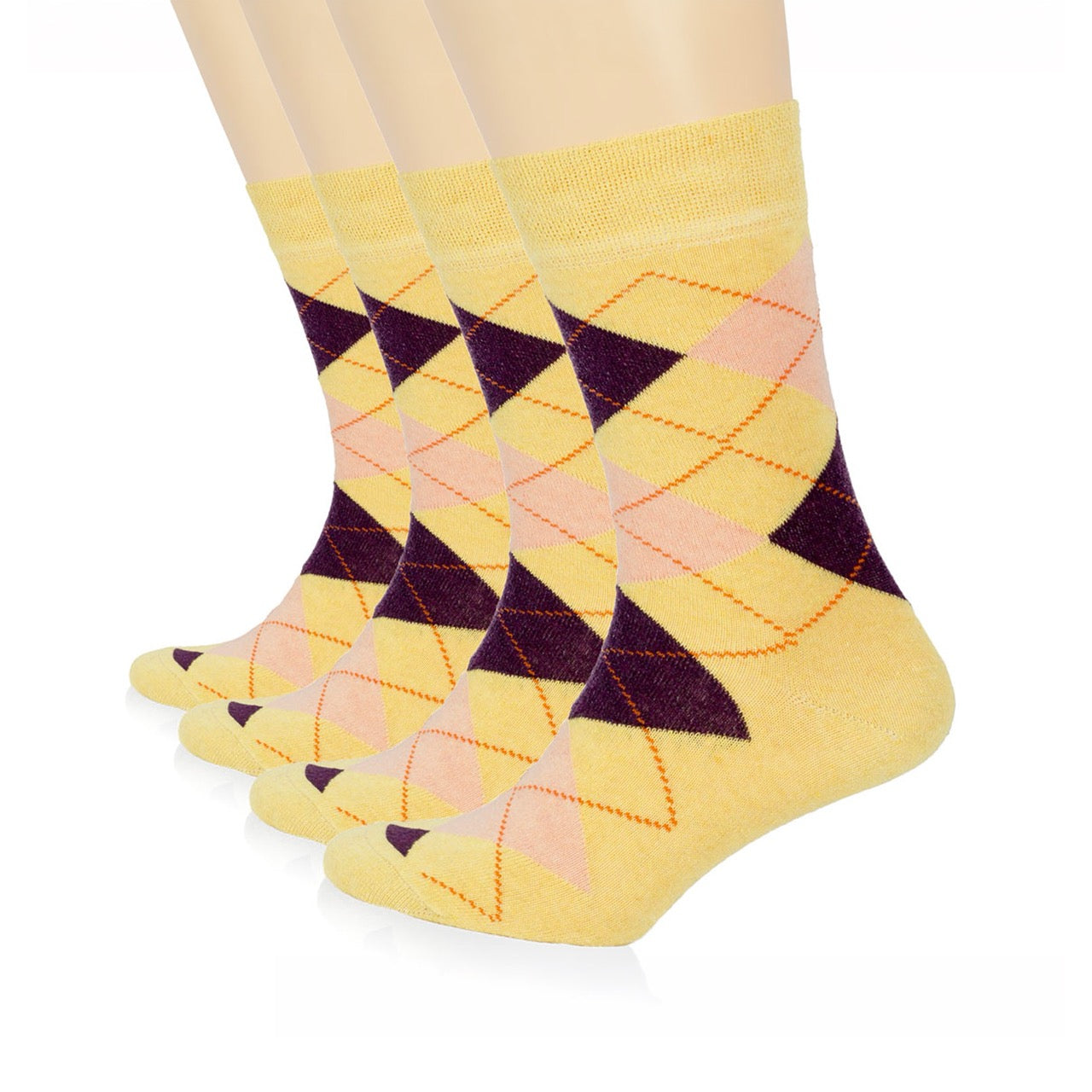


You bought a fresh pack of socks in August. By late October the toe seam is sitting across the middle of your child's toes, the cuff has left a ring above the ankle, and nobody said a word about it. This is not carelessness — it is arithmetic. Children's feet grow in bursts, socks stretch enough to hide the problem for a while, and the child who is wearing them has almost no vocabulary for "this is half a size too short."
This is a practical reference for parents who want to stop guessing. It covers how quickly feet actually grow at each age, why socks go wrong before shoes do, the physical signs that a size-up is overdue, and how to build a checking habit that takes less than a minute.
Growth is not a steady drip. It is fastest in the first three years, slows through the primary school years, then accelerates again around puberty. Broad expectations look like this:
The practical takeaway is not the numbers themselves. It is that the interval between checks should get longer as the child gets older — monthly for toddlers, seasonally for a nine-year-old, and back to monthly for a teenager who has just outgrown two pairs of trainers in a year.
Age is a starting point, not an answer. Foot length at a given age varies widely between children who are all developing normally, and foot width varies even more. A child with a broad forefoot may need a larger sock than their shoe size suggests simply to get enough width, while a narrow-footed child of the same age is swimming in the same pair. If you are working from an age chart, treat it as a place to begin and then confirm against the actual foot. Our kids' sock size chart by age and shoe size exists for exactly this purpose — matching to shoe size first, and using age only where shoe size is unknown.
Most parents notice shoes first because shoes are rigid. A shoe that is too short stops the toes at a hard wall, and the child complains, or limps, or refuses to put it on. A sock does none of that. Knitted fabric with elastane in it will stretch to cover a foot a size and a half too big for it, and it will keep doing so for months.
What stretching does is redistribute the problem. Instead of the toe simply not fitting, you get:
None of this is dramatic enough for a child to raise it. It is just mildly uncomfortable in a way that becomes normal.

You can run through all of these in under a minute, ideally at bath time when the socks are coming off anyway.
Take one sock off. Lay it flat and hold it against the foot without stretching it. The heel pocket should line up with the heel, and there should be about a centimetre of unstretched fabric beyond the longest toe. Then look at the leg for cuff marks. That is the whole check. Doing it on the first weekend of every month for a toddler, and at the start of each school term for an older child, will catch almost everything.
The APMA's guidance on buying children's footwear makes a related point that is easy to overlook: have children try shoes on with the socks they will actually wear, since a thick sock and a thin sock can differ by most of a shoe size. The same logic runs backwards. If you switch your child from thin summer socks to thicker winter ones, the shoes that fit in June may be tight in November without the foot having grown at all.
It is tempting, and it is usually a mistake. A sock that is too large bunches, and bunched fabric under the arch or at the toe is a friction point inside a shoe. It also defeats the shaped heel — the pocket lands in the wrong place and the sock rotates around the foot during the day.
There is a narrower version of this that does work. Most children's sock sizes are sold as ranges spanning two or three shoe sizes. If your child is at the bottom of a range and due a growth spurt, buying into that range rather than the one below gives you real headroom without oversizing. If your child is at the top of a range, buy the next range up now — you are already at the point where the fabric is doing the stretching.
A second practical approach is to stagger purchases. Rather than buying eight pairs at the start of the school year, buy four in September and four in January. You end up with the same number of pairs, half of them bought after the autumn growth has already happened, and you avoid a drawer full of socks that fitted for six weeks. If sock loss is also part of the picture, our guide to keeping kids' socks paired through the laundry covers the labelling systems that survive contact with a real household.
Since you are replacing anyway, it is worth upgrading the things that make a growing foot more comfortable rather than just buying the same sock in a bigger number.
If your child has sensitive skin or reacts to seams and textures, the sizing conversation gets more consequential rather than less — a sock that is fractionally short is felt much more acutely. Our notes on seamless socks for sensory-sensitive children and on socks for children with eczema go into the fabric and construction details in more depth.
If you want one rule rather than seven signs, use this:
Tie the check to something you already do — the start of a school term, a birthday, the day the clocks change. The failure mode is never that the check is difficult. It is that nobody remembers to do it.
You can browse the full range in our kids' socks collection, and the complete guide to choosing kids' socks covers fabric, length and construction if you are starting from scratch.
It depends heavily on age. Under three, a child may move up a full size every four to six months. Between six and ten, a full size a year is more typical. Around puberty, a full size in a single season is common. Because the pace changes so much, checking on a schedule works better than assuming a fixed interval.
By shoe size wherever you know it. Age charts are averages, and children of the same age routinely differ by two or three shoe sizes without anything being unusual. Use age only as a fallback, then confirm the fit against the actual foot.
They are a common source of friction and pressure rather than something more serious. A short sock pulls the toe seam back onto the toes and holds the fabric taut across the top of the foot, which is where rubbing and blisters tend to start. Sizing up removes the pressure point. If you see skin damage, persistent redness or your child is in pain, have it looked at rather than assuming it is the sock.
Together. Shoes are fitted with socks on, so a new pair of shoes assessed over a stretched, thinned sock will be fitted slightly too large. Replace the socks first, or bring the new socks to the shoe fitting.
Most families find seven to ten pairs of school socks workable — enough to cover a week plus losses, without buying so many that half of them are outgrown before they are worn. Buying in two batches across the school year rather than one large batch in September wastes fewer pairs.
This article is for general information and is not medical advice. Talk to your healthcare provider about your own feet.
He has been working for more than 20 years in the textile industry and has work experience in many parts of the world.