
Cart
0
You may also like




Not everyone with diabetes needs to stop trimming their own toenails, but a specific group does: anyone with reduced sensation, poor circulation, vision limits, difficulty reaching their feet, thickened or ingrown nails, or a previous foot ulcer. The reason is not that nails are dangerous. It is that clipping regularly produces small breaks in the skin, and on a foot with neuropathy you may not feel the injury, with reduced circulation it may heal slowly, and with elevated blood glucose an infection can spread faster. If none of those apply to you, self-trimming with correct technique — straight across, never into the corners, filing rather than cutting the edges — is generally reasonable.
Key Takeaways
It is one of the most ordinary things a person does. You sit on the edge of the bath, take the clippers out of the drawer, and trim your toenails. For most people it is a two-minute chore that carries no consequences at all. For someone living with diabetes, that same two minutes can be the beginning of a wound that takes months to heal.
This is not scaremongering, and it is not a blanket rule that applies to every person with diabetes. Plenty of people with well-controlled diabetes, good sensation in their feet, healthy circulation and clear eyesight trim their own nails safely for decades. The point of this article is to explain exactly why toenail cutting carries more risk with diabetes than without it, which specific circumstances shift it from "fine" to "leave it to a professional," and what safe practice looks like either way.
Three things change with diabetes, and they compound each other.
Diabetic peripheral neuropathy — nerve damage caused by sustained high blood glucose — commonly begins in the toes and works upward. Its most consequential feature is not pain but the absence of it. The National Institute of Diabetes and Digestive and Kidney Diseases explains that nerve damage can mean a person does not notice a cut, blister or sore on the foot. A clipper that catches the skin beside the nail does not announce itself. You finish, put your sock on, and carry on with your day while a small open wound sits unnoticed inside a warm shoe.
Diabetes is frequently accompanied by reduced blood flow to the lower limbs. Healing depends on circulation delivering oxygen, nutrients and immune cells to the site of an injury. When that supply is diminished, a cut that would close over in three days on a healthy foot can stay open for weeks. Time spent open is time available for infection.
Elevated blood glucose can impair the function of white blood cells, so an infection that would normally be contained locally has a better chance of spreading. This is the sequence behind the sobering figures the American Podiatric Medical Association cites: more than 100,000 lower limbs are amputated in the United States each year due to complications from diabetes. Their patient guidance on diabetes and foot health also notes something more encouraging — including a podiatrist in diabetes care is associated with a substantially lower risk of amputation and hospitalization.
A toenail trim is not dangerous because nails are dangerous. It is a common, repeated activity that produces small breaks in the skin, performed on the exact part of the body where a small break in the skin matters most.

If any of the following apply to you, this is the group where professional nail care is the standard recommendation rather than a precaution:
If none of these apply, self-trimming is usually reasonable — but the technique below still matters, and the situation is worth re-evaluating at every annual foot exam, because neuropathy develops gradually and quietly.
The American Diabetes Association's foot care guidance gives the core of it: trim straight across, do not cut down into the corners, and finish by filing sharp edges with an emery board rather than cutting them.
The full sequence:
A podiatrist (DPM) is the appropriate professional. Routine nail care for a person with diabetes and documented risk factors is often a covered medical service rather than a cosmetic one — many Medicare and commercial plans cover routine foot and nail care for patients with qualifying conditions, though the specifics depend on your plan and your documented diagnosis. It is worth asking your plan directly rather than assuming either way.
A typical schedule is every eight to twelve weeks, adjusted to how quickly your nails grow. Many people combine it with their regular diabetic foot examination, which is a sensible way to keep both on the calendar.
If cost or access is a barrier, ask your diabetes care team — some clinics run nail care sessions, and community health centers and podiatry schools frequently offer lower-cost options.
Nail care is one visible piece of a larger picture. The environment your foot lives in for sixteen hours a day matters at least as much.
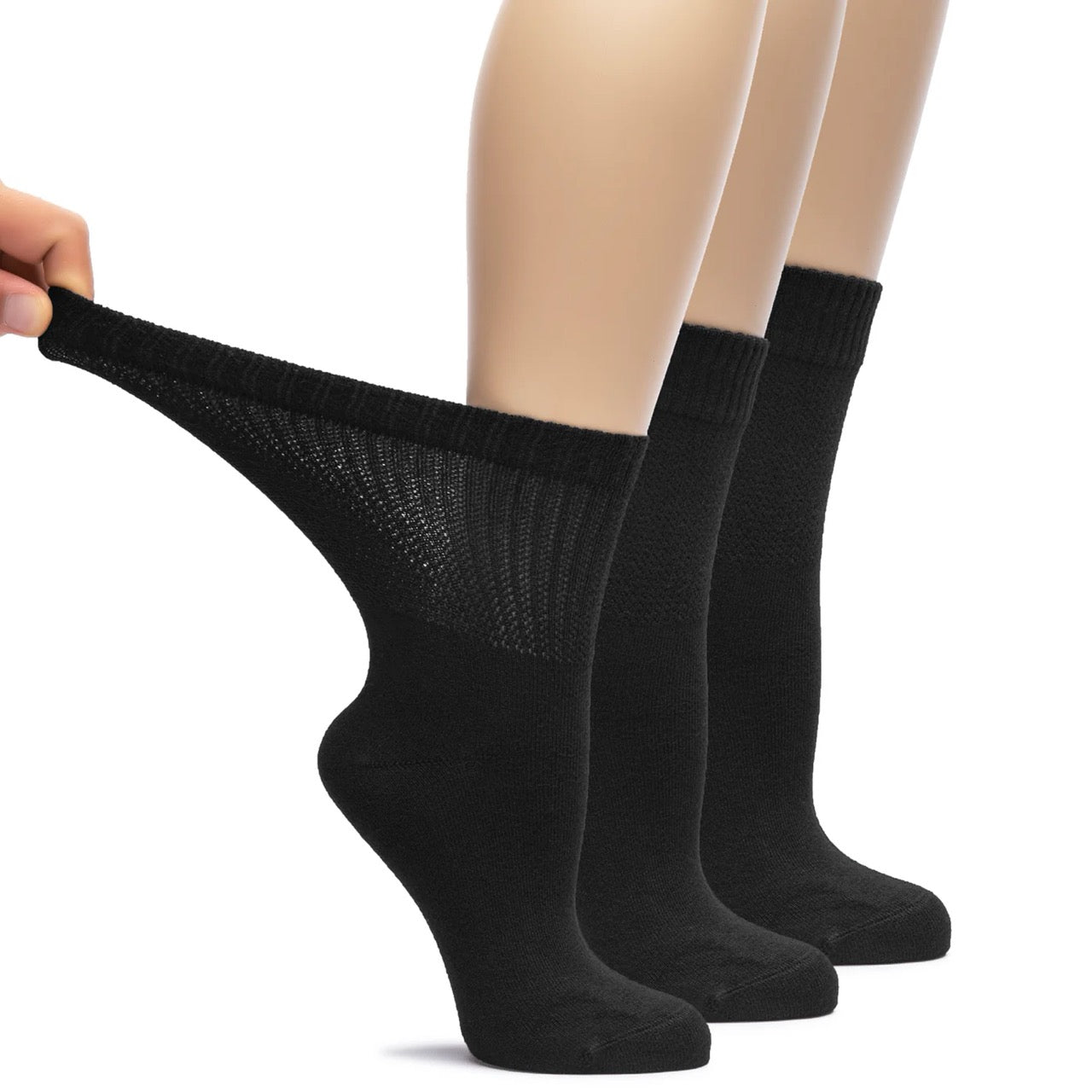
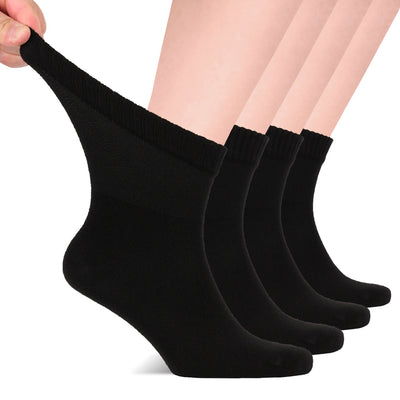
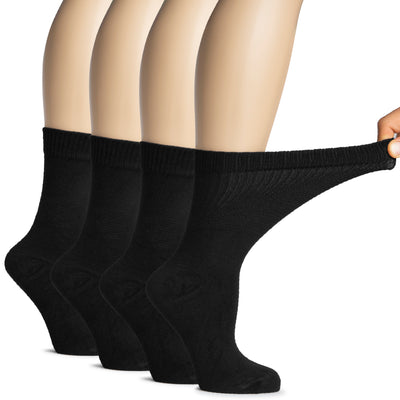
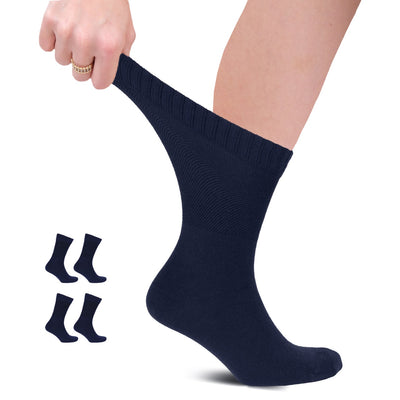
APMA's take-action list for people with diabetes puts socks near the top: wear thick, soft socks and avoid socks with seams that could rub and cause blisters or other skin injuries. That is the whole design brief for a non-binding diabetic sock — a flat or seamless toe so there is no ridge pressing across the toes, a cuff that holds position without banding the calf, and a breathable fiber that keeps the skin drier through the day.
Practical points to look for:
The full non-binding diabetic sock collection covers ankle and crew heights in both cotton and bamboo.
Professional nail trimming every couple of months only works alongside daily attention. The two habits that do the most:
Contact your healthcare provider promptly — not at your next scheduled appointment — if you notice any of the following:
NIDDK's guidance is consistent on this point: with reduced sensation, waiting for pain is not a safe monitoring strategy. Looking is.
This article is for general information and is not medical advice. Talk to your healthcare provider about your own feet.
Many can. If you have good sensation in your feet, healthy circulation, clear vision, can comfortably reach your toes, and your nails are normal in thickness and shape, self-trimming with correct technique is generally considered reasonable. If any of those conditions are not met — particularly neuropathy or poor circulation — professional nail care is the standard recommendation. Ask your diabetes care team which group you are in; it is a question they expect.
Cutting down into the corners of the nail is the most common cause of ingrown toenails, where the nail edge grows into the surrounding skin and breaks it. On a foot with reduced sensation and slower healing, an ingrown nail is a meaningfully higher-stakes problem than it is otherwise. Trimming straight across and then filing the sharp corners with an emery board avoids creating that edge in the first place.
Tell them you have diabetes before anything begins — a professional salon may decline, which is a good sign rather than a bad one. If you do proceed, the salon should be using properly sterilized or single-use instruments, should not be cutting or pushing back cuticles, should not be using a foot file or blade on calluses, and should not be soaking your feet for extended periods. Many people with diabetes find a podiatrist a simpler and safer choice.
Every eight to twelve weeks suits most people, adjusted to nail growth rate. Scheduling it alongside a regular diabetic foot examination is a practical way to keep both consistent.
They affect the environment around the nail. A tight or seamed sock presses on the toes and nail edges through the day, and a fiber that holds moisture keeps the skin around the nail soft and more vulnerable to fungal issues. A seamless-toe, non-binding sock in a breathable fiber is designed to reduce pressure across the toe box and keep the skin drier. It is one supporting element of foot care, not a substitute for professional nail care or daily checks.
Discover All Hugh Ugoli Socks
Shop All Socks


