Cart
0
You may also like
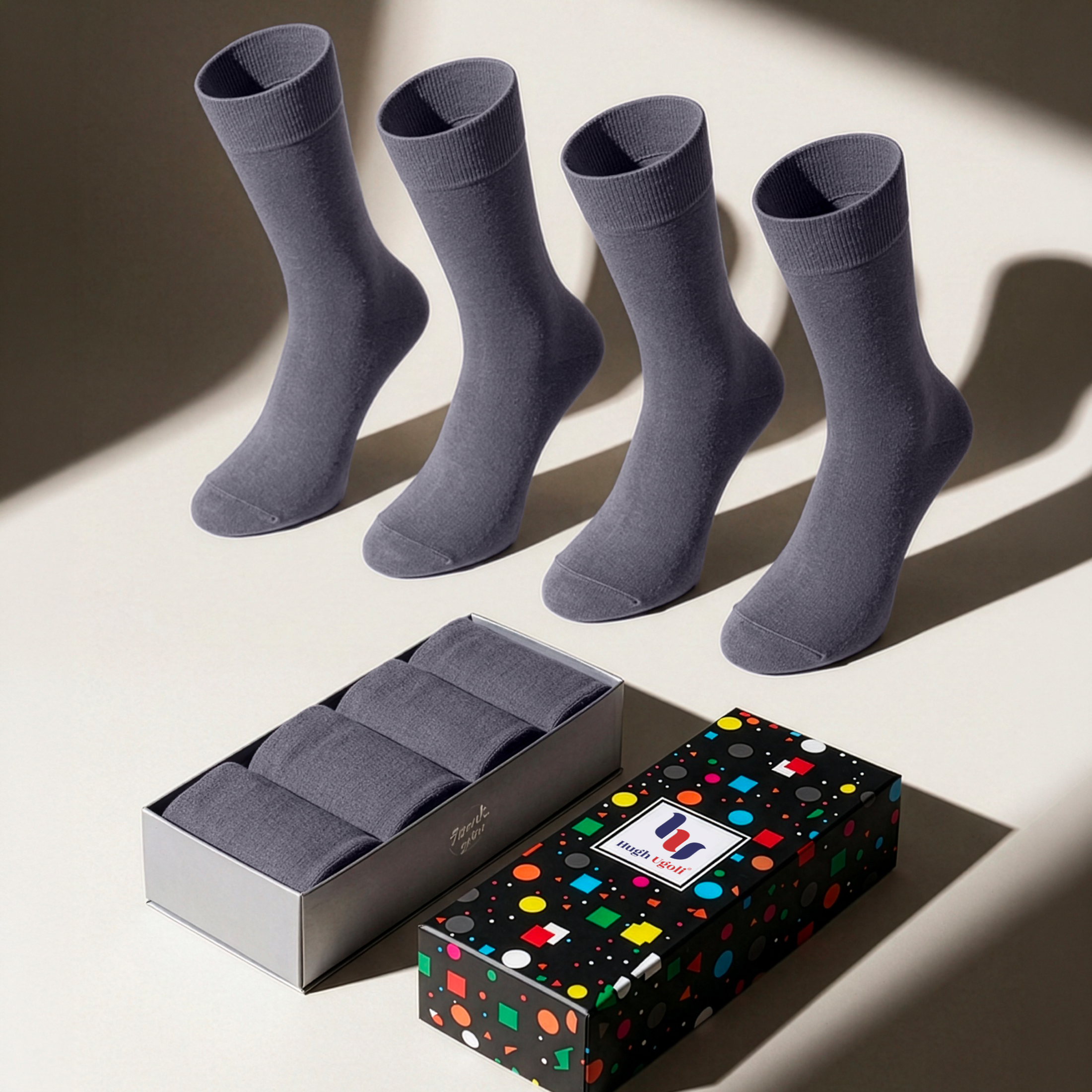
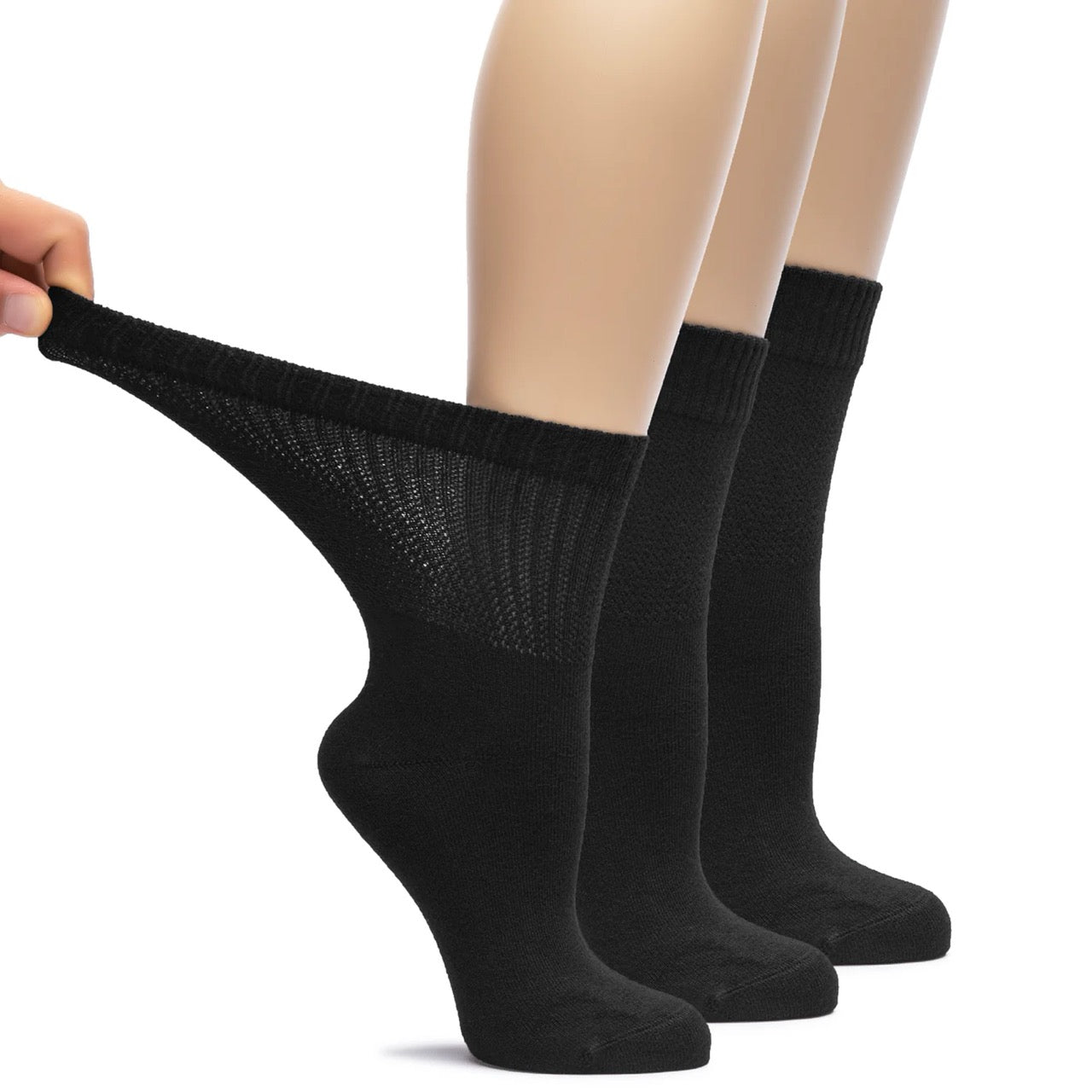
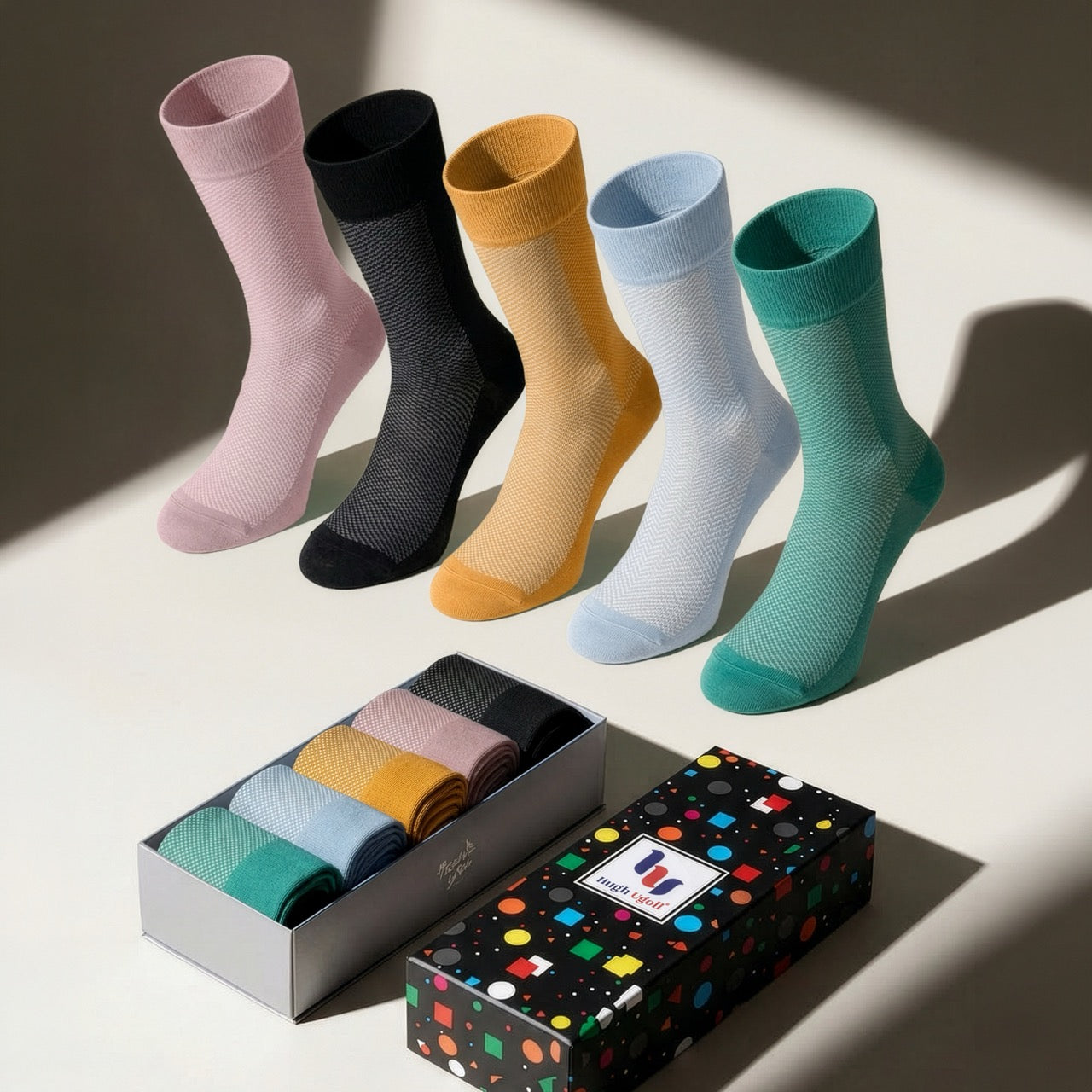
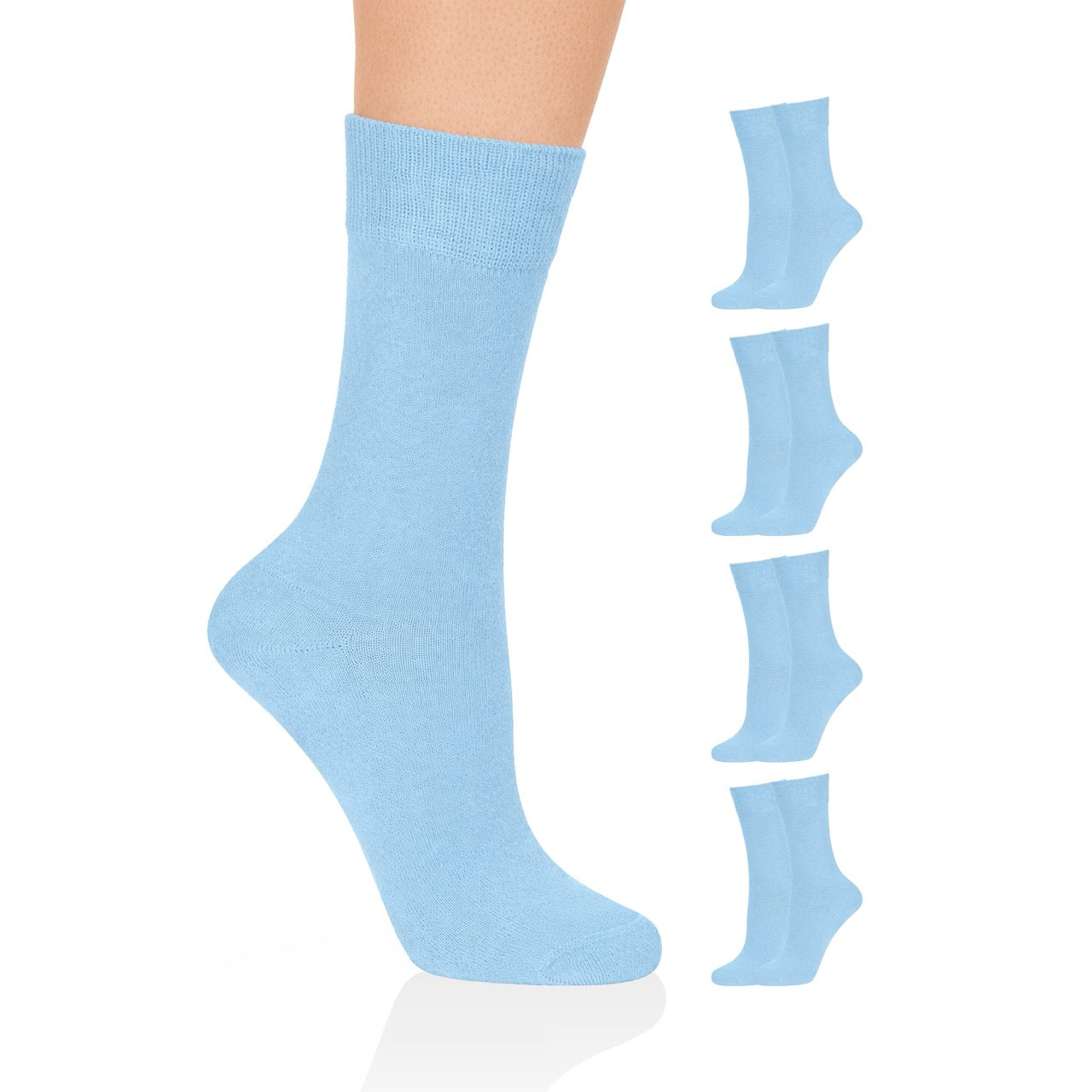
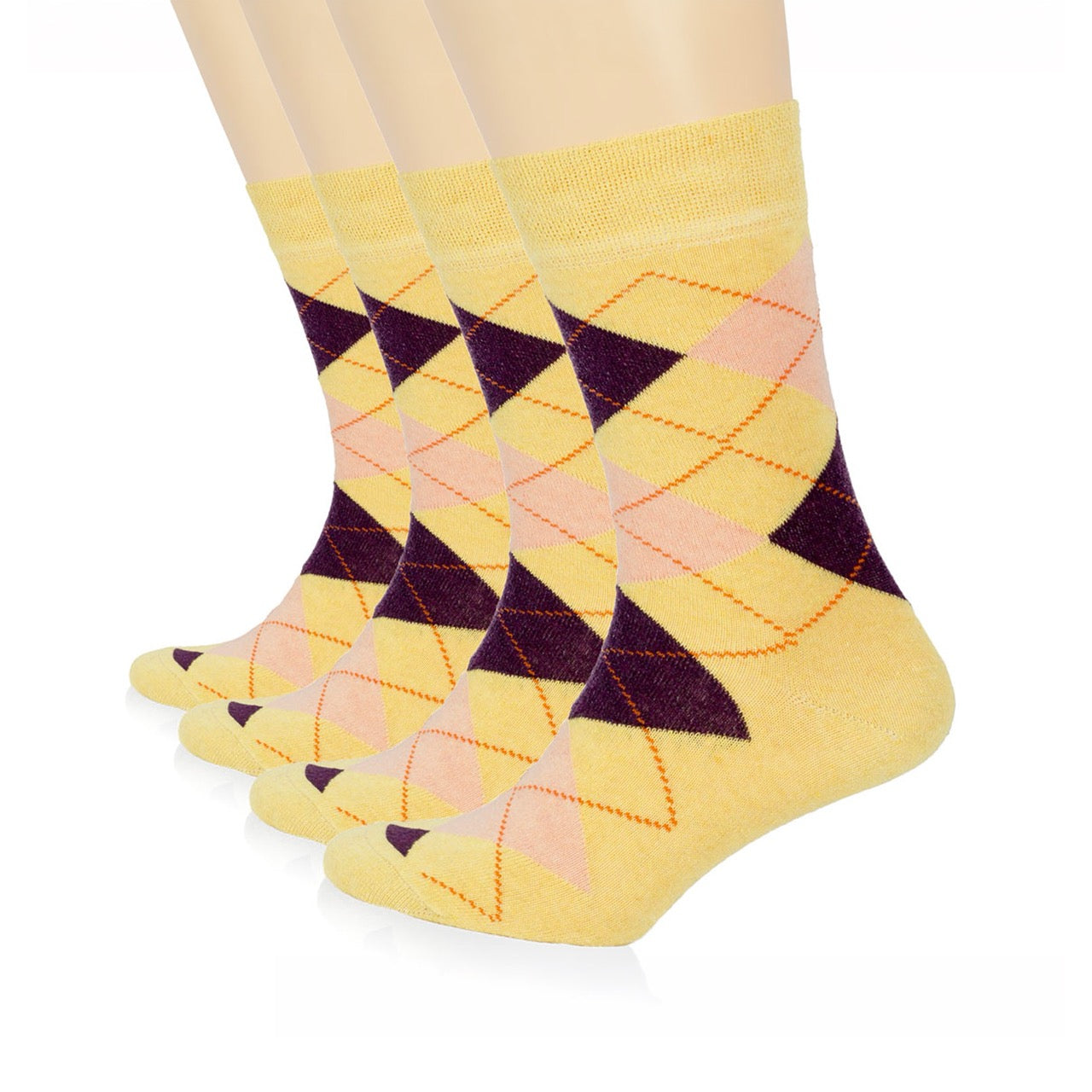
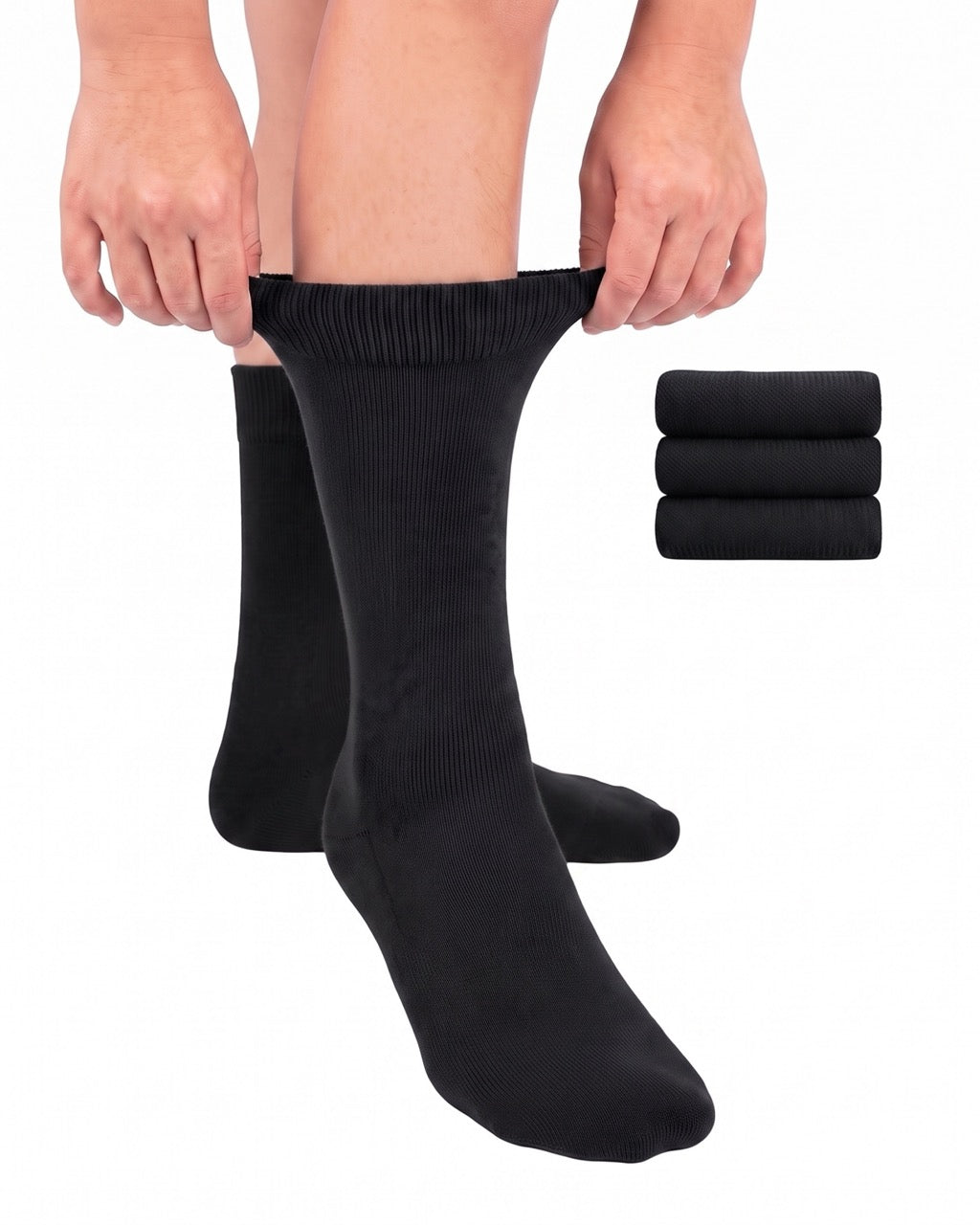
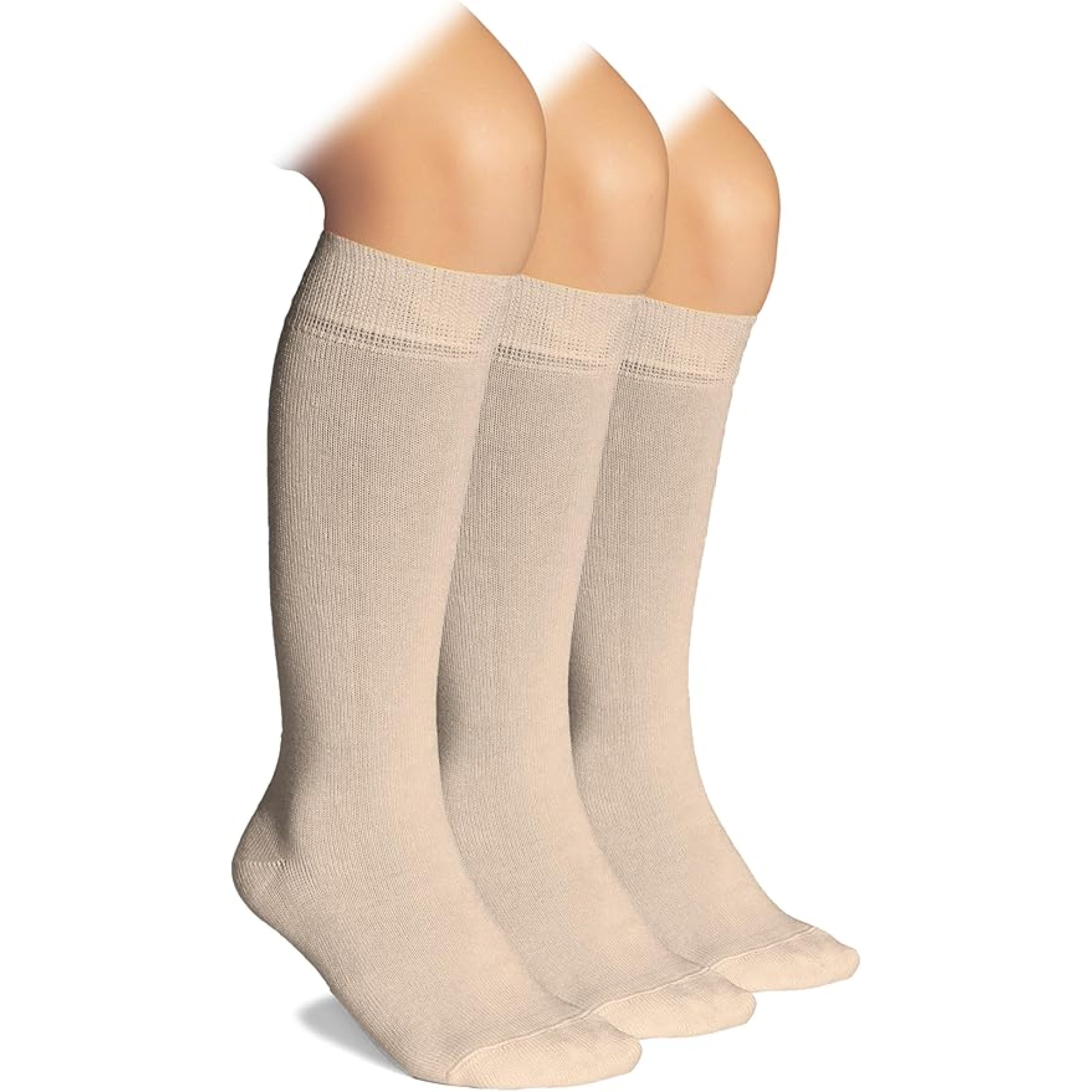


Bariatric socks are socks cut with a substantially wider leg opening and foot than standard sizing — but the term is unregulated, so one brand's bariatric is another brand's extra wide. Treat it as a signal of intended audience, not a specification. What actually matters is measurement: take your calf circumference at the widest point in the evening while standing, and your foot circumference across the ball, then check those two numbers against a product's stated ranges. Aim for the middle of a range rather than the top, and prioritise a genuinely non-binding cuff over maximum stretch.
Key Takeaways
If you have ever pulled on a sock and felt the cuff bite into your calf — leaving a red ring that is still visible an hour later — you already understand the core problem this article addresses. Standard socks are knitted to a narrow assumption about leg circumference, and a large share of adults fall outside it. The result is not a minor comfort issue. A cuff that constricts is uncomfortable, it can be difficult to get on and off, and for anyone dealing with swelling it is the last thing you want wrapped around your leg all day.
"Bariatric socks" is the term that has emerged for socks built for substantially wider calves and feet. The label is imprecise and the market around it is confusing, so this guide covers what the term actually means, how to measure yourself properly, which construction details matter, and how to tell a genuinely wide sock from a standard sock with optimistic marketing.
The word bariatric comes from medical equipment terminology, where it designates products rated for higher weight capacity and larger body dimensions — bariatric wheelchairs, bariatric beds, bariatric walkers. Applied to socks, it has come to mean socks with a substantially wider leg opening and foot than standard sizing provides.
Here is the important caveat: unlike a bariatric wheelchair, which has a defined weight rating, there is no standard governing what a manufacturer may call a bariatric sock. One brand's "bariatric" is another brand's "extra wide," and a third brand's regular large. The term tells you the intended audience, not the actual dimensions. This is why measurement matters more than labels.
You will encounter several overlapping terms for essentially the same category:
That last overlap is worth dwelling on, because it explains a lot about how this market is organized.
Socks marketed for people with diabetes are built around a small set of construction principles: a non-binding top that does not compress the leg, a seamless toe that eliminates a pressure ridge, and moisture-wicking fibers. Those first two features are exactly what someone with wide calves needs, regardless of whether diabetes is part of the picture.
The consequence is that the diabetic sock aisle is often the best place to find a genuinely non-constricting cuff, even for shoppers who have no interest in the diabetic framing. Our non-binding diabetic sock range is built on exactly this construction, and a substantial share of customers buy from it purely for the wider, gentler cuff.
That said, there is a distinction worth keeping straight. A non-binding cuff and a wide cuff are not the same thing. A non-binding cuff uses relaxed elastic so it does not compress; a wide cuff has a larger circumference to begin with. A sock can be one without the other. What most people with wide calves need is both: enough circumference to fit without stretching to the limit, and relaxed elastic so that the stretch it does undergo does not translate into pressure.

Almost everyone shops for socks by shoe size alone. For wide calves this is the wrong measurement, because shoe size tells you nothing about leg circumference. Two measurements are worth taking, and both take under a minute.
Measure around the widest part of your calf with a flexible tape measure, standing rather than sitting, and keep the tape snug but not compressing the skin. Write the number down.
Timing matters here more than most people realize. Leg circumference varies through the day, typically increasing from morning to evening — an effect that has nothing to do with any medical condition and simply reflects normal fluid movement while upright. We covered the mechanism in why your feet expand throughout the day. For sock buying, measure in the late afternoon or evening rather than first thing in the morning. Fitting to your morning measurement guarantees the sock will be too tight by dinnertime.
Wide calves frequently come with wide feet, and a sock that fits the leg but pinches across the ball of the foot is only half a solution. Measure the circumference around the widest part of your foot, across the ball. Compare against the brand's stated range rather than assuming a size letter means the same thing everywhere.
One additional consideration: the height at which a sock's cuff lands determines which part of your leg it has to accommodate. An ankle sock sits at the narrowest point and rarely creates a circumference problem. A crew sock lands mid-calf, where circumference is greater. A knee-high has to clear the full calf width. If you have wide calves, the taller the sock, the more the fit question matters — which is why many people with wider legs settle on ankle or low-crew heights even when they prefer the look of a taller sock.
Once you know your measurements, these are the features that determine whether a sock will work.
This is the single most important feature. A non-binding cuff is knitted with relaxed or minimal elastic so it holds position through fabric friction and knit structure rather than by squeezing. The practical test is simple: put the sock on, wear it for two hours, take it off, and look at your leg. If there is a visible indentation, the cuff is compressing. A well-designed non-binding top leaves no mark.
Be skeptical of socks that claim a non-binding top but use the same elastic as the rest of the range in a slightly wider knit. Stretching standard elastic further does not make it gentler — it makes it tighter, because elastic exerts more force the further it is stretched. This is the most common way a "wide" sock fails in practice.
Manufacturers often advertise how far a sock will stretch. This is the wrong metric. What matters is where your calf falls within that range. A sock stretched to ninety percent of its maximum will exert substantially more pressure than the same sock stretched to sixty percent, even though both technically "fit." Aim to land in the middle of a size range rather than at the top of a smaller one.
This is also why sizing up in a standard sock is an imperfect fix. A larger standard sock gives you more cuff circumference, but it also gives you a longer foot, which means excess fabric bunching under the arch and toe. Bunched fabric inside a shoe creates pressure points and friction. A purpose-built wide sock widens the leg without lengthening the foot.
A raised toe seam is a ridge of extra material sitting directly across the toes. For most wearers it is a minor annoyance; for anyone with reduced sensation, swelling, or skin fragility, it is a genuine friction point. Seamless-toe construction closes the toe during knitting so there is no perpendicular ridge inside the toe box.
Wider legs and feet generate more heat and more moisture, which makes breathability more than a comfort preference. Bamboo viscose is a strong option here — the fiber is fine and smooth, which reduces friction against the skin, and it moves moisture away from the foot effectively. Cotton is a reasonable alternative, though it holds moisture longer once saturated. Cheap synthetic blends are the weakest choice for this application, since they tend to trap both heat and moisture.
A detail that catches people out: a wide-calf sock still has to be long enough to reach where you want it. Some wide socks achieve their extra circumference by knitting a shorter leg, so the cuff sits below the widest part of the calf. That technically avoids the fit problem but may not be the look or coverage you wanted. Check the stated leg height, not just the width claim.
Within our own range, a few products are built around exactly these principles.
For anyone dealing with swelling around the ankle and lower leg, the women's bamboo ankle socks designed for swollen legs pair a genuinely relaxed cuff with a cushioned bamboo body. Sitting at ankle height, they sidestep the calf-circumference question entirely while still delivering the non-binding top.
If you want crew height, the women's bamboo diabetic crew socks use a loose-fit leg that accommodates a wider calf without the cuff reaching the end of its stretch. For men, the lightweight bamboo diabetic ankle socks apply the same non-binding construction in a thinner knit, which is the better choice if shoe volume is tight.
Whichever direction you go, check the stated measurements against the numbers you took rather than relying on the size letter.
Shoe size predicts foot length and nothing else. Someone with a size 8 foot may have a 14-inch calf or a 20-inch calf, and the sock that fits one will not fit the other. If a product page lists only shoe size and no calf measurement, that is a signal the product was not designed with calf width as a variable.
The instinctive fix for a tight cuff is to roll it down. This makes things worse: rolling doubles the fabric and concentrates the same elastic force over a narrower band, producing a tighter ring than before. If a cuff needs rolling, the sock is the wrong sock.
Some people snip the elastic band to relieve pressure. This does release the constriction, but it also causes the knit to unravel progressively and leaves a rough cut edge against the skin. It is a short-term fix that shortens the sock's life considerably.
They are close to opposites. Graduated compression garments are calibrated to apply a specific, measured pressure and are typically recommended by a healthcare provider for particular clinical situations. Non-binding socks are designed to apply as little pressure as possible. If someone has advised you to wear compression garments, a non-binding sock is not a substitute — and if you are considering compression on your own initiative, that is a conversation worth having with your healthcare provider first. For a related discussion of where these categories diverge, see our guide to lymphedema socks and what to avoid.
A cuff that fits well when new can loosen into uselessness or, less commonly, tighten as fibers shrink. High dryer heat is the main culprit for elastic degradation. Washing warm rather than hot, skipping fabric softener, and drying on low or air-drying will keep a well-fitting sock fitting well for considerably longer.
Finding socks for wide calves is largely a measurement problem dressed up as a shopping problem. Take two numbers — calf circumference in the evening, foot circumference across the ball — and use them to evaluate products against stated ranges rather than trusting size letters or marketing terms. Prioritize a genuinely non-binding cuff over maximum stretch, choose a height that suits your leg shape, and pick a breathable fiber. Get those four things right and the red ring at the end of the day stops being part of your routine.
This article is for general information and is not medical advice. Talk to your healthcare provider about your own feet.
Bariatric socks are socks made with a substantially wider leg opening and foot than standard sizing provides, intended for people with larger calves and feet. The term borrows from medical equipment terminology, where bariatric designates products built for larger dimensions. Unlike bariatric medical equipment, there is no standardized definition for socks, so the label indicates intended audience rather than specific measurements — which is why checking stated dimensions matters more than the term itself.
The clearest indicator is a visible indentation ring on your leg after wearing a sock for a few hours. Other signs include difficulty pulling socks over the calf, cuffs that roll or slide down because they are stretched to their limit, and a persistent feeling of tightness at the sock's top edge. Measuring your calf circumference at its widest point in the evening and comparing against a product's stated range gives you a definite answer rather than a guess.
They are different categories with significant overlap. Diabetic socks are defined by their construction — non-binding top, seamless toe, moisture-wicking fibers — while bariatric socks are defined by their dimensions. Because the non-binding top is a shared feature, many people with wide calves find that diabetic socks work well for them regardless of whether diabetes is a factor. The distinction to watch is that not every diabetic sock is cut wide, and not every wide sock has a truly non-binding cuff.
It helps but rarely solves the problem cleanly. Sizing up a standard sock adds circumference at the cuff, but it also adds foot length, which produces excess fabric that bunches under the arch and in the toe box. Bunched fabric inside a shoe creates friction and pressure points. A purpose-built wide sock adds width without adding length, which is why it fits better than a standard sock two sizes up.
No. A sock that leaves a visible indentation is compressing the leg more than it should for everyday wear. Occasional light marking from a snug sock is common and generally not a concern on its own, but a deep or persistent ring is a sign to switch to a non-binding design. If you notice new or worsening swelling in your legs and ankles, that is worth raising with your healthcare provider rather than treating as purely a sock-fit issue.
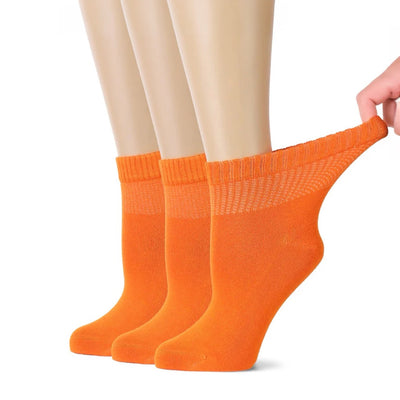
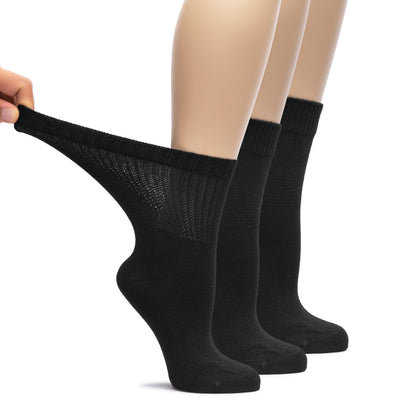
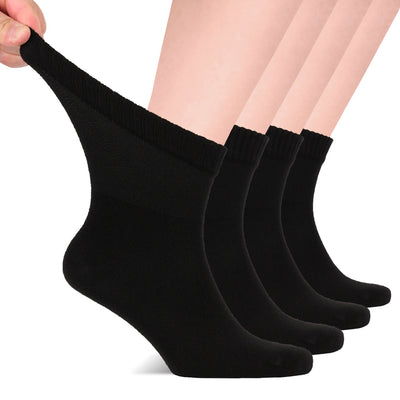
Discover All Hugh Ugoli Socks
Shop All Socks