Cart
0
You may also like
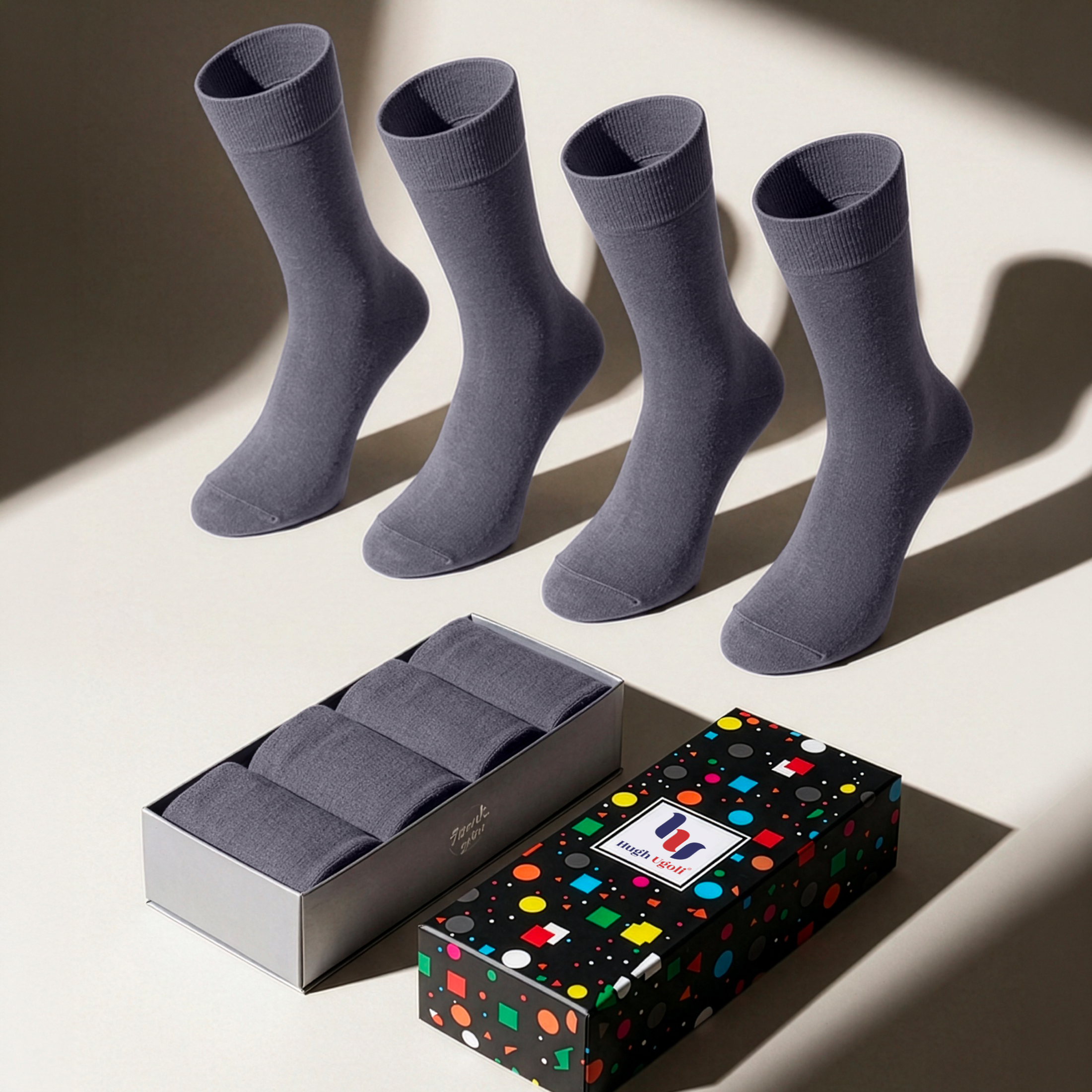
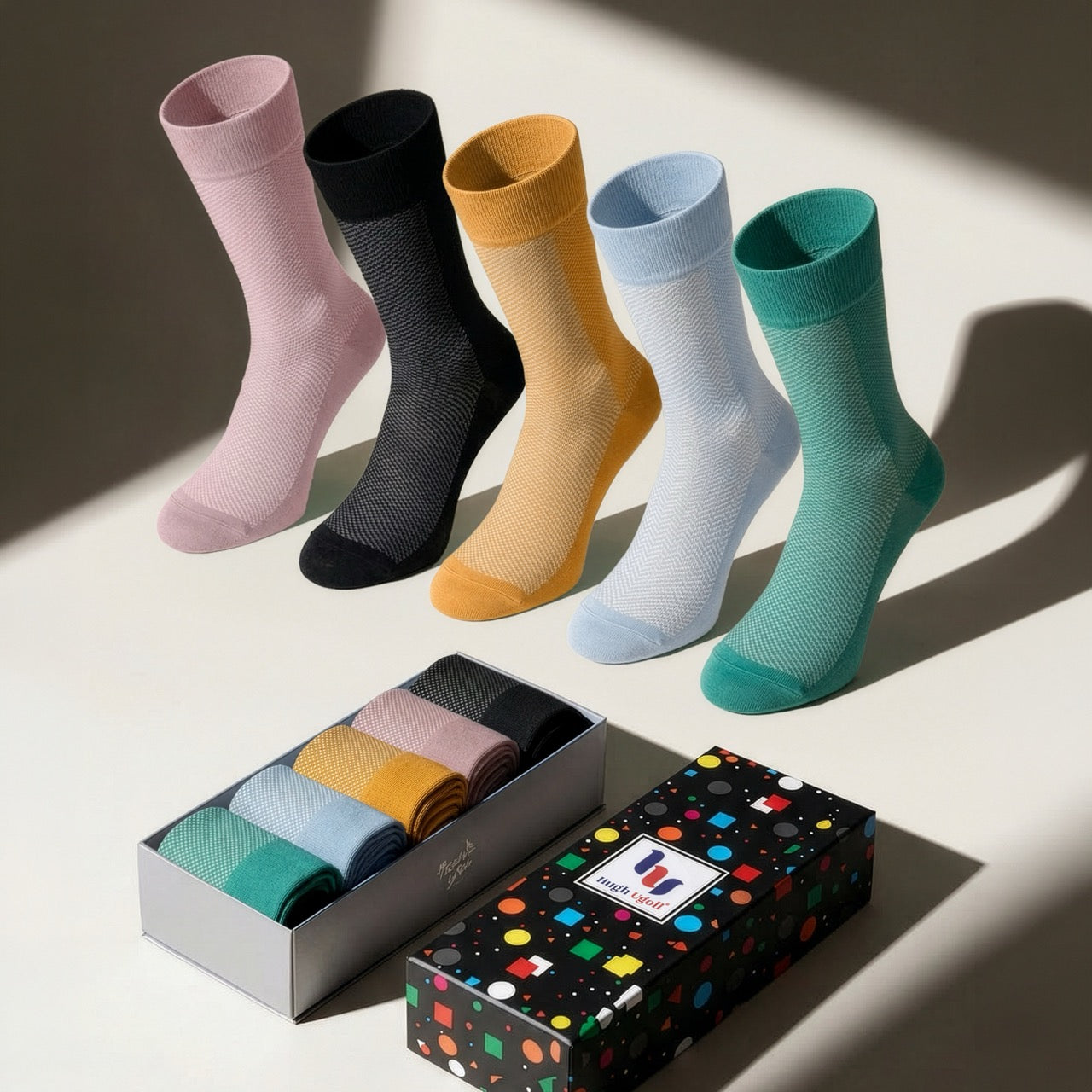
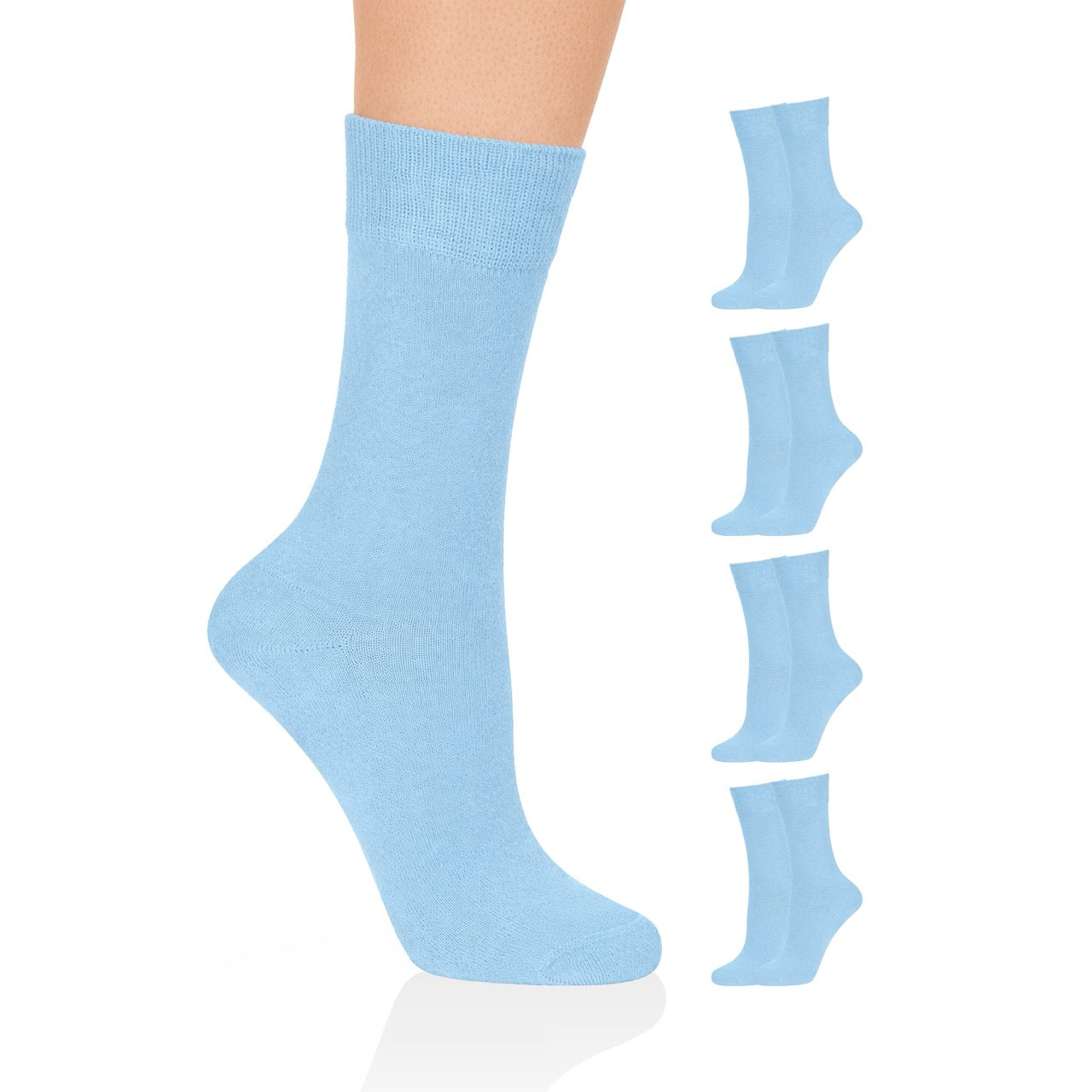
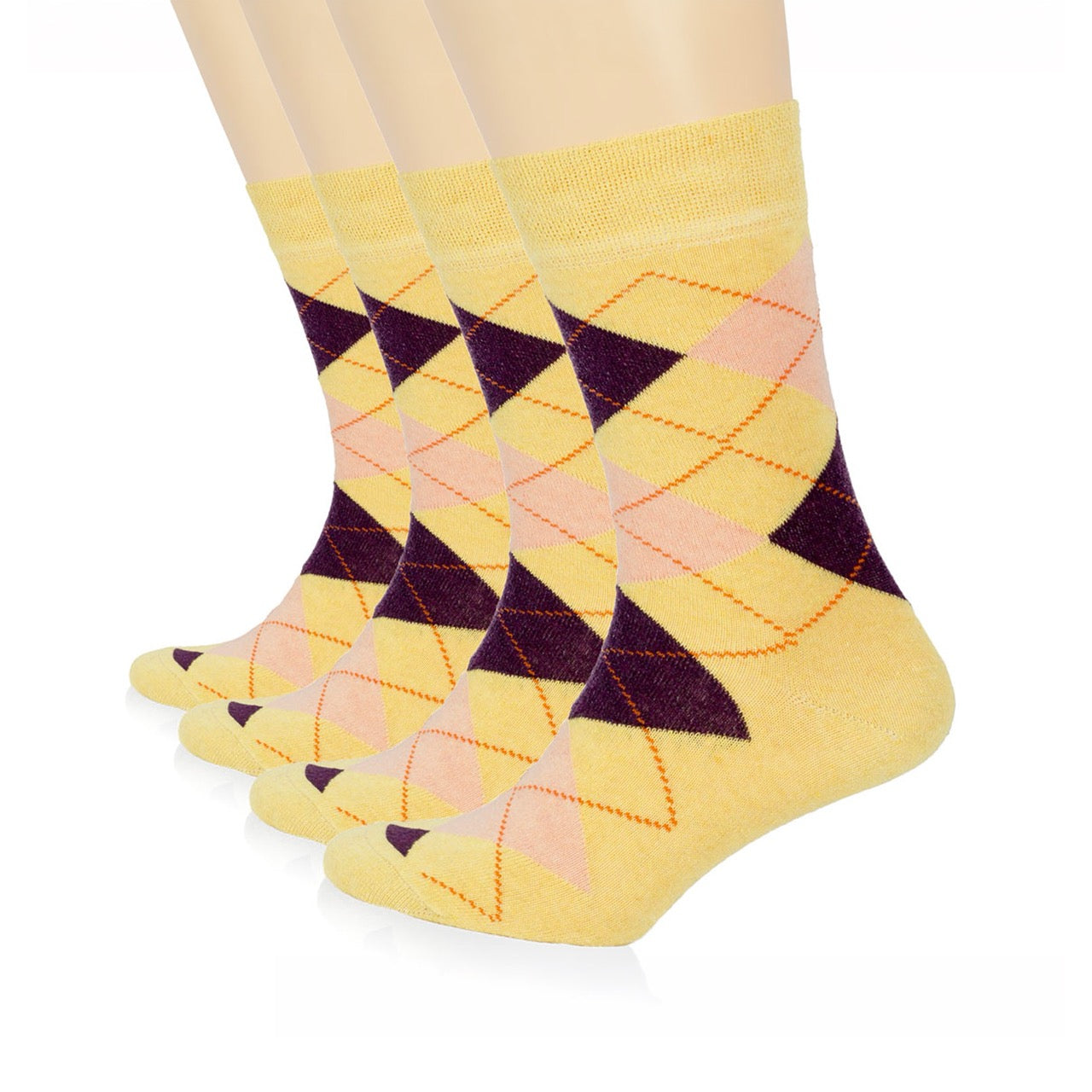


Most socks look roughly the same in the packaging. They're folded neatly, labeled with fiber claims that can mean almost anything, and priced across a range that doesn't obviously track to quality. A pair in a gift box at a premium price can be mediocre construction; a mid-priced pair from a brand that knows what it's doing can be genuinely excellent. The packaging rarely tells you which is which.
The good news is that quality in a sock is not invisible. It shows up in specific, observable details that you can check before buying — in a store, by handling the product, or online, by knowing what information to look for and what questions to ask. Understanding what those signals are and what they mean is the difference between buying confidently and relying on price or presentation as a proxy for quality that they often aren't.
The fiber content label is the most information-dense signal available before purchase, and most people scan it without knowing how to read it. The label lists fibers in order of percentage by weight, which tells you the actual composition rather than the marketing emphasis.
A sock labeled “bamboo” without qualification may be anywhere from thirty percent to eighty-five percent bamboo viscose, with the remainder made up of nylon, elastane, and sometimes cotton or polyester. The percentage matters considerably. A sock with sixty percent bamboo viscose is going to feel and perform differently from one with thirty percent, even though both can legally be described as bamboo socks. Look for the full percentage breakdown rather than just the fiber name.
“Combed cotton” is meaningfully different from standard “cotton” — combing removes short, rough fiber ends and aligns the remaining fibers, producing a smoother, more resilient yarn that performs better across more wash cycles. If a sock claims cotton as its primary fiber, combed cotton indicates a higher processing standard than cotton alone.
Merino wool as a label is more reliable than general “wool” because merino is a specific fleece variety with a defined fiber diameter that determines its softness. A sock labeled simply “wool” could contain any wool grade; merino sets a minimum softness standard that matters for next-to-skin wear.
Nylon content — typically ten to twenty percent in a quality natural-fiber sock — is one of the clearest indicators of durability-conscious construction. Nylon fibers are significantly more abrasion-resistant than natural fibers at equivalent weights, and blending them with bamboo, cotton, or wool reinforces the yarn at a microscopic level, extending the sock's functional life particularly at the heel and toe where abrasion is highest.
A sock with zero synthetic content is not automatically better — in fact, pure-natural-fiber socks without nylon reinforcement typically wear through faster than quality blended alternatives. The presence of a modest nylon percentage in the fiber blend is a positive quality signal, not a compromise. Elastane or spandex (usually one to three percent) is the fiber that provides cuff stretch and recovery — its presence in a small amount is standard and expected in any well-constructed sock.
Knit density — the number of stitches per unit area — is one of the most reliable physical indicators of construction quality in a sock, and it's something you can assess directly by feel. Hold the sock up to the light and look through the fabric. A densely knit sock has a tight, even structure with minimal visible gaps between the yarn. A loosely knit sock has visible open space in the weave and a slightly translucent or airy appearance even in the main body of the sock.
Denser knitting produces a stronger fabric that resists abrasion better, distributes pressure more evenly across the foot, and holds its shape through more wash cycles. It also feels more substantial in the hand — a quality sock has a certain satisfying weight and solidity when you handle it, not the light, slightly insubstantial feel of a thinly knit commodity sock.
The needle count, if a brand chooses to publish it, tells you the knit density numerically. Higher needle counts (200-needle, 400-needle) indicate finer, denser knitting than lower counts. This information isn't always available on packaging but is increasingly listed in online product specifications by brands that understand their construction well enough to want to communicate it.

Reinforcement at the heel and toe is one of the clearest indicators of a sock designed to last rather than one designed to fill a price point. The heel and toe are where every sock eventually fails — they absorb the highest mechanical stress from heel strike during walking and from the friction of the toe against the shoe's end. A sock without reinforcement in these areas relies on the same fabric density as the rest of the foot to withstand that concentrated wear, which it typically can't do indefinitely.
In person, reinforcement is visible as a slightly denser, heavier area at the heel cup and toe box — the fabric looks and feels noticeably more substantial than the main body of the sock. Some reinforcements use a contrasting yarn color that makes them visually obvious. Others use the same color but a denser knit pattern that you can see and feel as a textural difference. Either way, the reinforcement should be palpable: the heel and toe of a well-made sock have a different hand feel from the arch and cuff.
Online, look for explicit mention of “reinforced heel and toe,” “double heel,” or “terry loop cushioning at heel and toe” in the product description. A brand that has built these features into its construction is usually one that wants you to know about them; the absence of any mention of reinforcement in a product description is itself a signal worth noting.
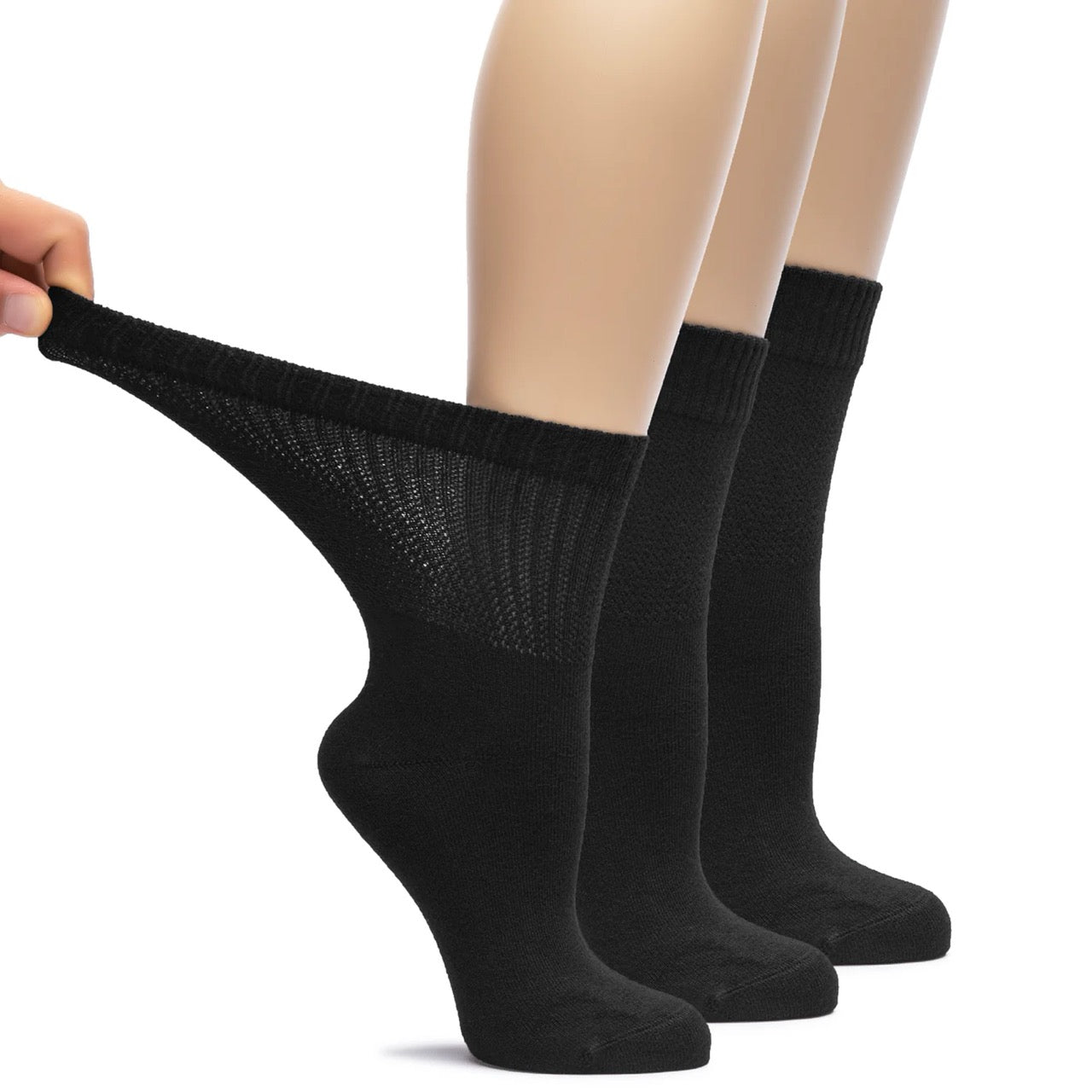
The cuff elastic is the component that most commonly determines how long a sock remains wearable, and you can assess its quality directly in a store in under ten seconds. Stretch the cuff to roughly double its resting diameter, hold it for three seconds, then release. A quality elastic snaps back immediately and completely — the cuff returns to its resting dimensions without hesitation or wavering. Poor-quality elastic returns slowly, incompletely, or with a slight sluggishness that becomes noticeable under the simple stretch test.
This test is diagnostic not only for current quality but also as a predictor of longevity. An elastic that already shows sluggishness in a new, unworn sock — which has been subjected to no washing or wear stress yet — will degrade significantly faster under the repeated stress of regular use and laundering than one that snaps back decisively. If you're buying in a store and the elastic already feels soft or weak before the sock has been worn once, pass on it regardless of what the label says.
Online shoppers can't perform this test directly, but the product description and fiber content provide proxies. Elastane or spandex percentage in the fiber blend (typically one to three percent) is the elastic component; the grade and quality of that elastane determines recovery force, which isn't directly readable from the percentage alone but tends to correlate with overall brand quality standards. Reading customer reviews specifically for mentions of cuff slippage or elastic failure over time is one of the more reliable ways to assess elastic quality without handling the product.
The seam at the toe — where the sock is closed after knitting — is a detail that separates construction philosophies clearly. A standard linked seam creates a raised ridge across the toe box that sits directly over the area of the toe under the most pressure inside a shoe. Over hours of wear, this ridge creates repeated friction against the skin that contributes to blisters and callus formation at the toe tips, particularly in people with sensitive skin or those who walk significant distances.
A quality sock addresses this in one of two ways: seamless toe construction, which eliminates the closing seam entirely through a linking technique that produces a smooth, flat closure without a raised ridge; or flat-seam construction, which produces a seam but positions it so it lies flat against the toe rather than sitting perpendicular to it. Both approaches are meaningfully better than a standard linked seam for in-shoe comfort and for reducing friction-related skin issues at the toe.
In a store, you can feel the toe seam directly by running your finger across the inside of the toe box. A seamless or flat-seam toe is smooth to the touch with no perceptible ridge. A standard seam is immediately evident as a raised line. If you're buying online, “seamless toe” or “hand-linked toe” in the product description indicates attention to this detail. Its absence from the description doesn't confirm a standard seam, but its presence confirms a better one.
Quality socks have a characteristic hand feel that's difficult to describe precisely but is immediately recognizable once you've handled enough of them. They feel substantial without being heavy — there's a density and evenness to the fabric that distributes slightly unevenly across your palm as you bunch the sock loosely. The fabric has a certain drape: it folds smoothly rather than holding stiff shapes or collapsing entirely flat. The fiber feels consistent across the sock — there's no roughness or unevenness in specific areas that suggests yarn inconsistency in the knitting.
Cheap socks feel lighter than they should for their apparent thickness, often because lower-quality yarn produces a structure with more air and less fiber per unit area. They may feel slightly rough at the fingertips or have a texture that's inconsistent across the foot — slightly rougher over the heel, less consistent at the toe, with visible variation in the knit if you look closely.
The inner surface is particularly telling. Turn the sock inside out and run your thumb across the interior. A quality sock has a smooth, even inner surface — whether flat-knit or cushioned, the texture is consistent and gentle. A cheap sock often has a rougher or more irregular inner surface even when new, which is what the foot is actually in contact with for hours at a time.
Buying socks online removes the ability to handle the product directly, but it doesn't eliminate the ability to assess quality before purchasing. The information is there if you know where to look.
Product descriptions from quality-conscious brands tend to be specific about construction details: fiber percentages (not just fiber names), needle count, reinforcement locations, seam type, and cuff design. A description that names only the fiber (“bamboo socks”) without providing percentages, construction details, or feature explanations is a brand that either doesn't know what distinguishes its product or doesn't think the distinction is worth communicating — neither is a confidence-building signal.
Customer reviews are most useful when filtered for mentions of specific performance aspects over time: how the sock holds up after many washes, whether the elastic retains tension, whether the heel shows wear, and whether the sock maintains its shape and softness. First-impression reviews are less useful because, as discussed, finishing treatments can make almost any sock feel acceptable when new. Reviews from people who have worn and washed the product repeatedly are the data point worth seeking.
Photography quality and detail level is a secondary signal. Brands that photograph their socks in ways that show construction details — the interior, the seam, the reinforced heel — have construction they want you to see. Brands that show only a styled hero shot of the exterior have less to show.
Price correlates with quality in socks up to a point, but the correlation breaks down at both extremes and in the middle of the range in ways that make price alone an unreliable guide.
At the bottom of the market, very low price points do reflect genuine construction compromises — the fiber blends, knit density, elastic quality, and reinforcement details that produce durability and comfort all cost money at the manufacturing level, and socks priced too low to accommodate those costs simply won't have them. In this range, price is a reasonable negative signal: very cheap socks are almost always commodity construction.
In the mid-range and above, the correlation weakens significantly. Marketing, packaging, brand positioning, and distribution costs can all push prices higher without affecting the sock's construction quality. A sock sold in an attractive gift box through a premium retail channel may cost significantly more than an equivalent or better sock sold with simpler packaging through a different channel. The construction details described in this article — fiber percentages, knit density, reinforcement, seam type, elastic recovery — are the actual quality indicators. Price is at best a coarse filter and at worst a distraction from those specifics.
A bamboo dress sock with a published fiber breakdown, reinforced construction, and seamless toe is a product whose quality is visible in its specifications rather than just its price point. The construction details tell you what you're buying in a way that the price tag alone never can.
If you're standing in a shop with thirty seconds and want to quickly sort quality from commodity, run through this sequence. Pick up the sock and feel its weight — does it feel substantial relative to its apparent thickness? Stretch the cuff and release — does it snap back immediately? Turn it inside out and run your thumb across the toe area — is the inner surface smooth with no ridge? Hold it to the light and look at the heel and toe — are they noticeably denser than the rest of the sock? Check the label for fiber percentages — is there a nylon component alongside the primary fiber?
Five checks, fifteen seconds. A sock that passes all five is built to quality standards. A sock that fails two or more of them has construction compromises that will likely become apparent within the first few months of wear. The checks work because quality in socks is not an abstract concept — it's the physical result of specific manufacturing decisions that leave observable traces in the finished product.
For socks designed with foot health specifically in mind, the same checks apply with the addition of cuff assessment: does the cuff grip gently rather than constricting, and is the sock designed to hold without leaving marks? A cotton ankle sock with semi-cushion construction and a non-binding top will typically communicate those features explicitly in its labeling — because a brand that's built them in wants buyers to know they're there.
Sock quality is not a mystery — it's a set of observable construction details that manifest in the fiber composition label, the hand feel, the seam, the elastic, and the density of the knit at the heel and toe. None of these requires specialist knowledge to assess; they require only knowing what to look for and taking thirty seconds to look. The brands that build quality into their socks generally want you to see it — in the specificity of their product descriptions, the detail they put into construction that's visible to anyone who handles the sock, and the transparency with which they communicate what's in the product. That transparency, or its absence, is itself one of the clearest quality signals available before you buy.
The clearest pre-purchase quality checks are: the elastic snap test (stretch the cuff to double width, release — it should snap back immediately), the toe seam check (run a finger inside the toe — a seamless or flat seam indicates better construction than a raised ridge), heel and toe density (these areas should feel noticeably heavier and denser than the rest of the sock), fiber label reading (look for specific percentages, a nylon component for durability, and combed or bamboo viscose rather than generic fiber names), and overall hand feel (quality socks feel substantial and even, not light and inconsistent).
A quality natural-fiber sock typically lists its primary fiber with a percentage (not just a name), includes a small nylon component (ten to twenty percent) for abrasion resistance, and contains one to three percent elastane for cuff recovery. Combed cotton rather than standard cotton, bamboo viscose rather than generic bamboo, and merino wool rather than generic wool all indicate higher processing standards. The presence of a specific fiber percentage breakdown — rather than just a name — is itself a sign that the brand knows and communicates its construction.
Up to a point, and not reliably above it. Very cheap socks almost always reflect genuine construction compromises that affect durability and comfort. In the mid-range and above, price increasingly reflects marketing, packaging, and distribution costs rather than construction quality. A sock's actual quality is visible in its construction details — fiber composition, knit density, reinforcement, seam type, elastic recovery — not in its price. Two socks at the same price can have very different construction; two socks at different prices can have equivalent or identical construction.
Reinforced heel and toe means the sock has denser, heavier knitting or additional fiber layers specifically at the heel cup and toe box — the two areas that bear the most abrasion during wear and washing. Without reinforcement, a sock relies on the same fabric density across the entire foot to withstand concentrated stress at these points, which typically produces visible thinning and eventual breakthrough at the heel or toe within months to a year of regular wear. Reinforcement substantially delays this failure point and is one of the clearest indicators that a sock was designed with longevity in mind.
Look for product descriptions that provide specific fiber percentages rather than just fiber names, explicitly mention construction features like reinforced heels and toes, seamless or flat-link toe closure, and non-binding cuff design. Read reviews specifically for long-term performance comments — how the sock holds up after many washes, whether the elastic retains tension, whether the shape is maintained. Brands that provide detailed construction information are typically ones that have construction worth communicating. Brands whose descriptions consist mainly of lifestyle copy and fiber names without specifics are often selling presentation rather than construction.
He has been working for more than 20 years in the textile industry and has work experience in many parts of the world.