Cart
0
You may also like


Quick Answer: Socks that are too tight restrict circulation, trap moisture, and increase friction. This combination leads to blisters and irritation, skin irritation, and long-term foot problems. Choosing moisture wicking, properly fitted socks improves foot health and prevents discomfort.
Socks are meant to protect your feet—not create new problems. Yet many people overlook how fit affects comfort and foot health. While loose socks can bunch and cause friction, tight socks can be even more harmful.
When socks are too tight, they compress the skin, restrict blood flow, and prevent proper airflow. This can result in trapping moisture, overheating, and worsening existing foot issues. Over time, the wrong socks may contribute to blisters, irritation, and circulation concerns.
Your feet naturally produce sweat throughout the day. This is normal and essential for regulating temperature. The problem begins when sweat has nowhere to go.
Socks that are too tight press fabric tightly against the skin. Instead of allowing air circulation, they create a sealed environment. When airflow is reduced, moisture remains against the foot.
Trapping moisture leads to:
Without moisture wicking properties, sweat remains in contact with the skin longer than it should.
Another serious issue caused by ill fitting socks is restricted circulation. When elastic bands compress too tightly around the ankle or calf, they can restrict blood flow.
While mild compression socks are designed intentionally for support, everyday socks that are too tight are not structured for healthy compression. Instead, they may restrict circulation in ways that contribute to:
Over time, poor circulation can worsen foot problems—especially for individuals already prone to foot health concerns.

Blisters develop when friction repeatedly stresses the skin. Tight socks increase this risk in two ways.
First, by trapping moisture, they soften the outer layer of skin. Damp skin is more vulnerable to tearing.
Second, compression can cause fabric tension points. When the sock stretches too tightly over the foot, small movements create shear force between the fabric and skin. This friction contributes to leading to blisters, especially around heels and toes.
The result? Painful blisters and irritation that could have been avoided with proper fit.
Many traditional cotton socks absorb sweat effectively—but they do not release it quickly. Cotton retains moisture, especially when tightly compressed against the foot.
When cotton socks become damp, they lose structure. Over time, thinning fabric may develop in high-friction areas. This thinning fabric increases vulnerability to blisters and skin irritation.
In contrast, moisture wicking socks are designed to move sweat away from the skin. They reduce trapping moisture and help keep feet dry.
Merino wool offers excellent moisture management and temperature regulation. Unlike heavy wool, fine merino wool is breathable and supports foot health.
Wool socks made from merino fibers:
This makes them a strong option for preventing sweat accumulation without compressing the foot excessively.
Modern moisture wicking socks often use performance blends that move sweat away quickly. These materials are engineered to reduce dampness while maintaining structure.
The right kind of socks balances stretch and breathability—without restricting blood flow.
It is not always obvious that socks are causing discomfort. Look for these indicators:
If you notice these signs, your socks may be ill fitting.
Wearing wrong socks consistently can worsen underlying foot issues. Conditions like athlete’s foot, fungal infections, and chronic irritation thrive in damp, compressed environments.
Healthy foot health depends on:
Socks that restrict circulation and trap sweat work against these fundamentals.
To avoid foot problems, focus on these features:
The right kind of socks should feel supportive without compressing excessively.
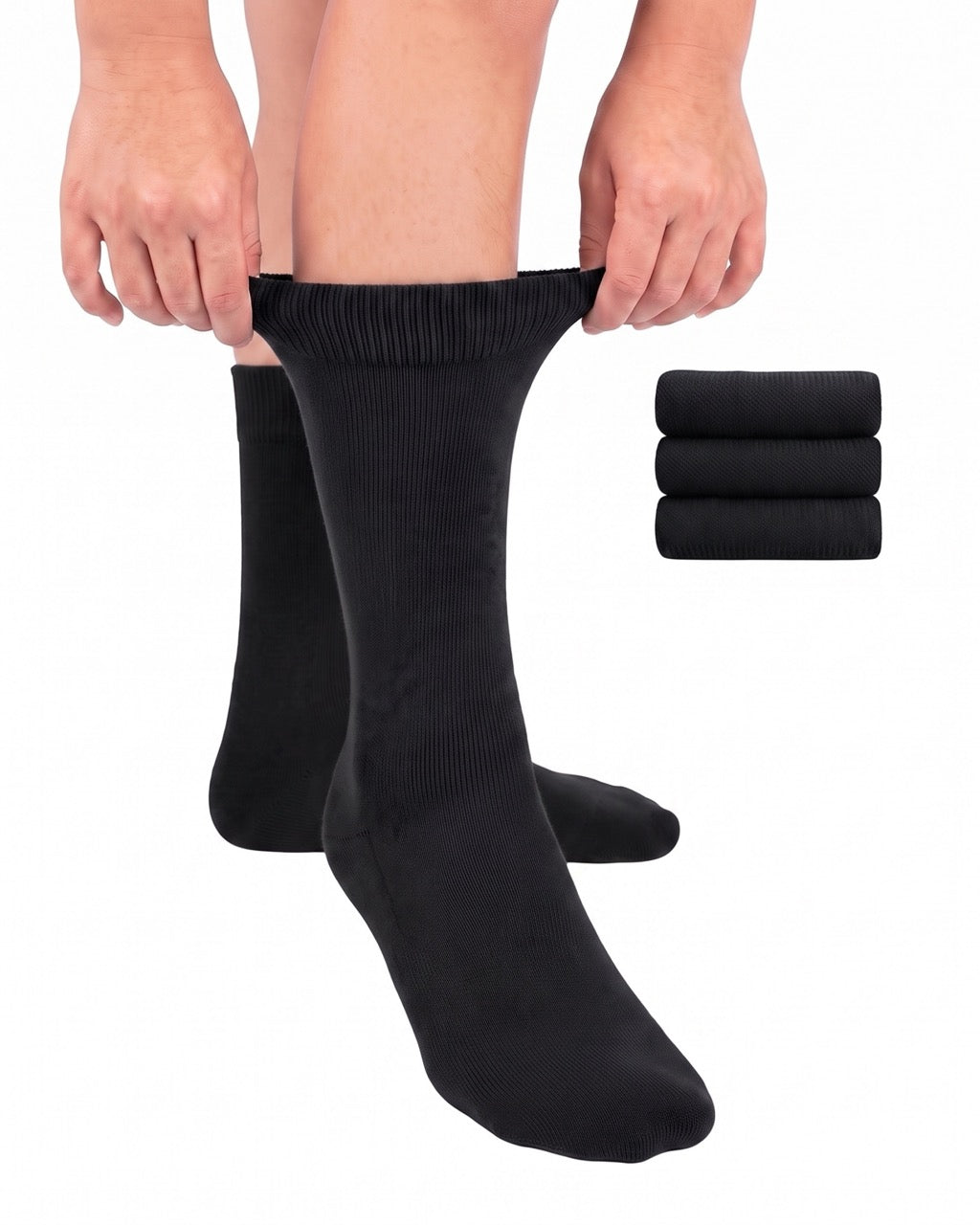
It is important to distinguish between secure fit and restriction. Socks should stay in place—but not restrict blood flow.
Compression socks used for medical purposes are engineered differently. Everyday socks that are too tight do not offer the same benefits and may contribute to poor circulation instead.
Comfort comes from balanced tension—not tightness.
Socks that are too tight do more harm than good. By restricting circulation, trapping moisture, and increasing friction, they contribute to blisters, irritation, and broader foot problems.
Choosing moisture wicking options, breathable materials like merino wool, and properly fitted designs protects foot health and improves daily comfort.
When selecting socks, remember: the goal is not compression without purpose—it is support without restriction. The right fit keeps your feet dry, healthy, and comfortable from morning to night.
Tight socks can restrict circulation, trap moisture, and increase friction. This combination may lead to blisters, irritation, and ongoing foot discomfort.
Yes. Tight socks can increase friction and hold moisture against the skin, which makes blisters more likely to develop.
Not always. Cotton absorbs moisture well, but it tends to hold onto sweat longer than moisture-wicking materials, which can leave feet damp.
Merino wool and moisture-wicking synthetic blends are often better choices because they help move sweat away from the skin and keep feet drier.
Common signs include deep marks on the skin, swelling above the cuff, numbness, tingling, and repeated moisture or friction problems.
He has been working for more than 20 years in the textile industry and has work experience in many parts of the world.